Key takeaways:
When choosing a roof access ladder, you need to consider the height of access, frequency of use, roof layout, available space, and the risks your workers may face when climbing. Aluminium fixed access ladders are a popular choice for most everyday applications because they’re lightweight, durable, and corrosion-resistant – while caged ladders, vertical line systems, and landing platforms are better suited to higher-risk applications. Katt Safety’s fixed access ladders are designed to suit a wide range of commercial and industrial environments, with all systems manufactured to meet BS EN ISO 14122-4:2016.
How confident are you that your current roof access route is the safest and most practical option for the people using it?
A roof access ladder does much more than get people from ground level to roof level – it helps to create a safe and reliable access route that suits your building, your workforce, and the way the roof is used. If you get it wrong, you could be putting your personnel in danger and making routine maintenance tasks much harder than they need to be.
Below, we explain what you need to consider when choosing a fixed access ladder in the UK, so you can keep your team safe and avoid any disruptions to your operations.
5 things to consider when choosing a fixed access ladder
1) Material
Your choice of material has a direct impact on the durability and maintenance requirements of your roof access ladder system. Aluminium is the preferred material for most commercial and industrial roof access applications, as it supports a strong, long-lasting system which is much easier to transport, handle, and install.
Here’s how the different ladder materials compare:
- Aluminium – an ideal choice for commercial roofs, industrial buildings, and plant access. It is lightweight, durable, corrosion-resistant, and easy to install, making it well suited to long-term external roof access systems.
- Galvanised steel – often used in heavy-duty industrial applications where strength is the priority. It is robust, but it is significantly heavier than aluminium and may require more maintenance over time.
- Stainless steel – a suitable option for specialist environments where corrosion resistance is essential, such as coastal or chemical sites. However, it’s more expensive to purchase upfront than aluminium or galvanised steel.
Our fixed access ladders are constructed from lightweight aluminium, allowing you to create safe, durable access routes without adding unnecessary weight to the building structure.
2) Access height
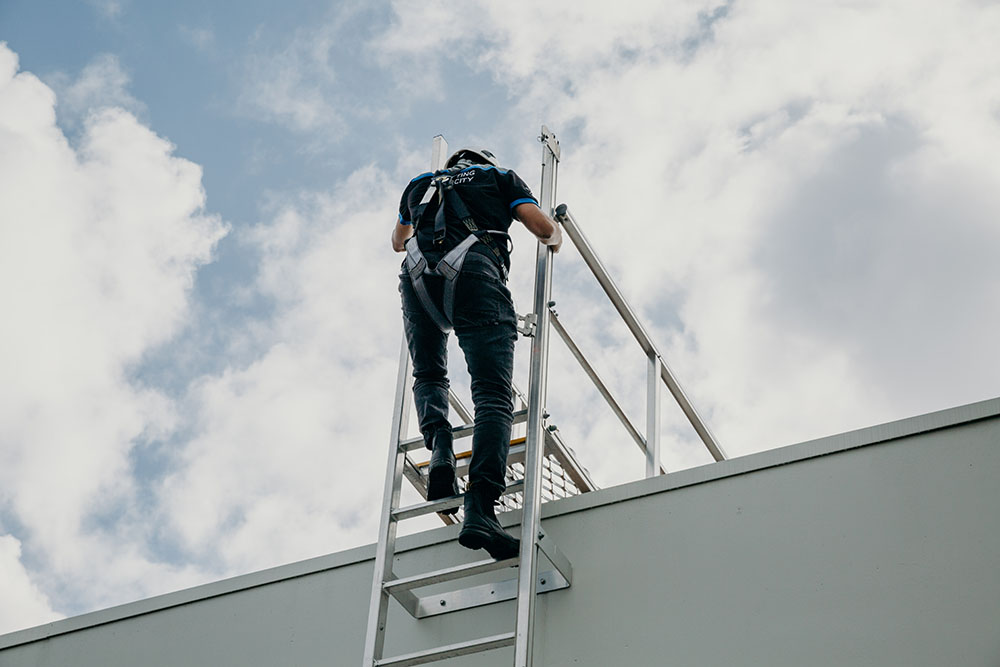
The height of the climb is one of the most important factors when selecting a roof access ladder. Low-level platforms may only require a simple angled or vertical ladder, while taller elevations may need a cage, fall arrest system, or intermediate landing.
Here’s how to determine which type of ladder you need based on the height:
| Access requirement | Suitable ladder option | Typical use case |
| Low-level access under 2.5m | Angled or vertical fixed ladder | Access between roof levels or plant platforms |
| Compact vertical access | Vertical fixed ladder | Areas where floor space is limited |
| Higher-risk vertical access | Caged or vertical line ladder | Roof access, plant rooms, and elevated maintenance areas |
| Long climbs or frequent use | Ladder with landing platform | Rest points and safer transitions |
Our range of fixed access ladder systems cover various different access heights and site requirements, from low-level access between roof areas to taller vertical climbs. Each system can be specified around the task, the building, and the people using it.
3) Frequency of use
You’ll also need to think about how often the ladder will be used, as this will have a significant impact on the level of protection and usability built into the system.
If it’s only needed for occasional inspection access, a compact fixed ladder like our RL20 series should suffice, as long as it is safe for the task being carried out. However, if your ladder is needed for frequent maintenance access such as regular HVAC servicing or solar panel checks, then a caged access ladder like the RL40 or vertical line access ladder like the RL50 may be more appropriate – depending on the access height, roof layout, and level of fall protection required.
If your workers will need to carry tools, access the roof in harsh weather conditions, or climb regularly, then you may also need to consider additional features such as walkways, handrails, landing platforms, or security gates.
4) Cage vs no cage
Customers often ask us if they’ll need a cage on their access ladder. The answer all depends on the access height, risk profile, site layout, and how the ladder will be used.
We’ve put together this useful comparison table to help you decide:
| Option | Best for | Benefits | Limitations |
| Uncaged fixed ladder | Lower-level access and compact spaces | Simple, space-efficient, cost-effective | May not provide enough protection for taller climbs |
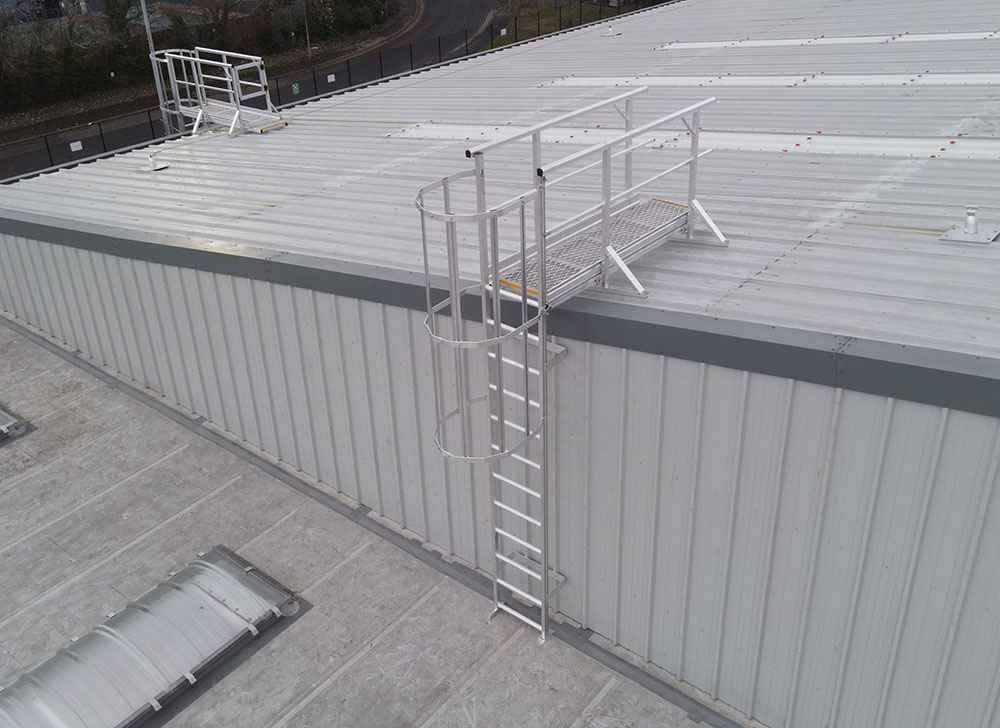
| Caged access ladder | Higher vertical access where users may need extra support around them while climbing | Helps keep the user within the ladder area and supports compliance | Requires more space around the ladder and will not stop someone from falling |
| Vertical line ladder | Tall vertical climbs where fall arrest is required | Provides constant fall protection | Users may need compatible PPE or training |
We supply both caged (RL40) and vertical line access ladders (RL50) that are designed with user comfort and safety in mind. Our RL50 series also includes a fall arrest system to provide constant fall protection at any point on the ladder.
5) Landing platform
If your workforce are carrying out taller climbs and need a safe transition point onto the roof, then you may need to consider adding a landing platform.
A landing platform helps by:
- Providing a stable rest point during longer climbs
- Improving the transition from ladder to roof level
- Creating safer access over parapets or changes in roof height
- Reducing awkward movements when stepping on or off the ladder
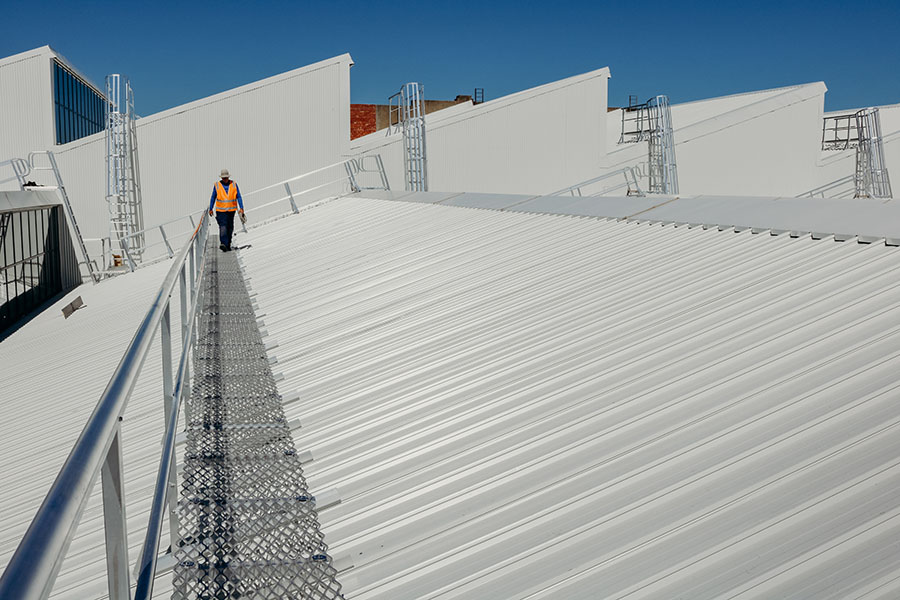
Landing platforms can also be combined with roof walkway systems to create a defined route from the access point to the working area. We supply both fixed and loose-lay walkway systems that can integrate with our fixed ladder systems to guide users safely from the access point to the required area.
Choose the right roof access ladder for your site with Katt Safety
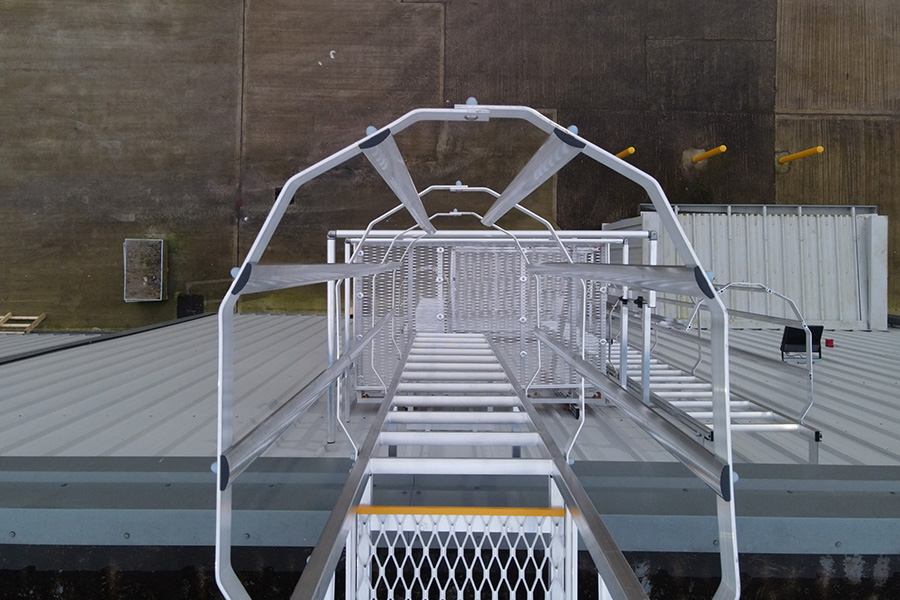
At Katt Safety, we supply a wide range of fixed access ladders in the UK to suit a wide range of building types, including angled ladders, vertical ladders, caged ladders, vertical line ladders, and modular step ladders. Each system can be fully configured to suit your requirements, so you can create safer, more practical access routes to the areas that matter.
Need a new or improved roof access ladder for your site? Simply fill out our online ladder configurator form to request your free quote.
FAQs
What is the best roof access ladder for commercial buildings?
The best roof access ladder for commercial buildings all depends on the height, available space, roof layout, and frequency of use. Angled or vertical fixed ladders are suitable for lower-level access, while caged or vertical line ladders are more appropriate for taller access points.
Do fixed access ladders in the UK need to be compliant with specific standards?
Yes, fixed access ladders in the UK should be designed, manufactured, and installed in line with The Work at Height Regulations 2005 and applicable British Standards. Katt Safety’s fixed access ladder range is designed to meet BS EN ISO 14122-4:2016 and BS 4211:2005+A1:2008 for ladder safety.
What is a vertical line access ladder?
A vertical line access ladder includes an integrated fall arrest system. Katt Safety’s RL50 series provides continuous fall protection at any point on the ladder when used with compatible PPE and appropriate training, making it suitable for vertical applications where floor space is minimal.
Can a roof access ladder be combined with other safety systems?
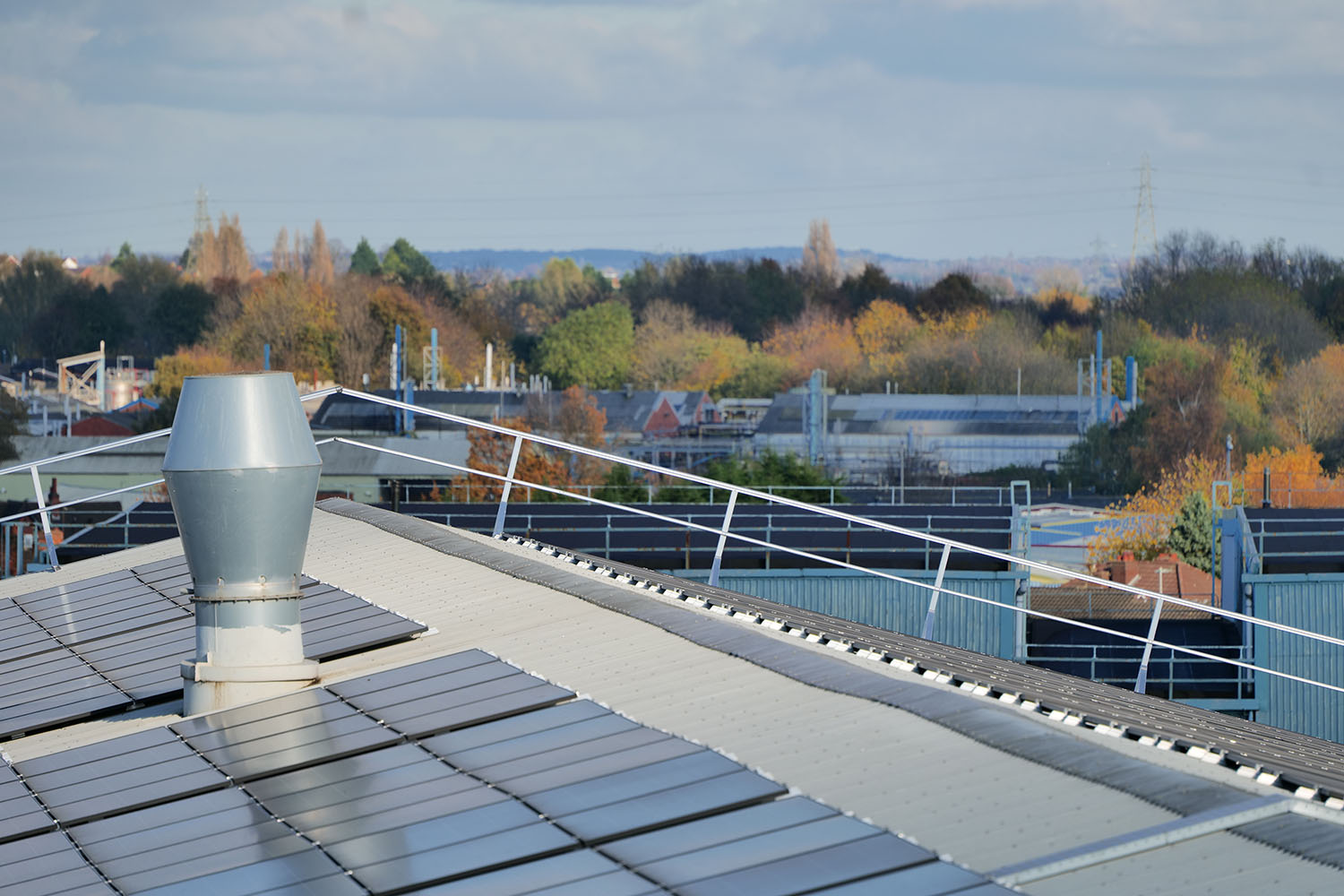
Yes, roof access ladders are often combined with guardrails, walkways, step overs, and access platforms to create a complete safe access route. This ensures that your workers are protected not only while climbing, but also once they are moving across the roof.