Key takeaways:
Roof safety should always be planned before installation work starts, not once your team arrives on site. You should ensure you have collective roof edge protection measures in place, such as guardrails and walkways, as they play a key role in keeping your workforce safe when they’re operating near exposed edges, plant zones, or access points. Make sure you identify and control any fragile surfaces, rooflights, and uneven roof areas before work begins, and ensure that your team can continue to safely access rooftop equipment once the project is complete.
Have you ever arrived on site ready to start an installation, only to find that the roof isn’t as safe or accessible as expected?
Regardless of whether you’re installing solar panels, HVAC equipment, plant machinery, or cable infrastructure, rooftop work often involves navigating unfamiliar layouts, fragile surfaces, exposed edges, and unclear access routes. And without the right access systems and fall protection measures in place, these routine installation tasks can expose your workers to serious hazards and put the success of the entire project at risk.
But the good news is that most rooftop hazards can be easily identified and controlled before installation begins. We’ve put together this helpful guide on roof safety for installation contractors, so you can keep your team safe and avoid unnecessary project delays.
Why roof installation work is so high risk
When carrying out installation work on a roof, you’re often dealing with multiple hazards at once. Your team may need to carry tools, move materials, work around existing plant equipment, or operate close to unprotected edges. They’ll likely be working in harsh weather conditions, too, which increases the risk of slips, trips, and falls.
It’s important to note that although installation work is often temporary, the risks are not. Even if your team is only working on the roof for a few days, you still need to ensure that safe systems of work are in place throughout every stage of the project. More on that below.
Laying the groundwork for safe roof installation
Follow the work at height hierarchy
It’s vital that you follow the work at height hierarchy when planning any roof installation work. The safest option is to avoid working at height wherever possible – but if that’s not practical, your next priority should be to prevent falls through suitable control measures. And if a fall risk still remains, you should take steps to minimise both the distance and impact of a fall.
Assess access routes and roof hazards
If you’ve determined that the roof installation work needs to go ahead, you need to have a clear understanding of how the installation will be carried out and the risks involved.
You’ll need to assess:
- How your team will safely access and exit the roof
- Where materials, tools, and equipment will be stored and moved
- Whether there are any fragile surfaces or rooflights
- The location of any exposed edges, openings, and changes in level
- Whether any additional temporary or permanent controls are required
Identify and control fragile roof risks
You should treat every roof with caution until a competent person has confirmed it is safe to access. Fragile materials, ageing roof sheets, rooflights, and poorly marked hazards can all create serious risks for your team. Make sure any fragile areas are clearly identified, marked, and controlled before installation starts. Depending on the roof and the task, you may need to install walkways, guardrails, skylight covers, stagings, or restricted access zones.
Protect your team throughout installation work
Install suitable roof edge protection
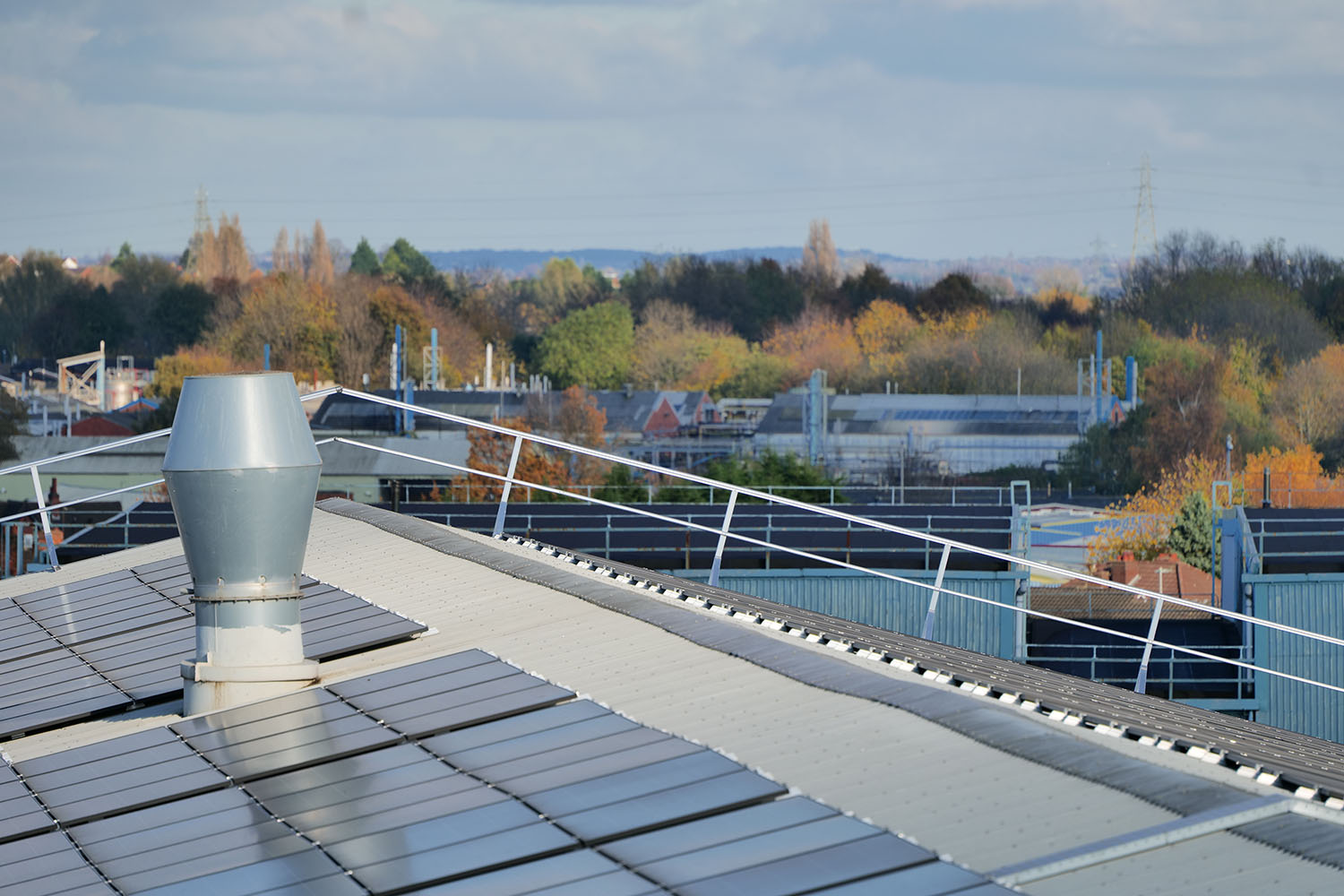
Roof edge protection is one of the most effective ways to reduce fall risks on flat and low-slope roofs. Unlike personal fall protective systems, roof edge protection (i.e. guardrails) help to keep everyone safe without relying on harnesses, anchor points, or specialist rescue procedures. We offer a range of permanent roof guardrail systems to help your team work safely around exposed edges.
Create safe routes across the roof
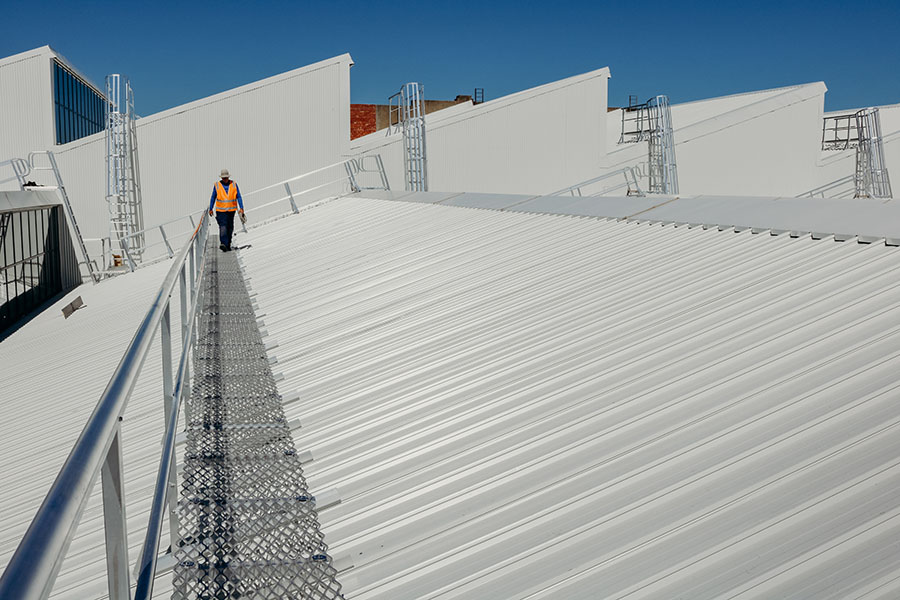
Getting your team safely onto the roof is only part of the challenge. Once they’re up there, they need a clear and stable route to the work area – without this, they may take dangerous shortcuts or unknowingly move too close to hazards. We supply a variety of fixed and loose-lay walkway systems to help guide safe movement across the rooftop and reduce unnecessary exposure to risk.
Ensuring safe access beyond installation

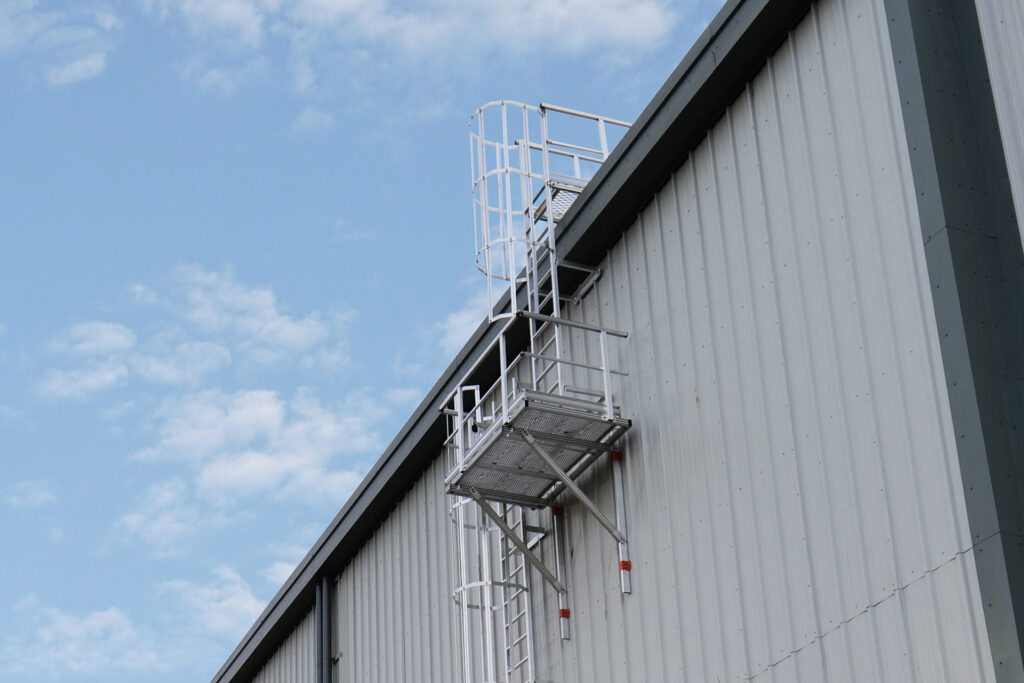
The risks don’t necessarily end once installation is complete. If your permanent safety equipment (e.g. walkways, guardrails, stepovers, fixed ladders) needs regular inspection, servicing, and maintenance throughout its lifespan, you’ll need to build this into your regime.
Environmental factors such as weather exposure, corrosion, accidental damage, or changes to the roof layout can all impact the effectiveness of safety equipment over time. Completing regular inspections and maintenance will ensure that the systems continue to perform as intended and remain compliant with all the relevant standards, while also giving you an opportunity to identify emerging hazards before they become serious risks.
Improve roof safety on your next installation project with Katt Safety
Roof safety for installation contractors is about much more than simply meeting compliance requirements. It’s about protecting your people, reducing risks, and ensuring every stage of your project can be completed safely and efficiently.
We design and supply a range of modular height safety systems, from guardrails and walkway systems to access ladders, skylight covers, and bespoke access structures, to help you create safer rooftop environments.
Not sure which safety system you need? Simply send us your drawing and we’ll help you find the right solution for your project.
FAQs
What is the biggest roof safety risk for installation contractors?
The biggest roof safety risk for installation contractors is falling from height, particularly when workers are operating near exposed roof edges, fragile surfaces, rooflights, or unprotected openings. Installation work can also involve carrying tools and materials, which increases the likelihood of slips, trips, and falls.
When should roof edge protection be installed?
Roof edge protection should be considered before any installation work begins, especially if contractors will be working near an exposed roof edge or accessing the roof regularly throughout the project. Collective protection such as guardrails should be prioritised, as it helps protect everyone from working in the area.
Do installation contractors need permanent or temporary roof safety systems?
Whether or not you need permanent or temporary roof safety systems all depends on the project, the roof layout, and how the roof will be used in the future. Temporary systems may be suitable for short-term works, but permanent systems are often a better option if your rooftop equipment needs ongoing inspection, servicing, or maintenance.
How can contractors move safely across a roof during installation?
Contractors should use clearly defined access routes that keep them away from roof hazards such as exposed edges, rooflights, fragile materials, and changes in level. Roof walkway systems can help to create safe, stable routes across the roof while also protecting the roof surface from damage.