The short answer:
Fixed access ladders are usually the best choice if you need regular, repeatable access, as they provide a permanent route to roofs, plant areas, and raised platforms. Temporary access towers can still be suitable for short-term tasks or one-off works, but they rely heavily on correct assembly, inspection, and site conditions every time they’re used. The safest option for your site all depends on the task, frequency of use, duration, and environment.
Not sure what the safest or most compliant way to access a roof, plant area, or raised platform is? Fixed access ladders and temporary access towers are two of the most common solutions for working at height. However, they’re designed for very different situations, so it’s vital that you understand the key differences between the two.
We’ve put together this comprehensive guide comparing fixed ladder systems and temporary access towers across safety, compliance, cost, and longevity, so you can select the safest and most practical option for your site.
What is a fixed access ladder?
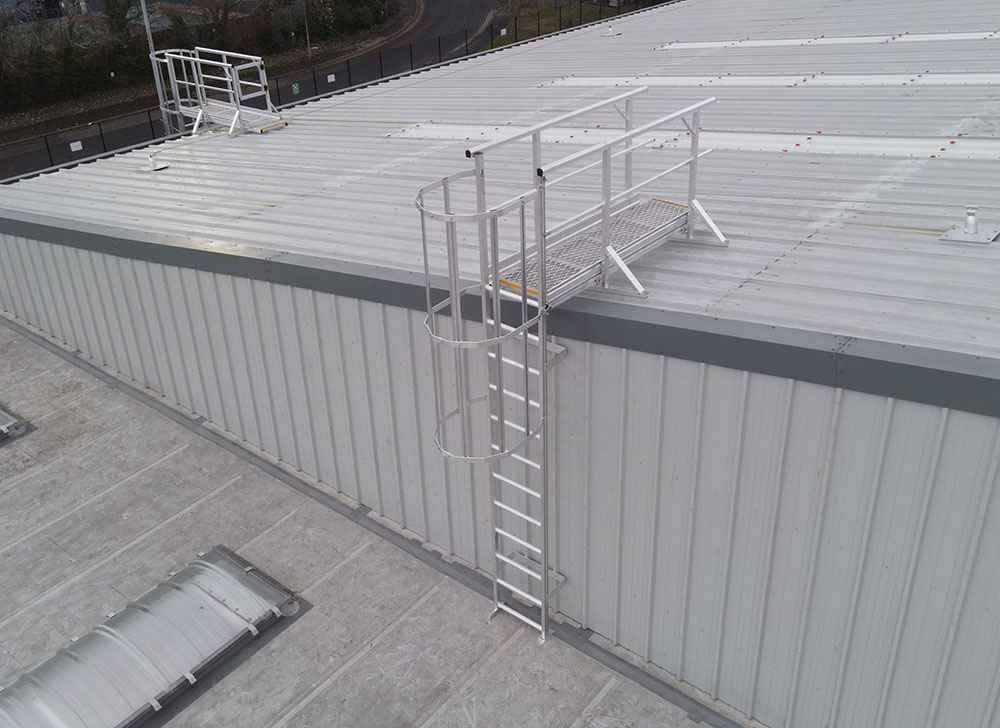
A fixed access ladder is a permanently installed ladder system that provides a safe and reliable route to elevated areas. It’s used to access rooftops, plant equipment, service platforms, and other areas that require routine maintenance or inspection.
Because it’s designed specifically for the building and intended use, a fixed access ladder offer a consistent means of access that remains readily available whenever it’s needed. This makes it ideal for commercial and industrial sites where working at height forms part of ongoing operational or maintenance activities.
What is a temporary access tower?
A temporary access tower is a mobile or assembled structure that’s used to provide short-term access for work at height. It’s commonly used in scenarios where the access point changes as the job progresses, such as maintenance, installation, fit-out, or construction work.
A temporary access tower can provide a stable working platform, provided it has been correctly selected, assembled, inspected, and used by competent people. However, because it’s a temporary solution, its safety depends heavily on how it has been installed and maintained, and what the ground conditions are like.
Fixed ladders vs temporary access towers: a quick comparison
| Factor | Fixed access ladder | Temporary access tower |
| Best for | Regular, repeatable access to roofs, plant, and platforms | Short-term or changing access needs |
| Safety | Provides a permanent, controlled access route that’s designed for the site | Can be safe when correctly assembled, inspected, and used |
| Compliance | Can be designed to relevant fixed ladder standards, including BS EN ISO 14122-4:2016 | Must be assembled and inspected in line with manufacturer guidance and The Work at Height Regulations 2005 |
| Cost | Higher upfront cost but offers better long-term value | Lower initial hire cost, but the cost of repeated hire and labour can add up |
| Longevity | Long-term solution that needs regular inspection and maintenance | Temporary solution for specific tasks or phases |
Safety: which option gives you better control?
A fixed access ladder provides a dedicated route that’s always in the same place, and is specifically designed around the building and the task at hand. Your workers know where to access the roof, where to step on and off, and how to move safely between levels.
A temporary access tower can be safe, but there are more variables to think about. You’ll need to ensure that:
- The tower has been built correctly
- The ground underneath is level
- All guardrails, toe boards, braces, and stabilisers are in place
- The tower has been inspected after assembly
Best fit for safety: Fixed access ladders – they provide a permanent, designated route with fewer variables on the day of use.
Compliance: what do the regulations say?
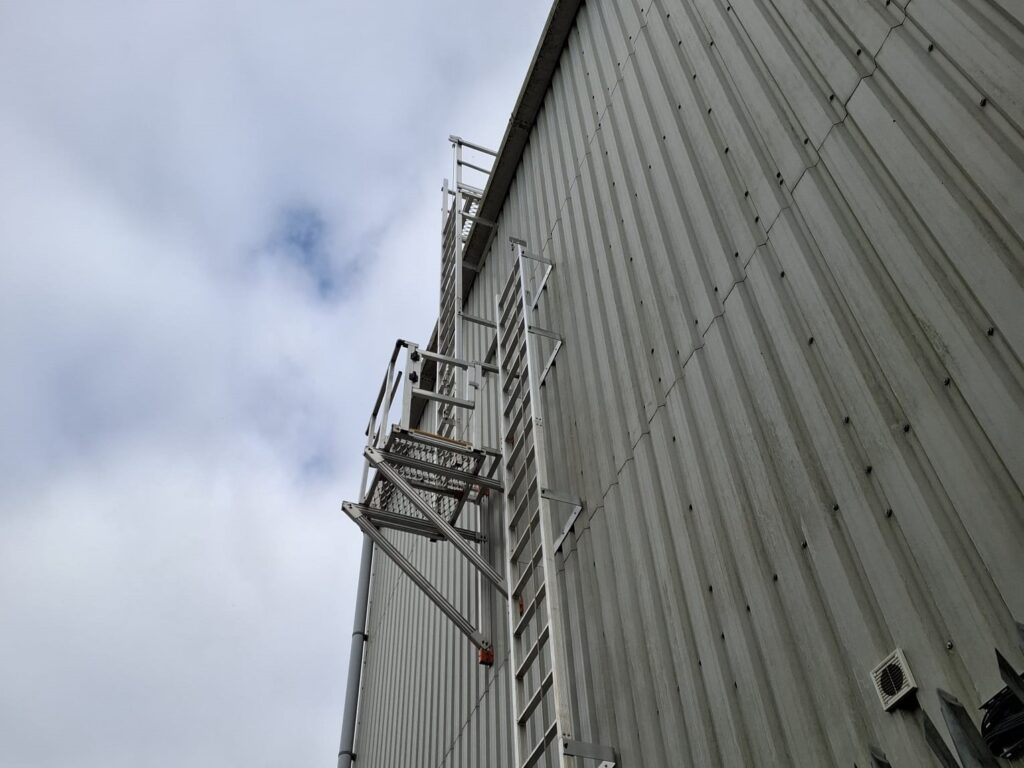
There are a number of standards that apply to ladder installations, including The Work at Height Regulations 2005. These regulations state that you should select the right access method based on the task, frequency of use, duration, environment, and risk level.
BS EN ISO 14122-4 is a key standard for fixed ladders that are used as permanent means of access to machinery, plant, and building areas. Katt Safety’s fixed ladders are compliant with BS 4211:2005+A1:2008 and BS EN ISO 14122-4:2016, ensuring they meet strict requirements for ladder design, dimensions, rest platforms, fall protection, and safe access/egress.
Temporary access towers aren’t covered by any British Standards. Instead, you are advised to follow the manufacturer’s instructions, use all the required components, and ensure that inspections are carried out by a competent person.
Best fit for compliance: Fixed access ladders – they’re much easier to manage for long-term compliance.
Cost and longevity: which offers the best value?
A temporary access tower is cheaper to hire if it’s only being used once. However, the costs and time associated with hire, delivery, assembly, inspections, and dismantling can quickly add up if you need regular access.
A fixed access ladder is more expensive to purchase upfront, but it’s designed to serve your site for the long term. Once installed, it provides immediate access whenever your maintenance teams or contractors need it, making it more cost-effective in the long run than repeatedly hiring temporary solutions.
Best fit for value: Fixed access ladders – they offer better long-term value if access is needed regularly.
Keep your site safe and secure with Katt Safety’s fixed access ladders
At Katt Safety, our fixed access ladders are designed to support safe and compliant access around commercial and industrial sites. Whether you need access to a rooftop, plant area, service platform, or another elevated location, our systems can be configured to suit the exact height, structure, and access needs of your building.
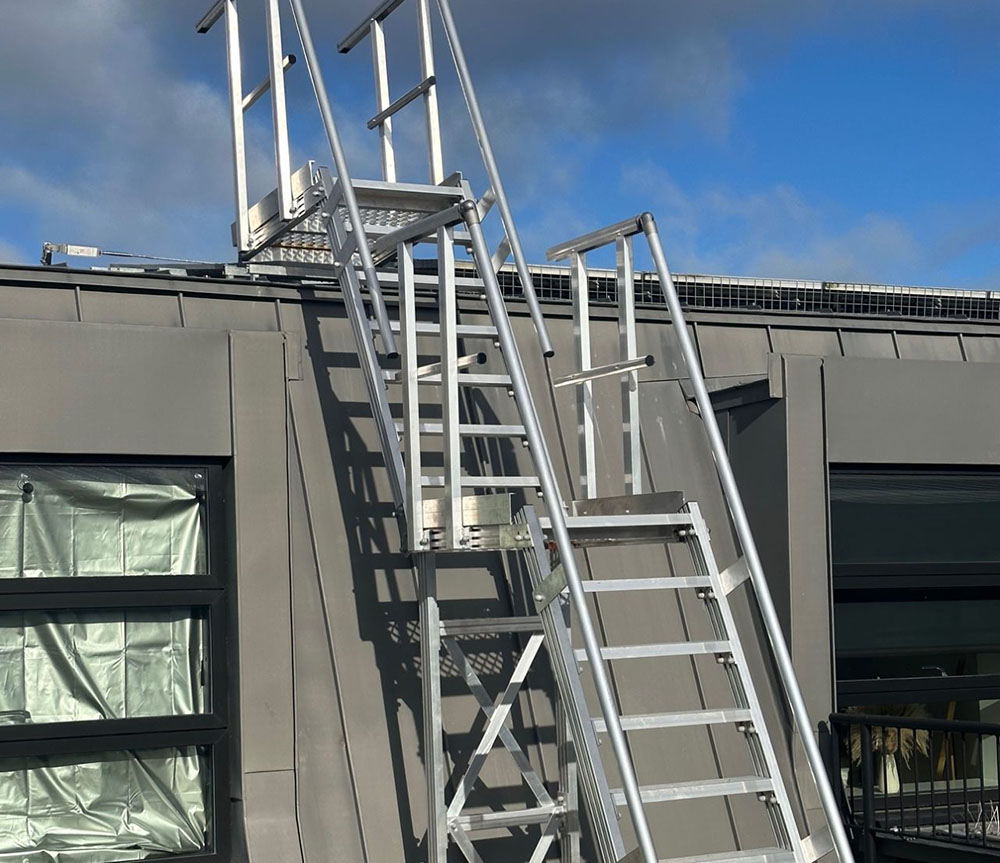
All our fixed ladders can be tailored to your site’s specific requirements, with options including angled ladders, vertical ladders, cages, guardrails, landing platforms, and security gates. This flexibility allows you to create a safe and secure access route that works for your site, your team, and your maintenance schedule.
Explore our range of fixed access ladders to find the right access solution for your building.
FAQs
What standards apply to fixed access ladders?
BS 4211:2005+A1:2008 and BS EN ISO 14122-4:2016 are the most commonly used standards for fixed ladder design, particularly for permanent access to machinery, plant, and roof areas.
When should I use a temporary access tower?
A temporary access tower may be suitable if you’re completing short-durating works or one-off maintenance tasks, or if the access location needs to change regularly.
Do fixed ladders need fall protection?
Depending on the height, layout, and risks present on site, fixed ladders may require additional fall protection such as cages, fall arrest systems, guardrails, or landing platforms.