
Key takeaways:
Cold winter temperatures and harsh weather conditions put extra strain on every ladder, guardrail, and walkway that your team relies on for roof access. The presence of wind, rain, and ice, paired with the shorter daylight hours, make it much easier to miss damage that would otherwise be obvious in summer. The Work at Height Regulations 2005 mandates that any equipment used for work at height should be inspected at regular intervals, and again after any event that could jeopardise its safety, including severe weather. Before winter sets in, check the rungs, stiles, and fixings on your ladder against BS 4211:2005+A1:2008. You should also inspect the guardrails, walkways, drainage, and skylights on your roof for signs of wear or debris build-up.
When did you last inspect your height access equipment? Our fixed access ladders, guardrails, walkways usually only get attention once something’s gone wrong – and at that point, it could be a genuine safety and compliance issue.
Autumn is the ideal time to inspect your equipment and repair any damage, before the harsh winter weather sets in. Below, we share our roof maintenance and ladder inspection checklists covering everything you need to address before winter.
When should you inspect your height access equipment?
The Work at Height Regulations 2005 require you to carry out inspections of all height access equipment, including ladders, guardrails, and walkways, on a regular basis. This includes:
- Before it’s used for the first time
- On a regular set schedule throughout its lifespan
- Straight after anything that could have damaged it, like a storm
The Regulations don’t set an exact number of weeks or months between inspections. That’s up to you to determine based on your risk assessment and the manufacturer’s guidance. British Standards such as BS 4211:2005+A1:2008 and BS 13700:2021 are also useful in determining exactly when checks should be carried out for specific equipment.
Autumn is a sensible time to run your regular inspection, ahead of any winter storms that will likely trigger extra checks. Here’s what you need to check on each piece of equipment.
Fixed ladder inspection checklist: what you need to check this autumn
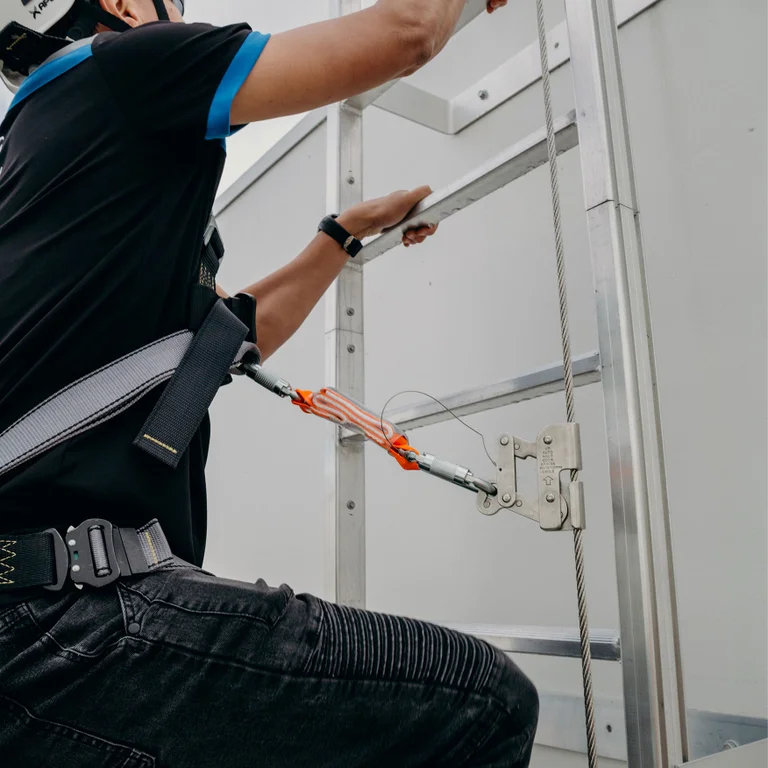
You’ll need to ensure that your fixed access ladder is free from damage and compliant with BS 4211:2005+A1:2008. Signs of corrosion and debris are much easier to rectify outside of winter, so we recommend working through the following steps this autumn:
1) Check the rungs and stiles
Inspect the ladder rungs and side rails for any signs of corrosion, pitting, cracking, or wear. This is especially common at the welds and joints, as moisture tends to collect here.
2) Confirm the fixings are secure
Verify that the wall brackets and stand-off fixings to the building are secure and free from corrosion. These are the points that are most likely to loosen over time as the building fabric moves.
3) Inspect the cage or fall arrest rail
If your ladder is caged or fitted with a guided-type fall arrester, check that all the hoops and rails are intact, and that the sliding sleeve moves freely.
4) Examine the landing and access points
Clear any debris, moss, or standing water from the base and top landing. You should also confirm that any locking or security devices are still functioning correctly.
5) Review relevant signage and documentation
Check that the ladder has a current inspection label showing when it was last inspected. Also confirm whether any problems that were flagged at the last inspection have since been fixed.
Roof maintenance checklist: inspecting your guardrails, walkways, and more

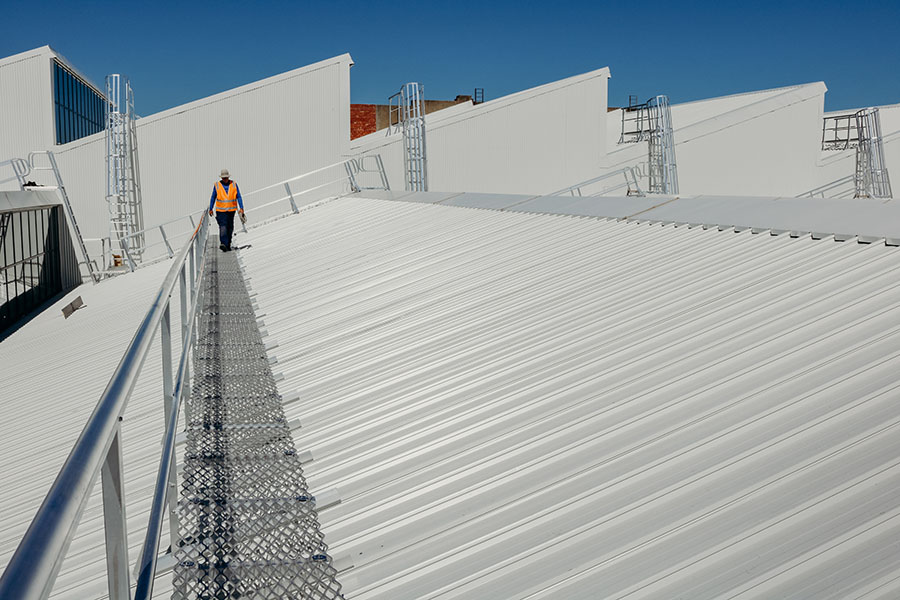
Fixed access ladders are essential to getting your workers onto the roof safely. But you also need to ensure that they will be safe and free from injury while they’re working on the rooftop. Here’s what you need to check:
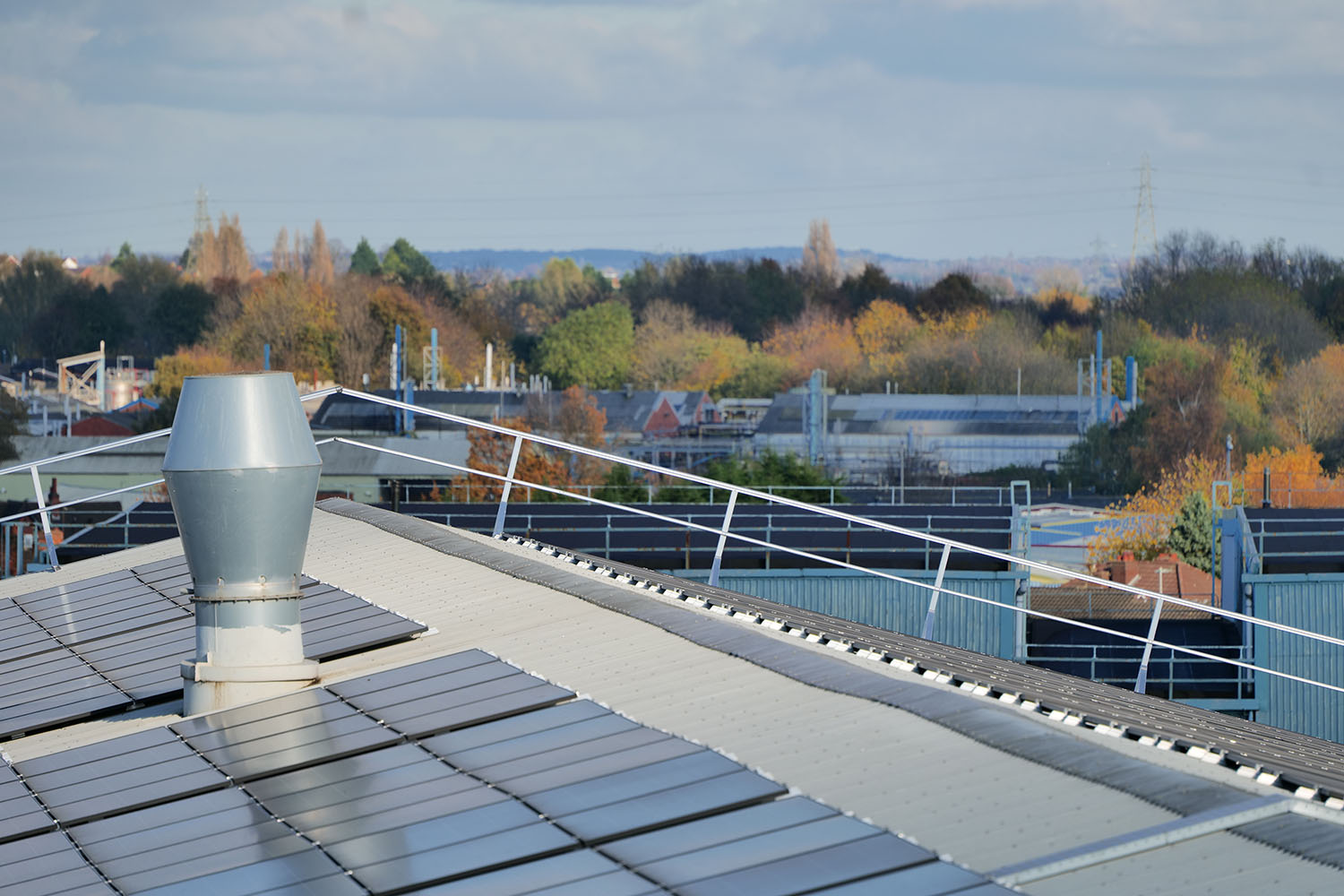
1) Inspect the condition of your guardrails
Check all posts, rails, and toe boards for signs of corrosion or movement. You’ll also need to confirm whether your counterweighted or freestanding guardrails still meet their original wind loading calculations.
2) Examine your roof walkways
Look for algae, moss, or debris build-up on your walkways. These can reduce grip and make slips and trips more likely. You should also ensure that the fixings and joints between sections haven’t become loose.
3) Clear all drainage channels
Remove any leaves and debris from your gutters and rainwater outlets. Blocked drainage is one of the most common causes of standing water and ice on flat roofs.
4) Check your skylights and rooflights
Confirm that your skylight cover’s fixings and edge seals are secure. You should also look for any signs of cracking or UV degradation, or any gaps that are large enough to step through.
5) Survey your flashings and membrane
Check all flashings, seals, and membrane edges for lifting or damage. The winter rain and constant freeze-thaw cycles will only make these worse.
Get your access equipment winter-ready with Katt Safety
Identified any issues when carrying out your equipment checks and worried about the cost of repairs? We can help you specify access equipment that will last through all the seasons, not just the upcoming winter.
Whether you need a fixed access ladder, a roof guardrail, or a walkway, we’ll design a modular system that’s specifically tailored to your site and can be adapted or changed as your requirements evolve – so you don’t have to keep paying for expensive repairs or rework every season.
Contact us to discuss your requirements and let’s get your access equipment winter-ready.
FAQs
How often should a fixed ladder be inspected?
You should check your fixed ladder before each use, and carry out a periodic inspection at a frequency set by your risk assessment. Autumn is a sensible time to carry out an inspection, before the winter weather sets in.
What’s included in a pre-winter rooftop maintenance checklist?
Your pre-winter roof maintenance checklist should cover guardrail and walkway condition, drainage outlets and gutters, skylight covers, flashings, and the membrane around any roof penetrations. Prioritise anything that can trap water or debris before the first frost occurs.
Do I need to inspect roof access equipment after a storm?
Yes, you should check your roof access equipment after a storm. The Work at Height Regulations 2005 mandate that you inspect your equipment after any event that could potentially jeopardise its safety, including high winds and storms.
Who’s responsible for winter safety checks on a commercial roof?
The building owner or facilities manager is responsible for winter safety checks on a commercial roof. This is regardless of who last installed or maintained the equipment.
Is a visual check from the ground level enough for a ladder inspection?
No. A proper ladder inspection involves checking the rungs, stiles, fixings to the building, and any cage or fall-arrest rail up close. Most of these can’t be assessed accurately from the ground.