Key takeaways:
As the roofing contractor, you are responsible for preventing falls from height under The Work at Height Regulations 2005. You should always prioritise collective edge protection, such as guardrails and walkways, ahead of personal fall arrest equipment. If your rooftop is accessed less than once per month, temporary edge protection may be suitable. But if your rooftop is accessed monthly or more, you’ll need to invest in a permanent solution that complies with the relevant British Standards. Katt Safety offers a range of permanent protection measures that help to keep your rooftop safe and compliant, including guardrails, walkways, skylight covers, and fixed access ladders.
Did you know that falls from height accounted for a quarter of all work-related fatal injuries in 2025-2026?
Every rooftop that your maintenance team steps onto carries that risk, whether they’re completing a one-day repair or a season-long refurbishment. And as the contractor, you’re responsible for reducing those risks and ensuring your site remains compliant with roof safety regulations.
We’ve created this handy rooftop safety for contractors guide to help you understand exactly what you need to put in place.
Your duties as a roofing contractor
Under The Work at Height Regulations 2005, you are responsible for the safety of anyone you send onto a roof. That means you need to plan the job properly before they set foot on the ladder, supervise the work while it’s happening, and make sure your team has the right equipment and training for that specific roof.
You should always complete a risk assessment to check what protection is already on the rooftop. If the assessment uncovers a missing guardrail or worn edge protection, it’s your duty to flag it to the building owner and get it fixed. You should never just work around these issues with personal protective equipment (PPE).
Below, we share some practical ways to ensure you fulfil your roof safety compliance obligations.
Roofing contractor safety guide: four ways to keep your rooftop safe and compliant

1) Follow the hierarchy of controls
The Work at Height Regulations 2005 mandate that you always follow the hierarchy of controls when planning rooftop work. You should always follow the steps below in the correct order:
- Avoid working at height if possible
- Use collective edge protection, such as guardrails, if the work can’t be avoided
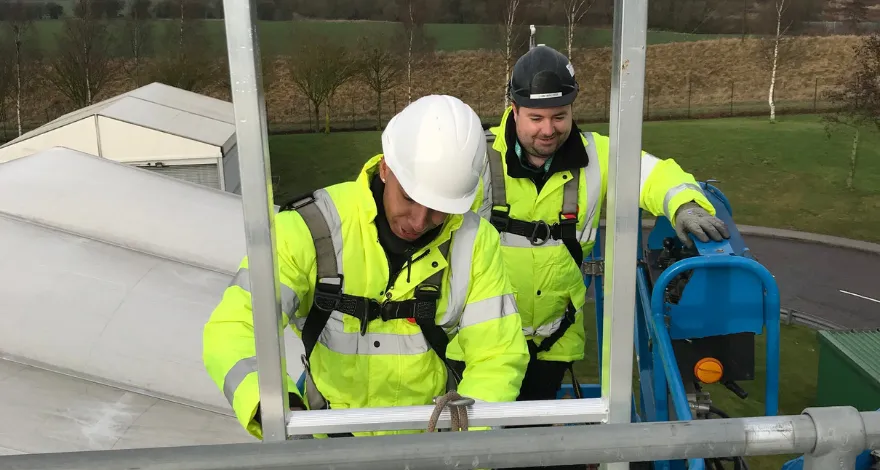
- Treat PPE like harnesses as a last resort
Collective edge protection automatically protects everyone on the rooftop, while PPE only works if it’s fitted and used correctly by each individual. That’s why PPE should only ever be a last resort, and you should instead focus your attention on installing safe and compliant edge protection.
2) Decide whether you need temporary or permanent protection
If your roof needs to be accessed monthly or more often, then permanent edge protection is the safest option. Below that frequency, temporary protection that’s compliant with BS EN 13374:2013+A1:2018 is usually acceptable.
Cost should also be a consideration when choosing between temporary or permanent protection. The cost of repeatedly hiring and reinstalling temporary protection can soon add up. Permanent systems are typically more expensive to purchase upfront, but are often more cost-effective in the long term.
3) Choose the right protection measures for your rooftop
No two rooftops are ever the same, so it’s vital to ensure that the protection you choose works for your specific environment. At Katt Safety, we offer a range of permanent protection measures that work for a variety of rooftops. These include:
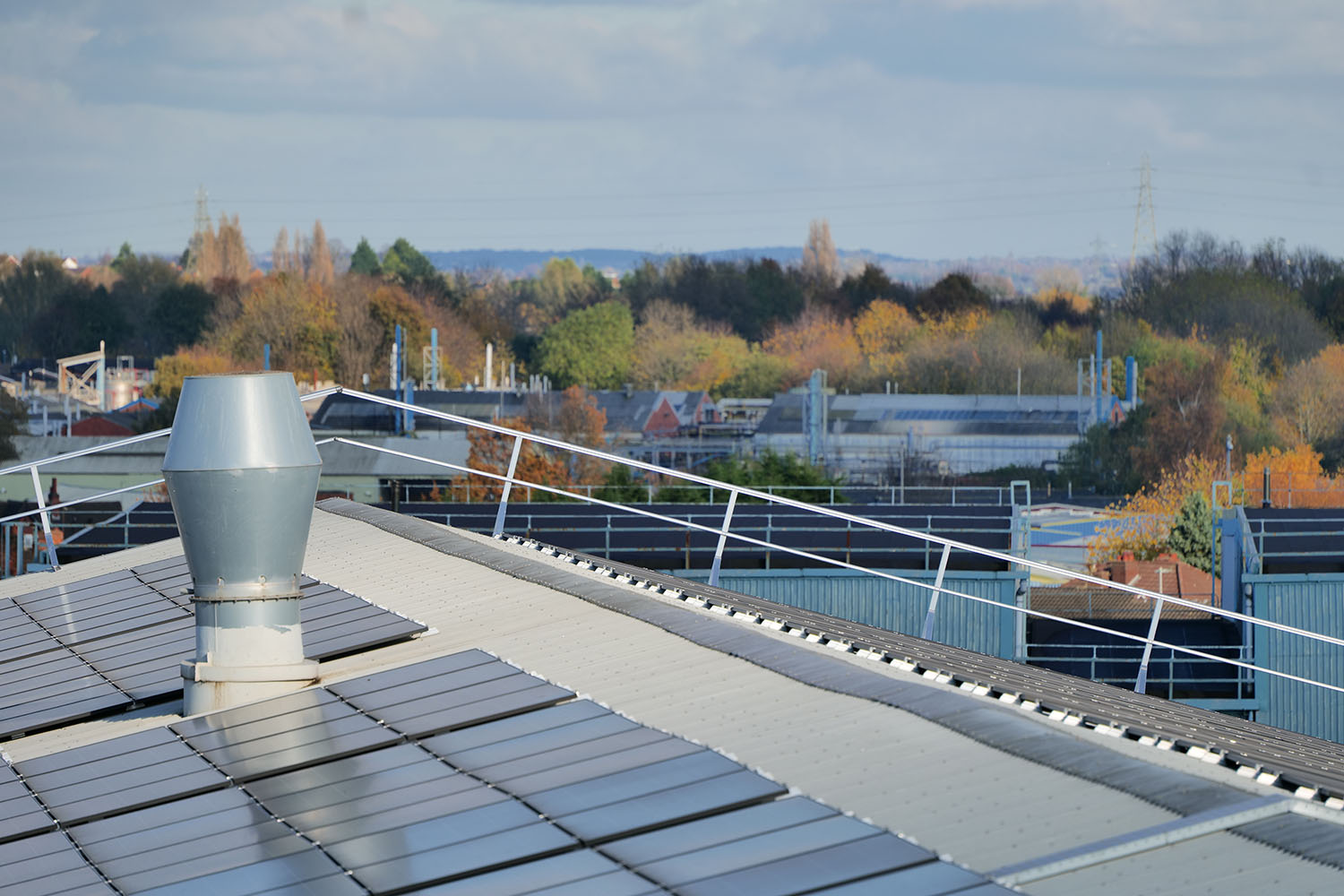
- Fixed and freestanding roof guardrail systems that keep everyone safe while working on roofs
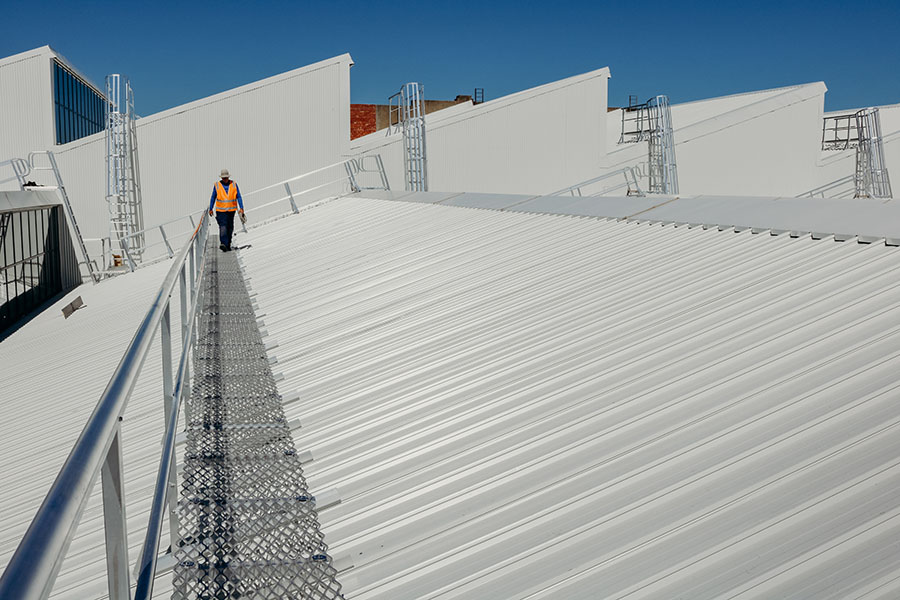
- Fixed and loose-lay roof walkway systems that create a safe and reliable route across the rooftop
- Skylight covers that prevent your team from falling through brittle skylights, rooflights, and roof surfaces
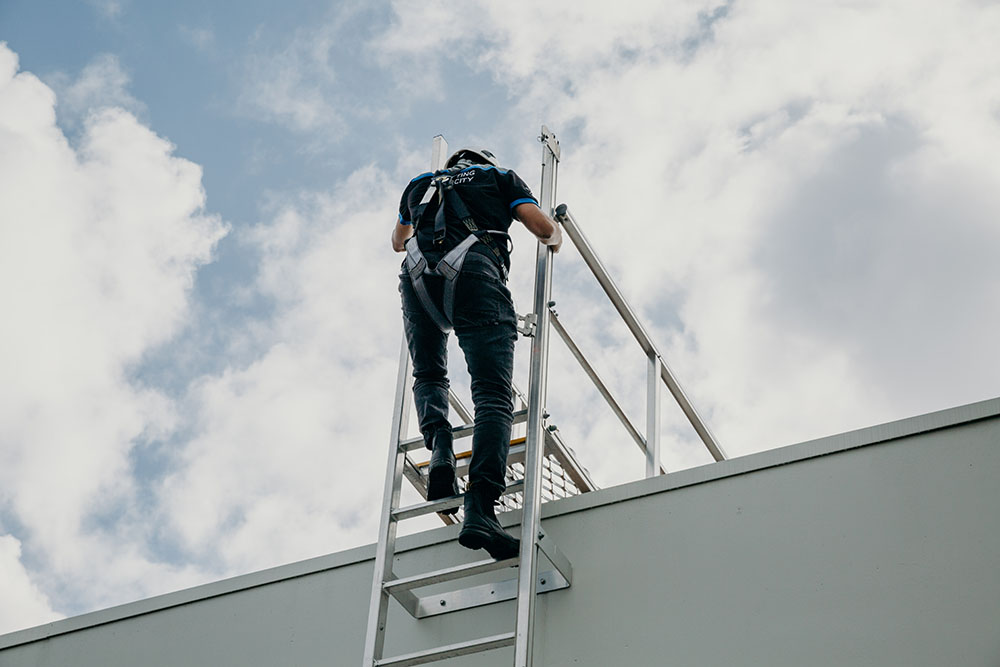
- Fixed access ladders that enable your crew to get onto the roof safely, with optional cages, mounts, and security features
All our products are designed in line with the relevant British Standards and The Work at Height Regulations 2005, giving you total peace of mind that your rooftop is safe and compliant.
4) Regularly inspect and maintain your systems
Your work doesn’t end once the edge protection has been installed. Permanent systems should be inspected at least once every 12 months, and you’ll need to keep a System Technical File up to date for the entire lifespan of the system. You should also check the system before each use, and again after anything that might affect its stability, such as high winds.
Make sure you build these inspections into your maintenance schedule rather than waiting for a problem to occur. That way, your team will continue to remain safe while working on the roof, and you can avoid any penalties associated with non-compliance.
Reduce risks on your rooftop with Katt Safety
We design and manufacture a range of modular aluminium access and fall protection systems that help to keep your rooftop safe and compliant. Each system is modular in nature and exceptionally easy to install, as well as being backed by a 10-year warranty to give you ultimate peace of mind.
Not sure which rooftop fall protection is right for you? Simply send us your drawings and a brief summary of your site, and we’ll recommend the safest solution for your rooftop.
FAQs
Why do I need to follow the hierarchy of controls on a roof?
Under The Work at Height Regulations 2005, you are legally obliged to follow the hierarchy of controls when planning any rooftop work. The controls state that you should avoid the work if possible, and use collective edge protection such as guardrails if the work needs to go ahead. You should always treat PPE as a last resort, as there are more risks involved.
Do I need temporary or permanent edge protection?
If the roof is accessed monthly or more, then permanent edge protection is the safer and more cost-effective option. If the roof is accessed less than once per month, then temporary edge protection is usually adequate.
What products protect against falls on a rooftop?
Guardrails and walkways help to protect the edges and routes across a roof, skylight covers prevent falls through fragile skylights and rooflights, and fixed access ladders help to get your team safely onto the roof to complete the work.
How often do permanent guardrails need to be inspected?
Permanent guardrails must be inspected at least once every 12 months, as mandated by BS 13700:2021. You’ll also need to keep a System Technical File up to date for the entire lifetime of the system.