Key takeaways:
If your fixed ladder doesn’t have a lock, gate, or guard on it, then in theory anyone can climb it. That could mean that a curious member of the public or even a trespasser could access sensitive areas on-site, and potentially injure themselves while doing so. As the building owner, you could be held liable if an accident occurs while someone is climbing your ladder without permission. Your insurer expects you to take reasonable measures to prevent unauthorised access to your ladder, meaning they might not pay out if a claim is made against you. Katt Safety’s RL426 Lockable Ladder Door and RL425 Ladder Cage Gate help to mitigate these risks and allow you to regain control over who accesses your rooftop.
Are you certain about who has access to your fixed ladder? If the answer is “not really”, then that’s not good enough.
An unsecured ladder could enable a member of the public or a trespasser to access your rooftop or plant room. If they injure themselves while doing so, this can leave you with a huge legal and financial headache. A lockable ladder helps to remove that risk entirely, ensuring that nobody can access elevated areas without permission. Here’s how…
The issues with unauthorised roof access
Legal liability
If someone accesses your ladder and injures themselves while climbing it, then you could potentially be sued for damages.
Under the Occupiers’ Liability Act 1984, you have a duty of care to everyone who accesses your site, including those who do so without permission, if the following conditions apply:
- You’re aware that a danger exists on site
- You know or could reasonably expect someone to come across that danger
- It’s a risk that you’re expected to protect against
An unsecured ladder that provides access to a roof edge or other fall risk is a clear example of that kind of danger. Your ladder doesn’t necessarily have to be locked by law – but if someone is injured while climbing yours without permission, a court will examine exactly what steps you took to prevent that unauthorised access in the first place.
Insurance requirements
Most commercial property and public liability insurers include security expectations within their policy conditions. If you fail to meet these requirements, your insurer could fail to cover you if an incident occurs. Fixed ladders may not necessarily be explicitly named within your policy T&Cs; but if your ladder could provide unsupervised access to a roof or upper level, then this may be flagged as a reason for refusal.
If you leave your ladder unsecured, you may also find that your insurer limits the level of cover they’re willing to provide, or they issue you with a higher premium.
How Katt Safety’s lockable ladders limit your liability
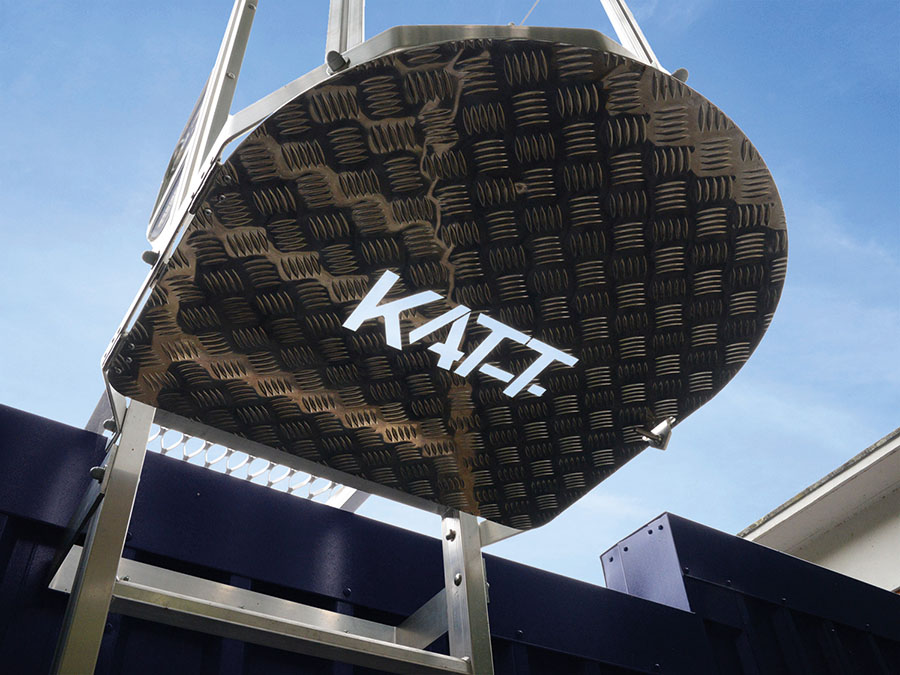
A lockable ladder helps to solve both of the problems covered above. Fitting a lock, gate, or guard to your ladder helps you meet your duty of care obligations. If an accident occurs and a court or insurer ever asks what you did to prevent unauthorised access, a lockable ladder is clear evidence that you took reasonable steps to protect against it.
At Katt Safety, we offer a range of ladder security options to help guard your fixed ladder, including:
RL426 Lockable Ladder Door
We supply a lockable ladder door that’s compatible with our RL30 series of vertical fixed ladders. The door fixes directly to the body of the ladder and can be locked with a standard padlock. This essentially converts the lower section of the ladder into a locked door, meaning nobody can step onto the rungs without a key. Our ladder door is built from high-grade aluminium and stands at 240mm tall, complete with a handle kit and all the fixings you need.
RL425 Ladder Cage Gate
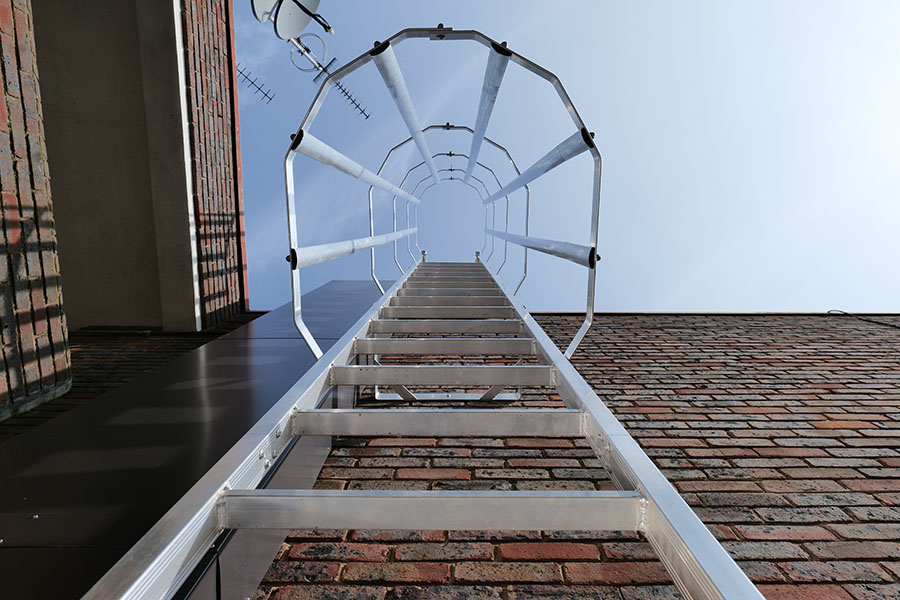
We also provide a ladder cage gate that’s designed for our RL40 series of fixed caged access ladders. The gate fixes onto the base of the cage rather than the ladder body and locks with a padlock – protecting the only entry point into the cage. It measures 710mm by 715mm and is built from the same high-grade structural aluminium as the RL426 ladder door, and comes with a hinge and lug kit for easy fitting on-site.
Keep your ladders secure with Katt Safety
Katt Safety’s lockable ladder doors and ladder cage gates provide the ideal solution to help you prevent unauthorised roof access and meet your duty of care obligations.
Not sure which option is right for your site? Our safety experts can help assess your ladder configuration, access frequency, and insurer’s requirements, before specifying a lockable ladder or guard that works for you. Get in touch to discuss your requirements.
FAQs
Do I legally need to lock my fixed ladders?
No, you aren’t legally required to lock your fixed ladders. However, the Occupiers’ Liability Act 1984 states that you can be held liable if someone accesses your ladder without permission and injures themselves while doing so.
What’s the difference between a lockable ladder and a ladder guard?
A lockable ladder is a ladder that can’t be climbed without a key. A ladder guard is the physical accessory that helps to achieve this, for example a ladder cage gate or access door.
Does ladder security help with insurance requirements?
Yes, ladder security can help with your insurance. Insurers commonly assess site security during underwriting and risk surveys. Having a padlocked access point shows that you’ve taken reasonable precautions against unauthorised access, which can support your claims and renewals processes.
Is a cage gate or a lockable door right for my ladder?
It all depends on whether your ladder already has a fall arrest cage. If it does, then Katt Safety’s RL425 Ladder Cage Gate could be the ideal solution. But if you have an open vertical ladder without a cage, then the RL426 Lockable Ladder Door may be more suitable.