
The short answer:
When choosing a ladder landing platform, you need to take these two things into account: the pitch of your roof, and any protection that’s already in place when you step off the ladder. Adjustable landing platforms are ideal for pitched roofs, because the platform angle adjusts to keep your landing level. Fixed bridging plates are suitable for flat roofs, helping to create a level connection between the ladder and the surface. Parapet platforms are compatible with parapet walls. Remember that a landing platform only makes the step off the ladder safe – you’ll still need to install a guardrail or walkway if there’s a risk of falling once your workers are on the roof.
HSE data reveals that falls from height accounted for around a quarter of all workplace fatalities in 2025-26. You may be surprised to read that many of these incidents happen while someone is stepping off a ladder, not while they’re climbing it.
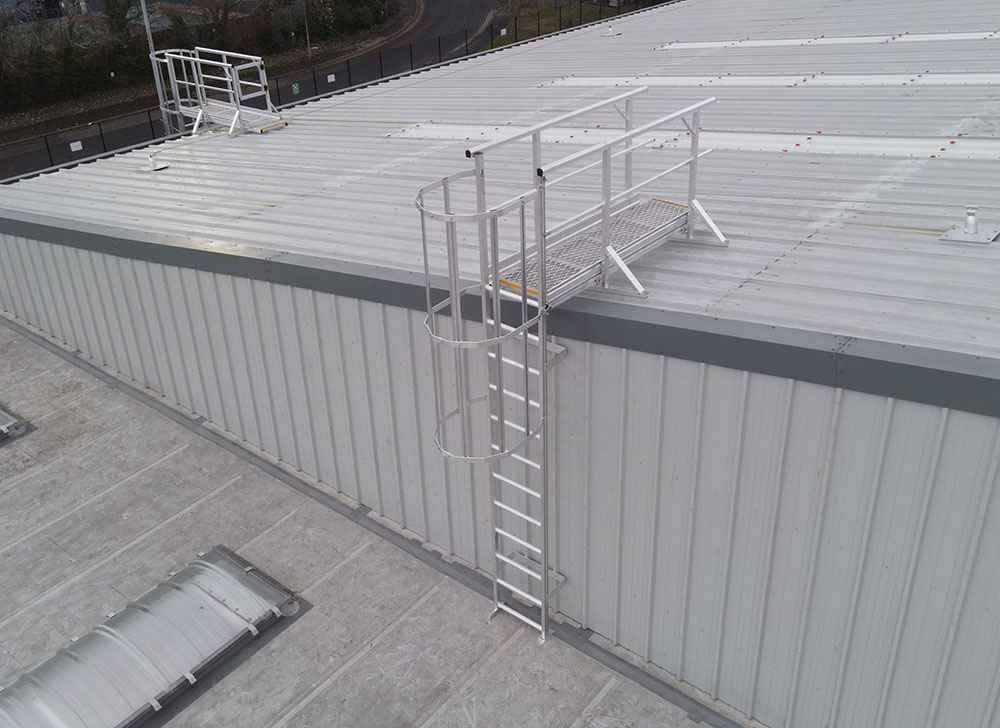
That’s exactly where a ladder landing platform comes in. It allows your personnel to step onto a stable, level surface once they reach the top of the ladder, rather than straight onto a sloped roof or an unguarded parapet.
At Katt Safety, we offer four ladder landing platforms that complement our fixed access ladders and can be configured to match your roof exactly. Here’s a breakdown of each one, so you can choose the right option for your site.
What are the ladder landing platform options?
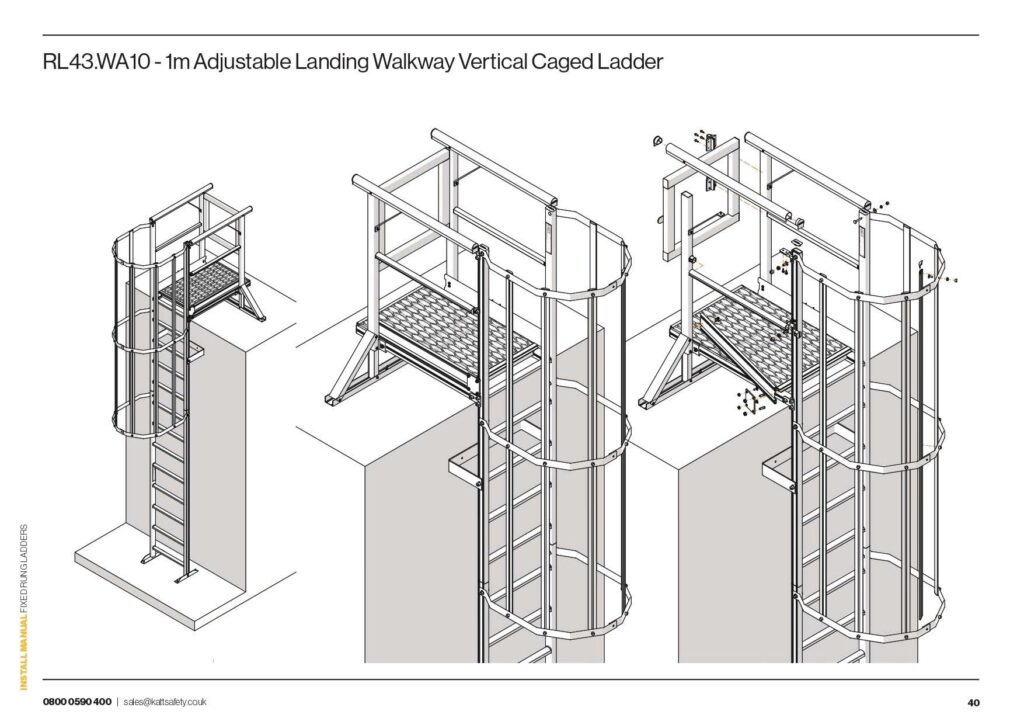
1m adjustable landing platform
What is it?
A 1m adjustable ladder safety platform that sits at the top of your ladder. You can vary the platform height to match your roof’s pitch, so that your workers always step onto a level, stable surface – regardless of the angle behind it.
When to use it
Choose this option if you have a pitched roof with a guardrail or wall protecting the landing point. This protection ensures your personnel are not in immediate danger of a fall, so the shorter 1m length should be plenty long enough.
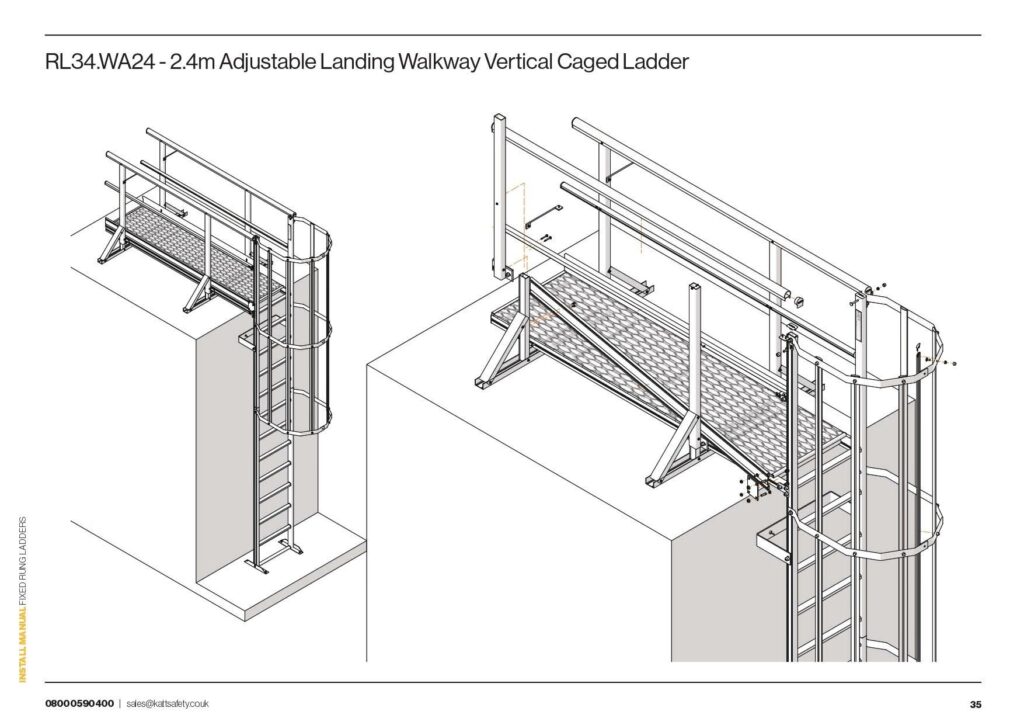
2.4m adjustable landing platform
What is it?
The longer 2.4m version of our pitched roof access platform. Like the 1m option, you can adjust the platform height to suit your pitched roof, but it extends to 2.4m so it can bridge a longer stretch of sloped roof.
When to use it
Choose this option if you have a pitched roof but the nearest guardrail or safe working area is further away from the ladder. The extra 2.4m length will support your workers across that distance, without them having to step onto an unsupported sloped roof along the way.
Ladder bridging plate
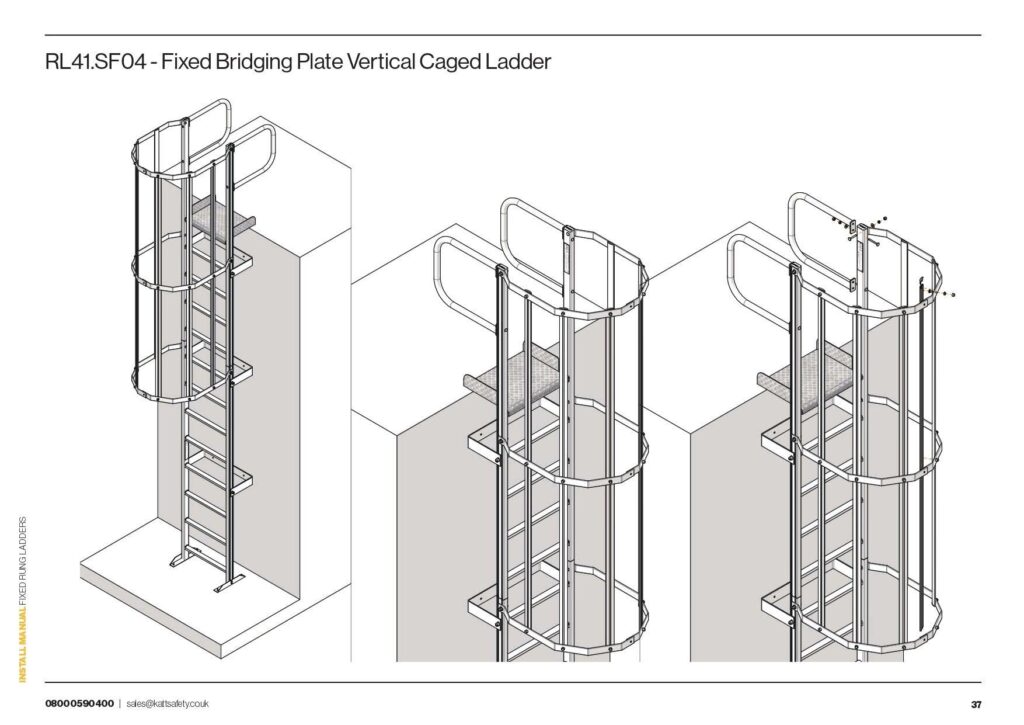
What is it?
A fixed checker plate that bridges the gap between the top rung of your ladder and the roof surface. It bolts on at the top of the ladder and gives your personnel a solid, non-slip step across to the roof.
When to use it
Choose this option if you have a flat roof or another level landing point with only a small gap to cover. Because there’s no slope to adjust for, a fixed bridging plate is a much simpler and more cost-effective choice than an adjustable modular ladder platform.
1m parapet platform
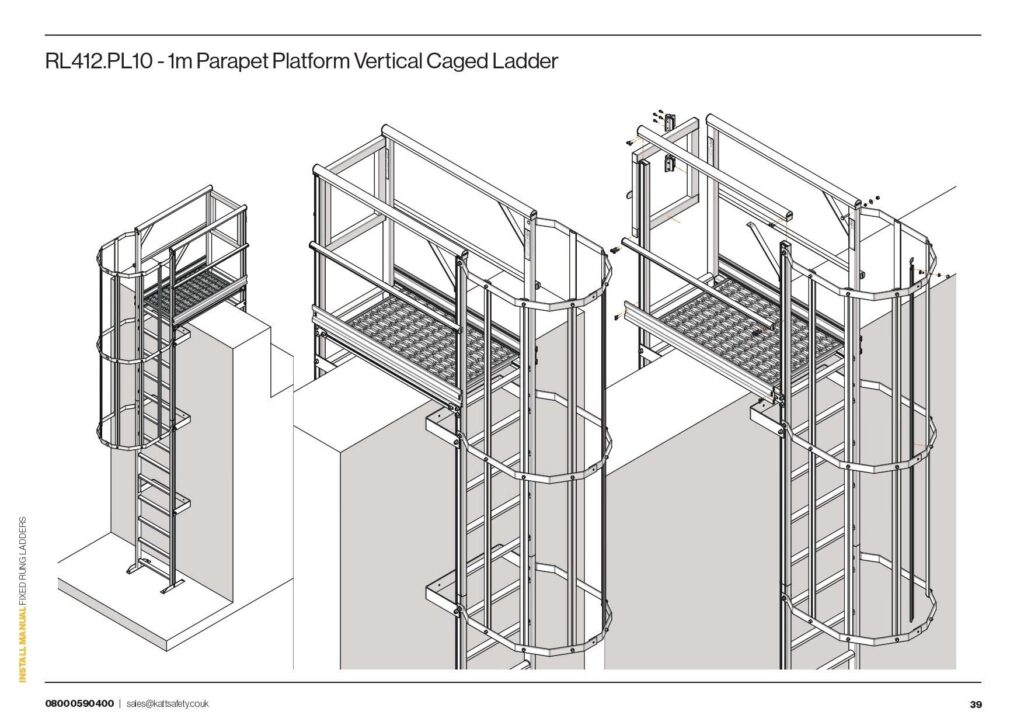
What is it?
A larger fixed landing platform than the bridging plate that gives your operatives a stable place to land before they cross the parapet at the top of the ladder. That way, they don’t have to climb straight from the rungs onto the wall.
When to use it
Choose this option if you have a ladder that lands at a parapet wall. Or, you may want to use it if your personnel need to move between a lower roof and an upper one, giving them a proper platform to stand on rather than just a bridging plate.
How to choose the right ladder landing platform
1) Check your roof pitch
If your roof is flat, opt for a fixed bridging plate or the 1m parapet platform. If your roof is pitched, you’ll need one of our adjustable landing platforms instead.
2) Assess what protection is already in place
Check whether a guardrail or wall already exists at the landing point, or if the nearest one is further away.
3) Choose your platform length based on the distance
If protection is already in place at the landing point, our shorter 1m adjustable landing kit should be long enough. If it’s further away, choose the longer 2.4m option instead.
4) Look for a parapet wall
If your roof has a parapet upstand at the landing point, choose the 1m parapet platform. This is the most suitable option for parapet walls, regardless of the pitch.
5) Review the rest of your route
A landing platform only makes the step off the ladder safe. If there’s a risk of falling once your workers are on the roof, install one of our guardrail or walkway systems.
Specify the right ladder system with Katt Safety
At Katt Safety, we offer a range of fixed access ladders for all types of roof configurations – from flat and pitched roofs, to those with a parapet wall.
Not sure where to start? We’ll help you specify an entire ladder system around your building, including the mounting option that fixes it to your roof, the safety cage that protects the user during climbing, the modular landing platform that guides them safely onto the roof, and the lockable door or cage gate that controls who can access the ladder.
Simply fill in our ladder configurator form to tell us about your building, and we’ll send over a free quote for the recommended system.
FAQs
What is a ladder landing platform used for?
A ladder landing platform gives you a stable surface to step onto at the top of a fixed access ladder. It prevents you from landing directly onto a sloped roof, a parapet wall, or an unsupported edge.
Which landing platform do I need for a pitched roof?
Our adjustable roof access landing kits are suitable for pitched roofs, available in 1m and 2.4m lengths. They’re designed for side entry onto a pitched roof, with fixings that adjust to match your roof’s pitch exactly to ensure the platform stays level.
Do I still need a guardrail if I have a landing platform?
Yes, you still need a guardrail if there’s a risk of falling once you’re on the roof. A landing platform makes the step off the ladder safe, but it doesn’t replace collective fall protection like a guardrail.
What’s the difference between a bridging plate and a parapet platform?
A ladder bridging plate covers the small gap between your ladder and a flat roof surface. A parapet platform is a larger fixed platform for when you need a complete standing area, such as at a parapet wall or between roof levels.