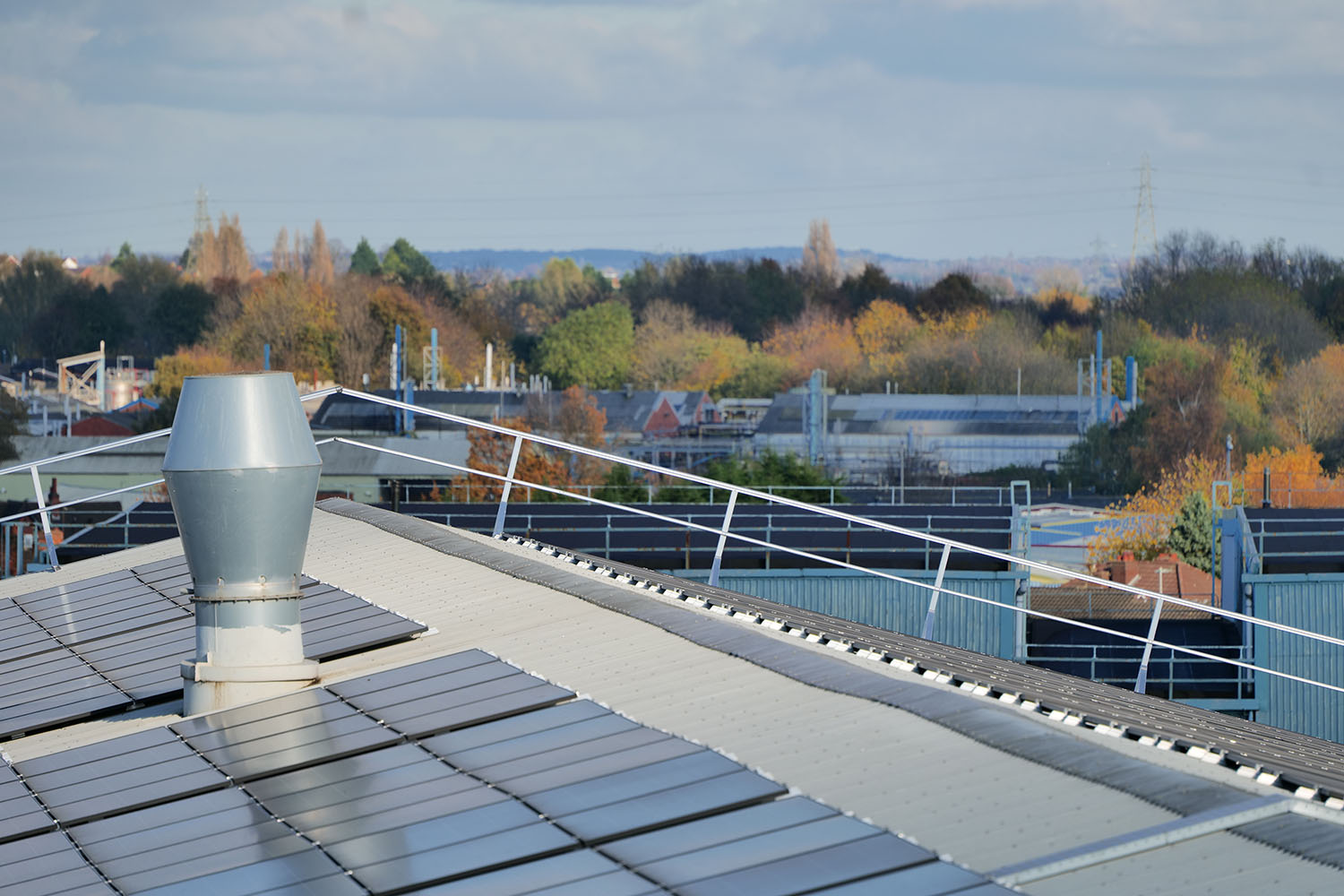
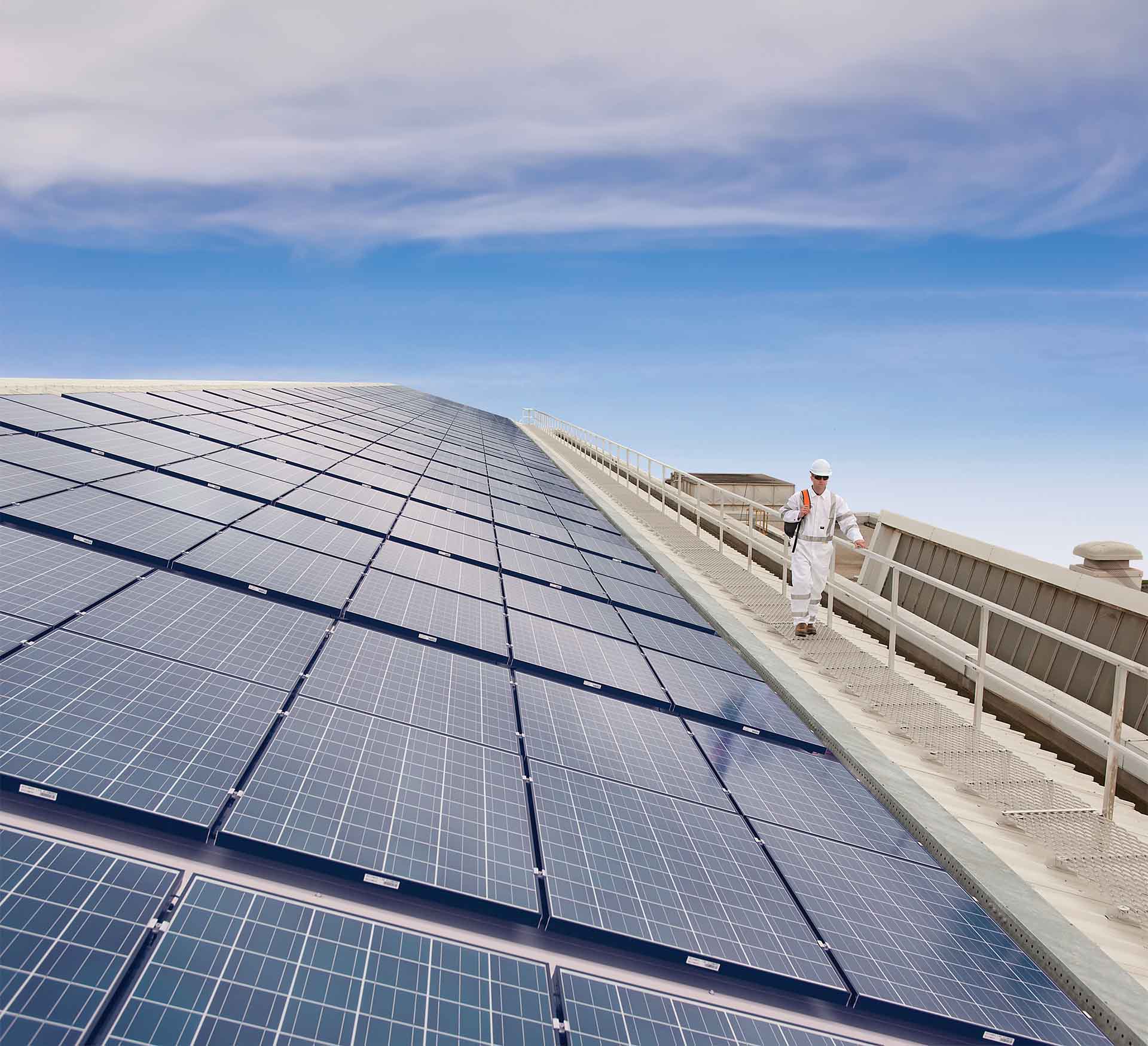
Following the government’s goal to achieve 45-47GW of installed solar capacity by 2030, rooftop solar PV installations are now becoming increasingly common on commercial and industrial buildings. While this is contributing to the UK’s greener energy targets, it’s also introducing significant rooftop hazards that you can’t afford to overlook.
Solar PV roof safety isn’t just about electrical work. It’s also about protecting your workers from accidents and injuries while working on rooftops. Whether you’re retrofitting an existing roof or managing the ongoing maintenance of solar panels, it’s vital that you have a clear strategy in place for fall prevention during solar installation.
In this blog, we explore the most common solar installation safety hazards, and share some practical solutions to help you eliminate these risks.
Understanding the HSE guidance for working at height
The Health and Safety Executive (HSE) outlines clear requirements for working at height, particularly on rooftops with fragile surfaces and fall hazards. Duty holders must:
- Avoid working at height where possible
- Use the most suitable equipment to prevent falls from occurring
- Prioritise collective protection measures (guardrails and barriers)
- Mitigate consequences with fall arrest systems if prevention isn’t possible
- Ensure all access routes are safe, clearly marked, and fit for purpose
- Verify that staff members are trained and competent to complete the task at hand
Ensuring you meet these regulations not only helps you avoid enforcement action (like fines or prosecution), but also keeps your team safe and preserves your organisation’s reputation.
The hidden dangers of rooftop solar installations
1) Fall risks at roof edges and openings
Falls from height are one of the leading causes of fatal injuries in UK workplaces. You have a legal duty to ensure that staff members can access and move around rooftops safely, especially if work is being carried out more than 2 metres off the ground.
Common fall hazards include:
- Unprotected roof perimeters
- Fragile materials (e.g. skylights or asbestos sheeting)
- Inadequate access systems
The solution:
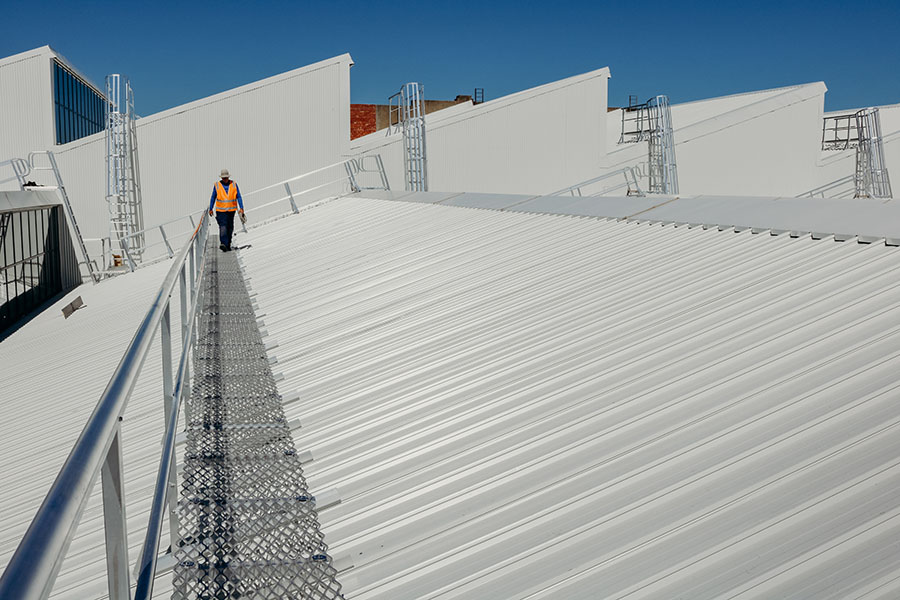
Our permanent roof guardrail systems provide reliable collective edge protection around the perimeter of a flat roof. They’re constructed from high strength aluminium, making them exceptionally sturdy, lightweight, and user friendly.
2) Trip hazards from solar panels and cables
Solar PV arrays can create a complex web of trip hazards, particularly during or just after installation. Panel edges, junction boxes, raised conduit, and trailing cables can all prevent your workers from moving safely across rooftops.
These trip hazards could result in:
- Minor injuries from falls on hard surfaces
- Loss of balance near unguarded edges
- Damaged cabling or panels from foot traffic
The solution:
Our fixed and loose-lay walkway systems offer a dedicated, non-slip path across the roof. Our modular systems can be easily configured around your existing panels and layout, creating clear routes from access points to all key maintenance zones.
3) Unsafe transitions and level changes
Solar PV systems are often mounted on pitched roofs or over uneven surfaces. This means that your workers will need to step over parapets, ducts, or other equipment to reach the arrays.
These unsafe transitions can increase the risk of:
- Missteps and loss of footing
- Manual handling injuries from awkward movements
- Delays in emergency scenarios (e.g. accessing injured colleagues or responding to fire risks)
The solution:
Our modular stair and platform systems allow your personnel to cross obstacles and move between levels safely. They’re quick to install and can be easily adjusted to your exact specifications, making them suitable for all roof types.
4) Fragile roof elements (including skylights)
Skylights, rooflights, and brittle sheeting are often hidden beneath solar panels. These surfaces aren’t designed to support heavy weights, and could collapse if workers stand on them.
Common risks include:
- Stepping onto skylights that are obscured by dirt, snow, or solar panels
- Misjudging the strength of old or weather-damaged roofing sheets
- Lack of clear visual indication of fragile zones
The solution:
Our robust skylight covers provide reliable fall hazard protection for personnel working on rooftops. They’re available in multiple configurations and sizes, making them ideal for all types of rooflights, skylights, and brittle roof structures.
Rooftop access safety checklist for your solar PV site
Before you send your workers up onto a rooftop, we recommend completing the following pre-installation checklist:
- Assess the structure of the roof and its load capacity to ensure it can support the added weight of panels, mounts, and safety equipment
- Identify any fragile zones in the roof (e.g. skylights or asbestos panels) and clearly mark them as hazards
- Install collective fall protection systems (e.g. guardrails and covers) in line with HSE regulations
- Plan safe, defined routes from roof access points to all major service areas using walkways
- Install modular stairs and platforms in areas with level changes or obstructions to ensure for smooth movement
- Ensure that your access ladders are correctly secured and fully compliant with BS EN ISO 14122 standards
- Regularly inspect and maintain your safety systems to ensure that they remain secure, visible, and fit for purpose
Solar energy is the future, but safety is today’s priority
At Katt Safety, we understand the unique challenges that your workforce faces when it comes to rooftop solar PV installations. Whether you’re planning a new solar project or need to improve access safety on an existing roof, we can help you identify your specific rooftop hazards and supply industry-leading safety solutions to eliminate these risks. We’re dedicated to supporting you every step of the way, from the initial drawing stage through to the completed product ready for installation on site.
Contact our expert team today to discuss your height safety concerns.