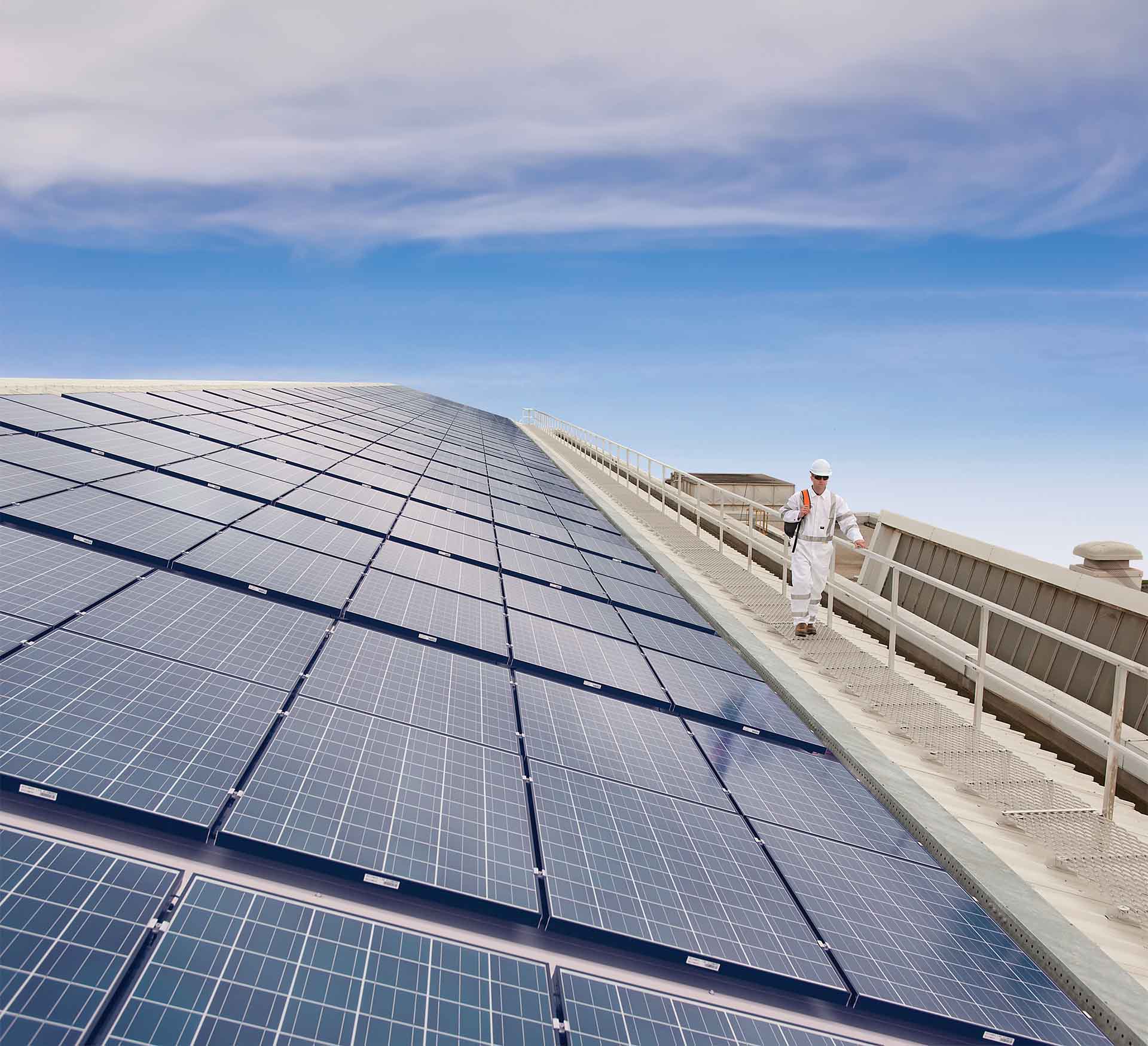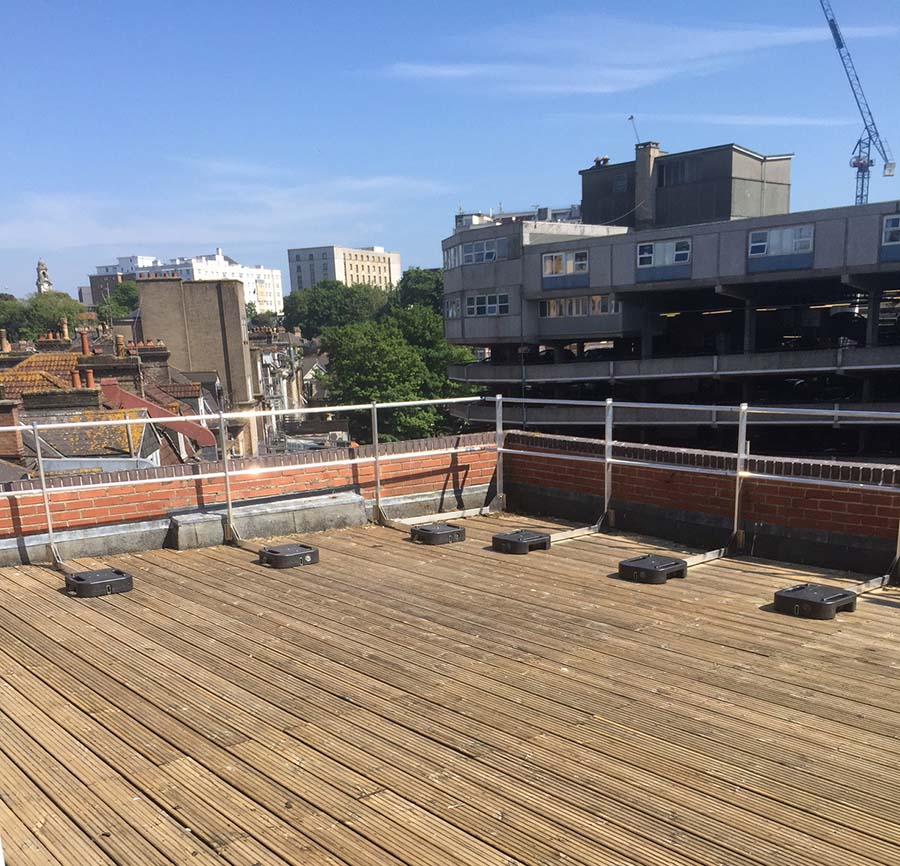
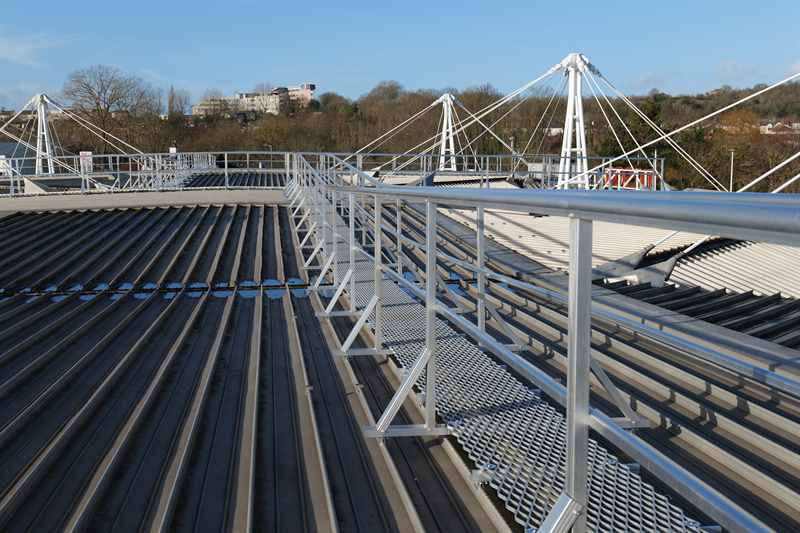
Working on roofs inherently carries risks. To prevent falls, appropriate precautions are vital. If there’s a risk of falling more than two metres, robust roof edge protection, such as suitable guardrails and toe boards, is usually a must. While other fall arrest systems like safety harnesses offer additional protection, they’re typically used as a secondary measure.
It’s a sobering fact: falls from height were the leading cause of workplace fatalities in Great Britain between 2023 and 2024, accounting for nearly 37% of all worker deaths. This stark statistic underscores the critical importance of adhering to correct guidelines for working at height. Failing to comply can lead to severe injury or even death. So, how can you ensure your site is safe and compliant?
Understanding Roof Edge Protection
Roof edge protection refers to guardrails or barrier systems installed along the perimeter of a roof or any sudden change in level. Their sole purpose is to prevent falls and protect personnel working in these areas.
The “Work at Height Hierarchy of Controls” prioritises edge protection barriers over individual protection methods like harnesses. This is because collective measures protect multiple workers simultaneously and don’t require specialist training or equipment for effective use.
When to Implement Roof Edge Protection
You should implement roof edge protection around the perimeter of any roof where people need access for maintenance or cleaning. The Building Regulations (Part K) specifically mandate guardrails on any roof that requires access.
Since no two roofs are identical, the precise placement and configuration of guardrails must be determined by a comprehensive risk assessment carried out at each individual site.
This assessment must be conducted by a competent person and consider all potential hazards. Crucially, all identified hazards must be addressed with appropriate solutions and implemented before any work commences.
Minimum Height Guidelines for Guardrails
According to Building Regulations Part K, guardrails must be at least 1100mm in height and include a minimum of two horizontal rails. These specifications are designed to prevent workers from slipping or falling beneath the barrier.
While exceptions may apply in certain low-access or temporary-use scenarios, a thorough risk assessment will determine whether deviations are appropriate.
Key Industry Standards for Roof Edge Protection
Numerous standards govern roof edge protection and safety systems, but a few are particularly vital:
Building Regulations Part K
Part K of the Building Regulations mandates guardrails for:
- Stairs, ramps, building floors, balconies, and any roof accessible to people.
- Any light well, basement area, or similar sunken area.
Beyond requiring a minimum height of 1100mm and at least two horizontal rails, Part K also specifies a loading criteria: a uniformly distributed load of 0.74kN/m per square metre and a point load of 0.5kN.
EN 13374: Temporary Edge Protection Systems
This standard applies to temporary edge protection systems, requiring them to withstand loads applied perpendicularly, horizontally, and vertically. EN 13374 outlines requirements for three classes, determined by roof pitch:
Class A: For roof pitches from 0-10°.
Class B: For roof pitches from 10-30°.
Class C: For roof pitches from 30-45°.
Each class has specific static load requirements, with Classes B and C also needing to withstand an additional dynamic load simulating someone rolling down the roof slope. The regulations also include a minimum recommended wind velocity pressure of 0.6N/m.
Manufacturers must demonstrate product compliance through rigorous testing.
BS 13700:2021: Permanent Freestanding Systems
Before 2021, EN 13374 was often used as guidance for all freestanding guardrail systems, regardless of their intended lifespan. However, the introduction of BS 13700:2021 specifically addresses freestanding systems designed for permanent installation. This standard mandates:
- Site-Specific Wind Speed Calculations: Each installation must undergo calculations conforming to wind loading criteria in BS EN 1991-1-4:2005+A1:2010.
- Location-Specific Design: Installations must be designed according to specific wind calculations based on location, building height, and exposure level.
- System Technical File: A System Technical File, as outlined in BS 7883:2019, must be produced by the designer and provided to the duty holder for the lifetime of the system. This file must be available for all future inspections and maintenance.
- Annual Inspections: Permanently installed counterweighted guardrails require annual inspections adhering to the manufacturer’s recommended examination regime. This also includes retrospectively applying wind calculations to verify the original product’s wind design during these annual checks.
It is the building owner’s responsibility to ensure that their roof guardrails comply with these new requirements.
Guardrail Inspections: Staying Compliant
Industry best practice recommends that collective edge protection systems, like guardrails, be inspected and re-certified every 12 months, or more frequently depending on usage. With the introduction of BS 13700:2021, annual inspections of permanently installed counterweighted, freestanding guardrail systems are now a mandatory requirement.
KATT Safety: Your Roof Edge Protection Specialists
KATT Safety, the specialist height safety division of Modular Safety Systems, is a leading manufacturer and supplier of modular solutions for construction, infrastructure, and building maintenance projects across the UK.
Our range of modular, high-strength aluminium roof guardrail systems is specifically designed to provide robust collective edge protection around flat roof perimeters, ensuring the safety of all personnel working at height. KATT Guard offers various configurations to suit diverse project needs.
Don’t leave safety to chance. Get in touch with our experts today to learn more about our compliant roof edge protection solutions and ensure your site adheres to all current requirements.