The short answer:
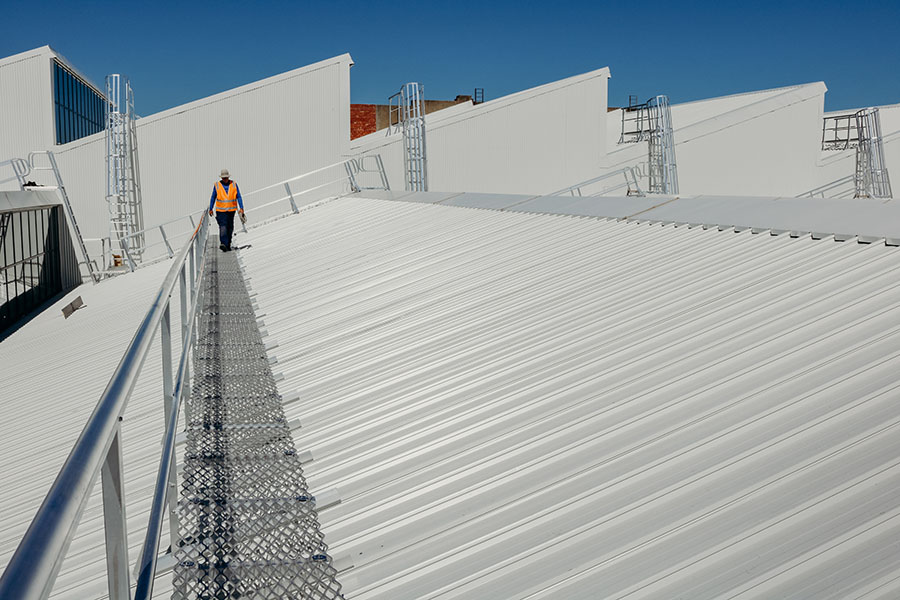
A guardrail isn’t automatically a legal requirement. But you are legally required to provide some form of fall protection if people need to access a commercial roof and there’s a risk of falling two metres or more, or they’re working within two metres of the roof edge. That protection can be collective (e.g. guardrails) or personal (e.g. an anchor point that lets operatives connect with a harness). The Work at Height Regulations 2005 state that the employer or building owner is responsible for planning, supervising, and properly resourcing that access – not just the contractor who goes up on the roof. HSE guidance sets monthly access as the dividing line. If your personnel need to access the roof monthly or more frequently, then you’ll need a permanent roof guardrail; but temporary edge protection may be more suitable below that frequency.
When did you last check how your roof is being accessed, and by whom? If a contractor is accessing your roof monthly to service a HVAC unit, and a solar installer is visiting every quarter, then it’s time to install permanent roof edge protection. Without it, you could be putting your personnel at risk of serious injury, or even death.
Below, we’ll walk you through when roof guardrails are legally required, who is responsible for specifying them, and how to determine whether you need a permanent or temporary system.
When are guardrails legally required?
If people need to access your roof and there’s a risk of falling two metres or more, then you’re legally required to put some form of edge protection in place. A guardrail is often the preferred option as it protects everyone on the roof automatically – you don’t need to rely on each person wearing and using a harness correctly.
This requirement comes from the following three places:
- The Work at Height Regulations 2005 – this states that, as the employer or building owner, you’re responsible for planning roof access properly and controlling the risk
- Part K of the Building Regulations – wherever there is a risk of a fall
- HSE guidance – this makes it clear that collective protection, like guardrails and toe boards, should be prioritised above PPE like harnesses (known as the “hierarchy of controls”)
The HSE draws a rough line at monthly access. If people are accessing your roof on a monthly basis or more frequently, then you’ll need to install a permanent roof guardrail. But if it’s less frequent, then temporary edge protection may be suitable. More on that below.

Who’s liable for specifying roof edge protection?
The Work at Height Regulations 2005 labels facilities managers and building owners as duty holders. This means that they’re legally accountable for the safety of work carried out at height on their property, even if that work is outsourced to contractors.
BS 13700:2021 requires you to hold a System Technical File for permanent freestanding guardrails, which you will be awarded after every inspection. You must carry out an annual inspection and retrospectively verify the original wind loading calculations against your site. Essentially, you need a clear record of what was installed, when it was last checked, and by whom. A memory of a contractor who fitted it years ago isn’t enough.
Discover more about the roof edge protection requirements in our dedicated blog post.
How to choose between permanent vs temporary edge protection
Here are five questions to ask yourself when choosing between permanent and temporary systems:
1) How often is the roof accessed?
If the rooftop is only accessed for occasional annual inspections, then temporary edge protection might be suitable. But monthly or more frequent visits call for a permanent solution.
2) How many different trades use the roof?
Make sure you treat all visits from solar operations and maintenance, HVAC contractors, and cleaning teams as cumulative rather than separate. Even if each trade only visits occasionally, they could easily push your roof past the monthly threshold when added together.
3) What’s the roof pitch?
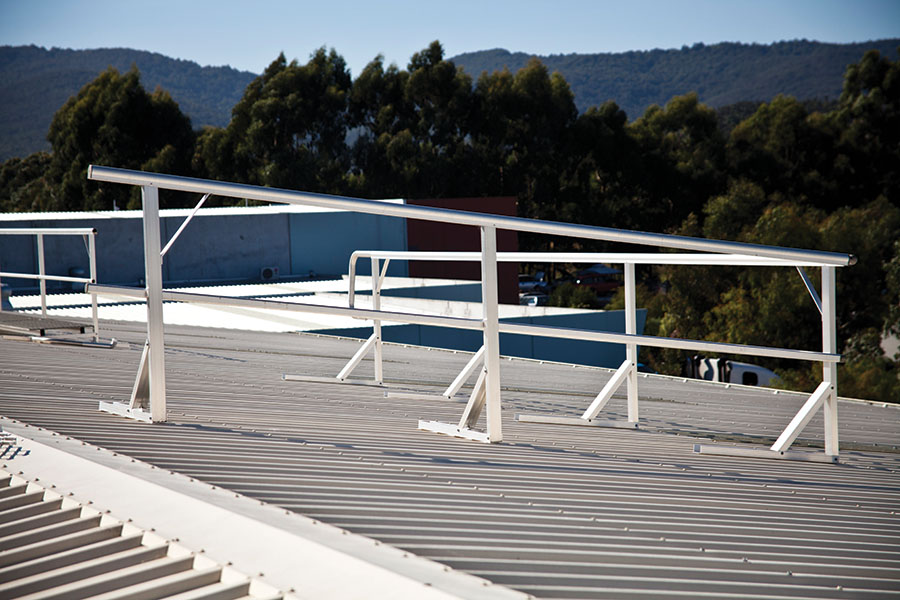
If you have a pitched or unusually shaped roof, then this may narrow down your options. Under BS EN 13374:2013+A1:2018, you can only have a temporary system for roof pitches up to 45°, split into classes A-C based on how steep the roof is. If your roof pitch is above 45°, then you’ll need a bespoke permanent solution instead.
4) How long will the works last?
For longer projects like major refurbishments and solar rollouts, a permanent installation usually offers better value for money than repeatedly hiring and reinstalling temporary systems.
5) What does it cost over the life of the building?
The costs associated with repeatedly hiring, transporting, and reinstalling temporary solutions over several years can quickly overtake the price of a one-off permanent roof guardrail installation.
Keep your roof safe and secure with our permanent roof guardrails
At Katt Safety, we supply modular, high-strength aluminium guardrail systems that are built specifically for permanent installation on commercial flat roofs.
Our fixed guardrails are engineered to meet BS EN ISO 14122-3:2016 and BS EN 13374:2013+A1:2018, and you’ll also get a System Technical File for the lifetime of your system. Each system is easy to install and can be tailored to meet your exact requirements – whether you’re looking to protect a solar array, or improve access to a roof that’s used by multiple contractors throughout the year.
Get in touch to discuss your requirements and we’ll help specify the right solution for your roof.
FAQs
Is a guardrail legally required on every commercial roof?
No, a guardrail isn’t automatically required for every commercial roof. But if people need regular access to your roof and there’s a risk of falling, then collective edge protection is mandatory under The Work at Height Regulations 2005 and Building Regulations Part K.
What height does a roof guardrail need to be?
Building Regulations Part K states that a permanent roof guardrail must be a minimum of 1100mm high with at least two horizontal rails. Temporary systems use a lower 950mm minimum threshold.
How often should permanent roof guardrails be inspected?
Permanent roof guardrails should be inspected every 3 – 12 months, depending on your specific site or company policy. BS 13700:2021 makes this a mandatory requirement for permanent freestanding, counterweighted systems.
Can I use temporary edge protection instead of a permanent guardrail?
Yes, you can use temporary edge protection in areas where access is required infrequently (less than monthly). Permanent guardrails are usually the safer and cheaper long-term option for roofs that are accessed on a monthly basis, or more frequently.
Who’s responsible if a roof guardrail fails inspection?
The building owner or duty holder is responsible if a roof guardrail fails inspection. This is irrespective of who installed the system or who’s currently maintaining the roof.