Key takeaways:
As commercial solar becomes an increasingly important part of the UK’s Net Zero journey, it’s vital that you consider safe rooftop access from the very start of any installation, inspection, or maintenance work. Your roof safety solar installation strategy should focus on protecting your workers throughout the project, leveraging solutions such as walkway systems, skylight covers, staircases, and step overs. These permanent access systems help to create clear and compliant access routes around your solar panels, plant, rooflights, and changing roof levels, in turn supporting your sustainability goals while keeping your people safe every time they step onto the roof.
Solar adoption is accelerating. Is your rooftop ready?
The UK’s transition to Net Zero is gathering pace, with the government targeting 45-47GW of installed solar capacity by 2030. Commercial rooftops have a significant role to play in achieving this ambition – warehouses, factories, distribution centres, schools, offices, and retail buildings offer valuable space for solar PV systems and could collectively support up to 15GW of rooftop solar capacity.
If your business is investing in rooftop solar, it’s vital that you consider how the systems will be accessed, installed, and maintained safely throughout their lifespan. Without a clear roof safety solar installation strategy in place, you could be exposing your workers to unnecessary hazards while they carry out essential work at height.
In today’s blog, we explore the risks associated with solar installations, and how solutions such as walkway systems, skylight covers, staircases, and step overs can help to protect your workforce while supporting your wider Net Zero goals.
The risks associated with solar installations
Solar PV systems are often installed on large, open roof areas where access routes aren’t always clearly defined. During installation, your workers may be exposed to hazards such as:
- Fragile rooflights
- Exposed edges
- Service penetrations
- Cable routes
- Roof plant
- Changes in level
When these risks are not properly managed, the consequences can be severe. In 2022, a company was fined £120,000 after an employee fell four metres from a rooftop while carrying out solar installation work. The HSE found that the work at height hadn’t been properly planned and that suitable measures to prevent a fall were not in place. The incident resulted in the worker suffering a broken leg and led to a substantial financial penalty for the company.
Before any rooftop work begins, it’s vital that you have suitable precautions in place to reduce the risk of slips, trips, and falls. Here’s what you need to consider.
How to keep your workers safe on commercial solar rooftops
Create clear access routes with roof walkway systems
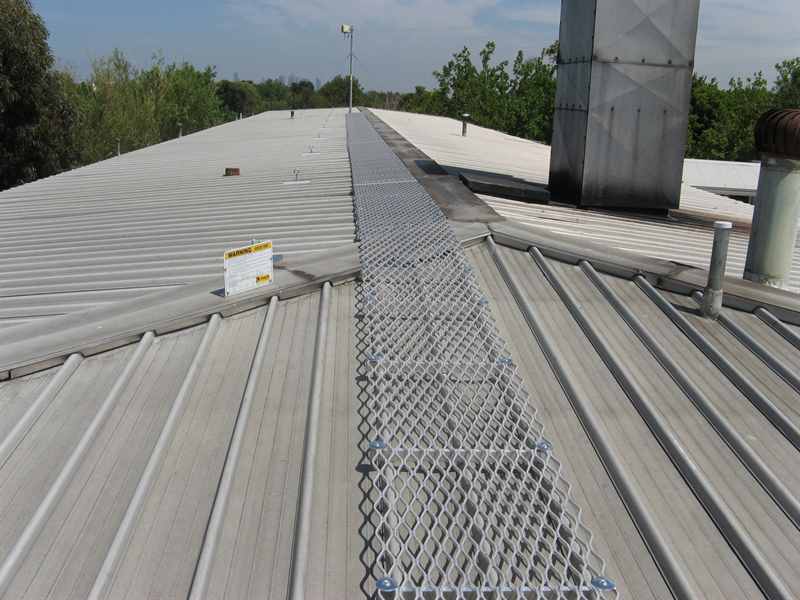
If your workers are left to choose their own route across the rooftop, they may end up walking too close to fragile surfaces, exposed edges, cables, or areas that aren’t designed for regular food traffic. A solar roof walkway helps to remove that uncertainty by giving your team a safe and defined route to follow.
Katt Safety’s fixed and loose-lay walkway systems create clear access routes that enable your employees to move safely between different roof access points and solar arrays. Our systems can be configured around your exact roof layout, helping to protect your workers without disrupting the performance of your solar installation.
Protect fragile rooflights with skylight covers

If your commercial roof has skylights, then it’s vital that you factor these into your solar safety plan from the start. Rooflights can be difficult to identify when your workers are focused on completing the work, especially on busy rooftops that don’t have clearly marked access routes.
Katt Safety’s skylight mesh solar covers help to protect your workers when operating near brittle rooflights and fragile roof surfaces. They provide an added layer of protection if they were to accidentally step or fall onto a fragile area, reducing the risk of accidents while still ensuring enough natural light into the building below.
Use staircases and step overs to keep access routes uninterrupted
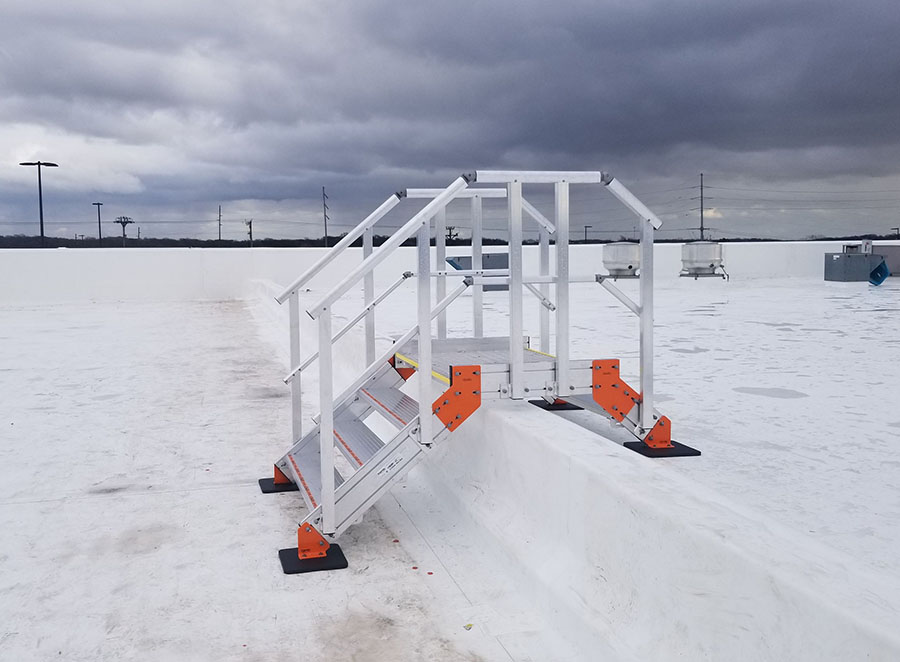
When carrying out solar installation work, your employees may need to operate around ductwork, pipework, cable trays, parapets, and plant. If you don’t provide appropriate staircases or step overs, then your workers may be forced to climb over these obstacles or take an unsafe shortcut across the roof.
Katt Safety’s modular access systems enable your workers to move around these obstacles safely. Our staircases can help your team move safely between different roof levels or onto access platforms, while our step overs give them a safer way to cross over obstructions without creating unnecessary trip hazards.
Helping you build safety into your Net Zero investment
At Katt Safety, we’re here to help you accelerate your Net Zero ambitions while simultaneously safeguarding your workforce. Whether you’re planning a new commercial solar installation or upgrading access on an existing rooftop system, we can help you design a safe and compliant roof access solution that works around the unique challenges of your building.
Our systems are manufactured from high-strength materials and backed with a 10-year warranty to withstand demanding rooftop environments. Because they’re modular, they can be easily adapted as your rooftop layout evolves, helping you to maintain safe access for installation, inspection, and maintenance activities. They’re also compliant with all relevant British Standards and The Work at Height Regulations 2005, so you can rest assured that you’re protected from penalties associated with non-compliance.
Ready to improve safety on your rooftop? Simply send us a rough sketch or drawing, and we’ll help you develop a practical access strategy that protects your workforce and keeps your solar investment performing for years to come.
FAQs
Why is roof safety important for solar installation?
Roof safety is essential for solar installation as it involves working at height, often around exposed edges, fragile rooflights, cables, plant, and changing roof levels. If you fail to manage these risks, you could be putting your workers’ lives at risk and subjecting yourself to financial penalties.
What is the best safe access system for solar panels?
The best safe access system for solar panels all depends on the layout of your roof, the panel design, and your access requirements. Many commercial solar projects benefit from a combination of walkways, skylight covers, staircases, and step overs to create clear and continuous access routes across the rooftop.
When should safe access be planned for a solar project?
You should plan for safe access as early as possible, ideally during the solar project design stage. This will ensure that any access routes, walkways, step overs, and skylight protection can be integrated around the solar layout early on, rather than having to be retrofitted later.