Key takeaways:
Data centre walkway safety is all about managing how your operatives move through these complex, high-risk environments. If your walkways are poorly designed, hazards such as cable trenches, mezzanine edges, and congested access areas can quickly lead to slips, trips, and falls. It’s vital that your data centre walkway is designed around your specific site hazards and integrates with your other rooftop safety measures – and that you regularly review the design to ensure it remains safe and compliant.
Data centres are one of the most complex operational environments in modern infrastructure. It’s essential that your operatives can move through these spaces safely and aren’t exposed to unnecessary hazards like cable trenches and mezzanine edges – which is exactly where a well-designed walkway system comes in.
Here’s everything you need to know about data centre walkway safety, including why walkways are essential in these environments, and how you can design a solution that will keep everybody safe.
Why walkways are essential in data centres
Data centres aren’t typical workspaces. They’re highly serviced, complex environments where mechanical, electrical, and IT infrastructure are all competing for limited space – which creates a clear set of risks when it comes to how people can safely access and move through these areas.
Unlike standard commercial roofs, data centres often include:
- Complex service routes
- Raised platforms and mezzanines
- Congested plant layouts
- Frequent access requirements for maintenance teams
Walkways are a critical control measure in these environments, helping to establish safe routes and prevent your operatives from entering hazardous zones. Without them, your operatives may be forced to use unsafe access routes, which puts both their safety and your operations at risk.
What defines a safe walkway system?

Roof walkway systems for data centres need to do much more than simply mark a path. They must actively control movement, reduce risk, and help your operatives carry out their work safely.
A well-designed walkway system should:
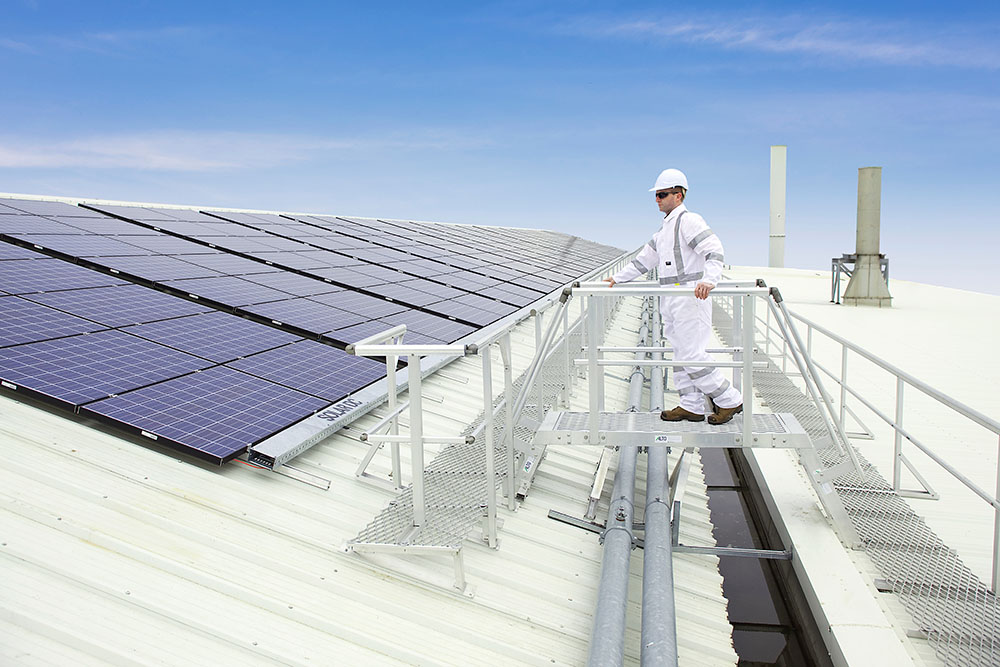
- Provide clear, designated routes that guide your operatives safely across the roof or plant area
- Be slip-resistant and able to withstand year-round UK weather conditions
- Avoid fragile surfaces and hazards such as skylights and service voids
- Integrate with your other roof safety systems, including guardrails and step units
- Be compliant with UK safety regulations, including The Work at Height Regulations 2005 and relevant British Standards
Our Katt Walk roof walkway systems are specifically engineered to meet all these challenges and help you create safer, more controlled environments across your rooftop. Here’s how to design a safe walkway system for your data centre:
5 steps to designing a safe walkway system for your data centre
1) Map out how personnel access your data centre
Start by identifying where your operatives need to go, how often they need to access your rooftop, and which maintenance tasks are being carried out in each area. This will give you a clear picture of the routes that need to be protected.
2) Identify the hazards that impact movement
Once you have a solid understanding of your access requirements, you need to assess the features that could create fall risks or unsafe movement. In data centres, this often includes cable trenches, mezzanine edges, changes in level, and narrow routes between plant and equipment.
3) Design safe routes around your specific site hazards
You now need to design a walkway system that actively controls and reduces the risks present at your data centre. For example:
- Ensure you route walkways away from cable trenches and open voids wherever possible
- Maintain safe distances from mezzanine edges and elevated platforms
- Create clearly defined paths through tight plant areas, encouraging sufficient width and discouraging unsafe shortcuts
4) Integrate the walkway within your wider safety strategy
You should never treat your walkway as a standalone product. It needs to work alongside your other safety measures, including guardrails, step units, and roof edge protection to ensure that access remains safe from the point of entry to the point of work.
5) Review the design as your site evolves
It’s important to regularly review your design to ensure the walkway continues to provide safe access and remains aligned with your current operational demands. This is especially important if you’ve recently installed new rooftop equipment or your layout has changed.
Improve your data centre walkway safety with Katt Safety
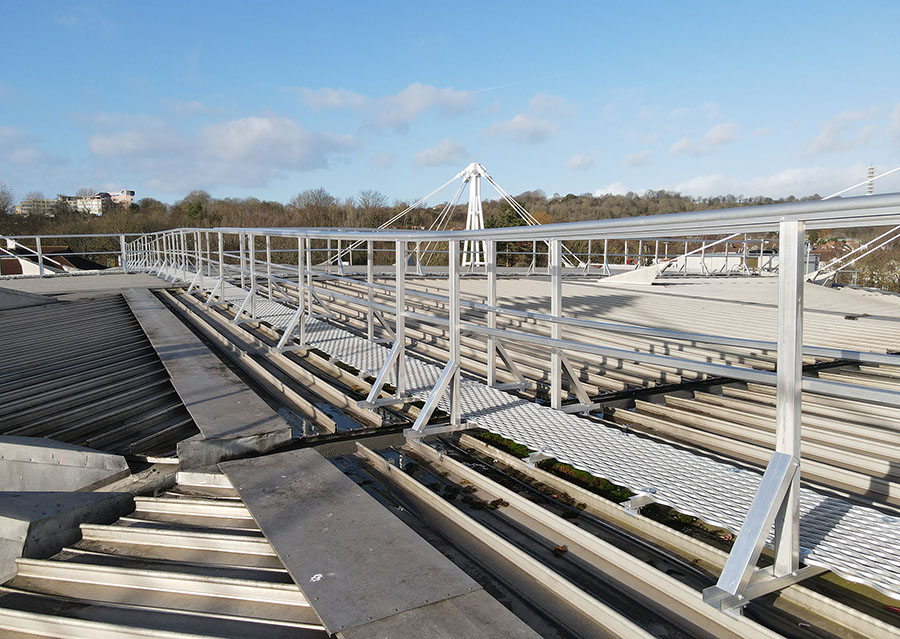
At Katt Safety, we offer a range of fixed and loose-lay walkway systems to help improve access across your data centre and keep your workforce safe. They provide clear, reliable routes across even the most complex rooftops and plant areas, with a modular design that can be fully tailored to meet your exact requirements.
Our systems are engineered in line with BS EN ISO 14122-3:2016, BS 4592-1:2006, and BS EN 516:2006 to help you demonstrate compliance with The Work at Height Regulations. What’s more, they’re extremely easy to install with minimal maintenance required, and include a 10-year warranty for basic wear and tear preventative maintenance work.
Need help designing a walkway system for your data centre? Contact our expert team to get started.
FAQs
What is the purpose of walkway systems in data centres?
Walkway systems provide safe, clearly defined routes for operatives who are accessing plant and equipment. They help to reduce the risk of slips, trips, and falls, which is especially important in complex environments like data centres.
How do walkway systems improve data centre safety?
Walkway systems improve data centre safety by guiding movement away from hazards such as cable trenches, fragile surfaces, and roof edges – while providing stable, slip-resistant walking surfaces across the rooftop.
Can walkway systems be retrofitted to existing data centres?
Yes, most walkway systems can be installed on existing roofs and plant areas without major disruption. A site assessment will help to identify current risks and ensure the system is designed around how the space is actually used.
Do walkway systems need to be integrated with safety measures?
Yes, walkway systems should form part of a wider fall protection strategy, working alongside guardrails, step units, and roof edge protection to ensure safe access from the point of entry to the point of work.