In short:
Rooftop solar installations come with their fair share of fall risks, from trip hazards and complex cable routes to fragile roof materials and exposed edges. To effectively manage these risks, you need to look beyond temporary controls and put well-designed fall protection measures in place, including safe access routes and collective edge protection. Solar roof safety systems such as walkways and guardrails help you keep your workforce safe during installation and maintenance work, without compromising the roof’s integrity.
Are you responsible for managing a rooftop solar installation on a commercial or industrial building? Working at height is already one of the most hazardous activities out there – and when you add solar panels, cable routes, and potentially fragile roof structures into the mix, the risk of falls increases significantly.
It’s your legal and moral responsibility to reduce fall risks on rooftops and keep your solar installation staff safe. The good news is that with the right planning and solar roof safety systems in place, you can effectively control these risks and create a safer environment for everyone working on the roof. Here’s how to get started.
What are the common rooftop solar hazards?
Trip hazards
Solar panels contain multiple hazardous components, including frames, mounting brackets, ballast systems, and cable trays. Poorly managed cable routes and uneven surfaces can easily become trip hazards during routine maintenance work. If you don’t introduce defined access routes across the rooftop, your workers may be forced to step over obstacles or walk in unsafe areas.
Fragile roofs
Many commercial buildings have fragile roof materials such as fibre cement sheets, rooflights, or ageing metal decks. Once solar panels have been installed on the rooftop, these hazards can actually be harder to identify. The HSE reports that falls through fragile surfaces account for 22% of all fall from height fatal injuries in the construction industry, so it’s vital that you put appropriate control measures in place.
Unprotected edges
Solar arrays often extend close to roof edges, increasing the likelihood of a fall during installation or maintenance work. If you rely solely on PPE or temporary measures such as harnesses, warning lines, or edge markings, you’re leaving too much room for error – particularly on large or multi-level roofs.
The importance of collective fall protection for solar installation work

In December 2024, a solar panel installation firm was fined £120,000 after an employee fell from a roof and broke his leg during routine solar panel maintenance. The investigation found that appropriate collective fall protection had not been provided, resulting in the worker falling four metres to the ground. Incidents like this highlight the very real consequences of inadequate planning and controls.
This is why the hierarchy of control should always be your starting point when planning fall protection for solar installation work. Collective protection, such as guardrails and fixed walkways, sit higher in the hierarchy than PPE – providing a safer, more reliable solution than personal fall arrest systems alone. They offer continuous, 24/7 protection for anyone accessing the rooftop, helping to prevent incidents like the one above from happening in the first place.
How our walkways and guardrails can reduce fall risks on your rooftop
Walkway systems
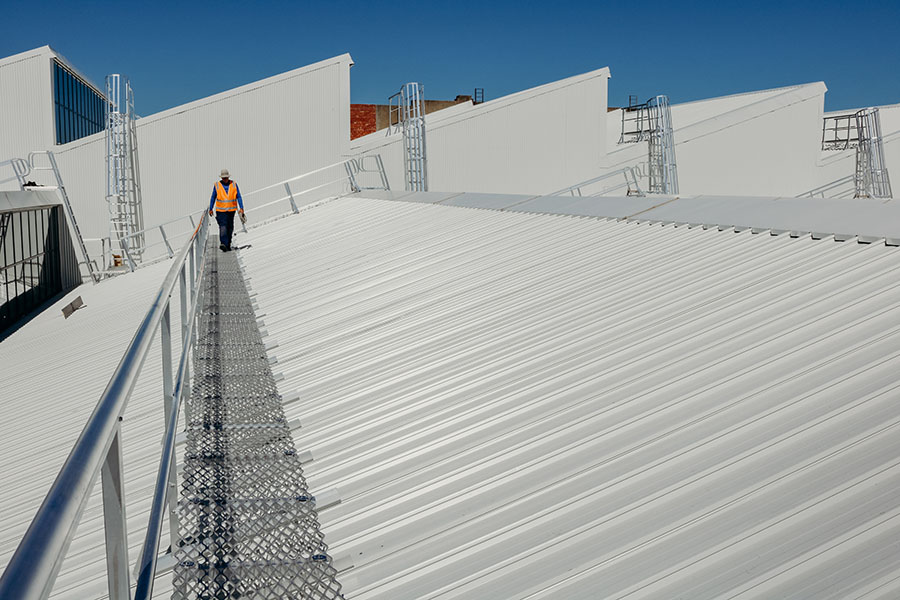
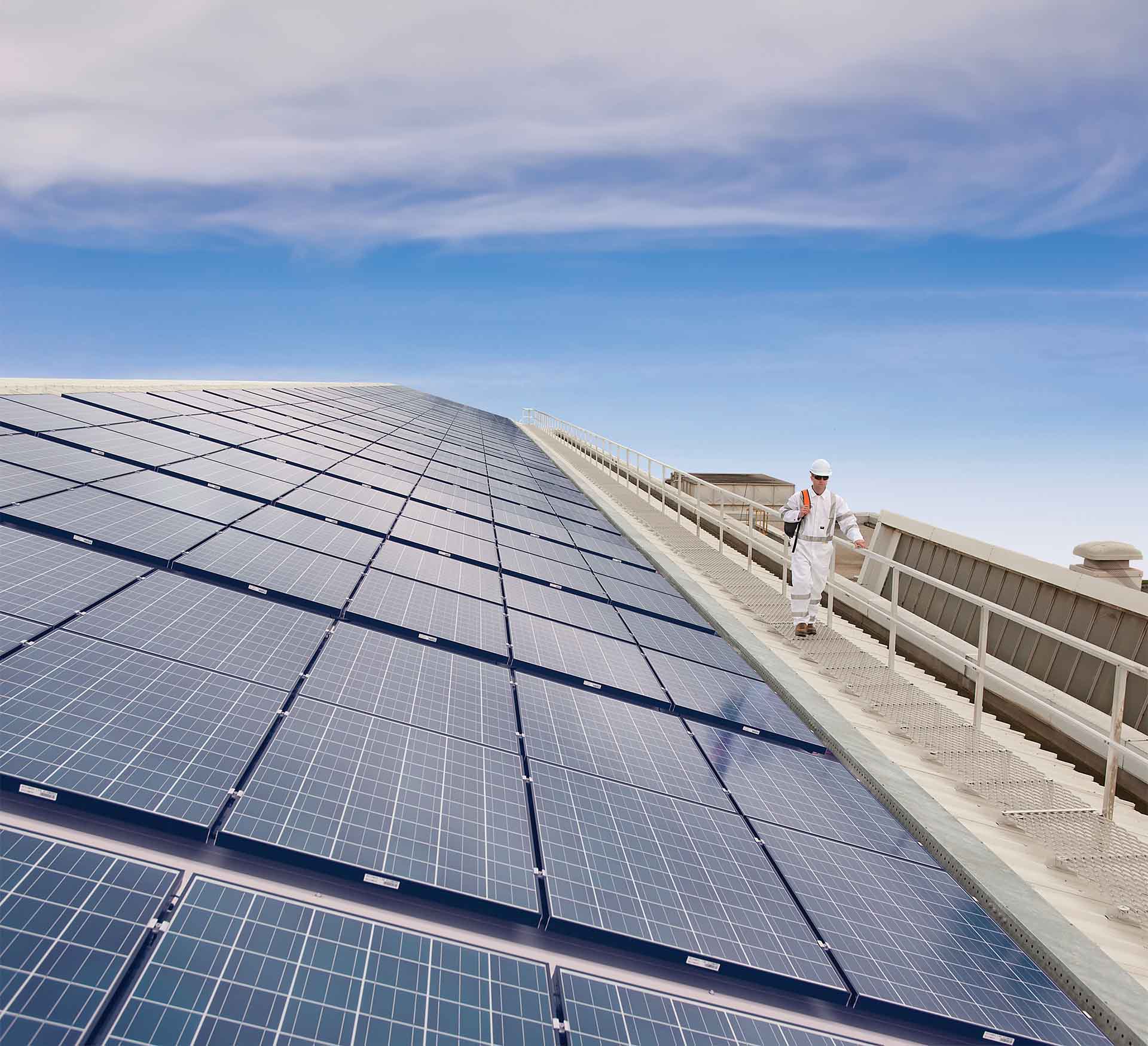
Installing clearly defined access routes across the roof is one of the most effective ways to reduce fall risks on your rooftop. Katt Safety’s non-penetrative fixed and loose-lay walkway systems are designed to work around solar arrays, helping to protect both your people and the roof structure beneath.
They’re ideal for:
- Providing safe, anti-slip routes across the roof
- Preventing foot traffic on fragile or unsuitable roof areas
- Keeping cable routes organised and visible
- Supporting ongoing inspection and maintenance without disturbing the solar panels
Guardrails
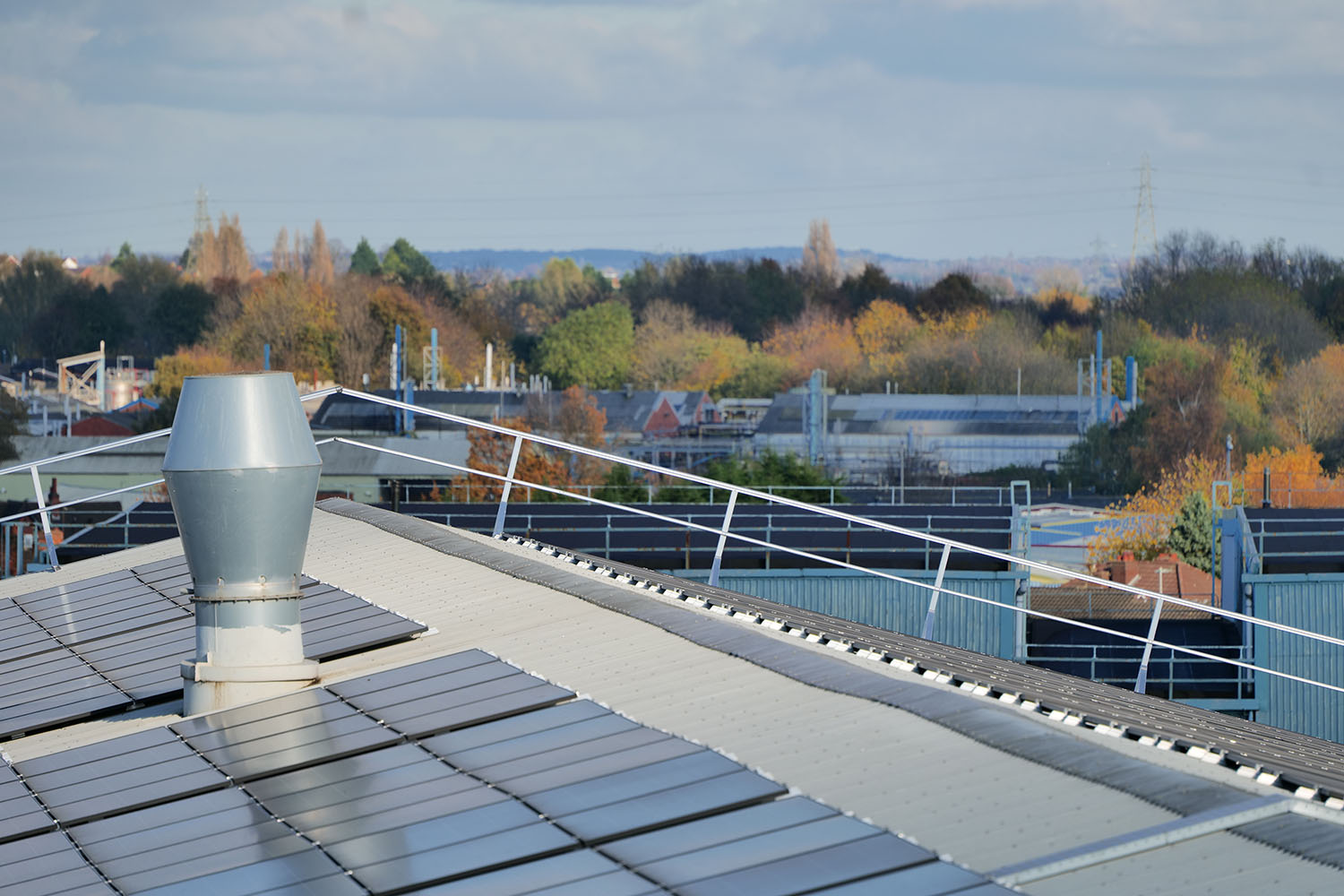
Roof edges are one of the highest-risk areas on any solar installation, particularly where arrays, inverters, or access routes are positioned close to the perimeter. Our permanent roof guardrail systems are designed to address this risk by creating a continuous physical barrier around the roof edge.
They help to:
- Prevent falls from exposed roof edges and changes in level
- Reduce reliance on PPE or individual behaviour
- Protect anyone who is accessing the roof, including installers and maintenance teams
A combination of both
While walkways and guardrails each address specific hazards, they’re most effective when used together as part of a single, coordinated fall protection strategy. By combining the two, you create:
- Safe access routes from roof entry points to solar arrays
- Clearly defined working zones around panels and inverters
- Reduced risk of slips, trips, and falls at the roof edges
- A fully compliant solution for both solar installation and ongoing maintenance
Helping you design the perfect solar roof safety system
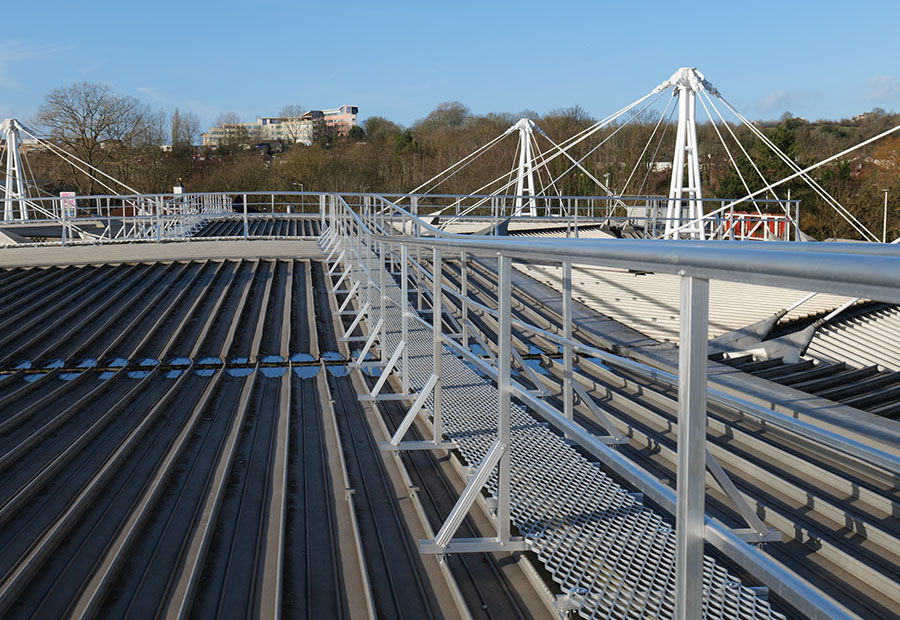
No two rooftops are the same. That’s why we design all our solar roof safety systems around your building, your roof type, and your solar access requirements.
We work with duty holders, designers, and installers across the UK to create fully bespoke, modular solutions that are designed in line with UK regulations and industry best practice, including The Work at Height Regulations 2005. Our systems are easy to install with minimal maintenance required, helping to keep your solar installation staff safe without disrupting your operations.
Explore our range of walkways and guardrails, or contact us for more advice on reducing fall risks on your rooftop.
FAQs
What are the main fall risks on solar roof installations?
The most common risks during solar roof installation and maintenance work include trips over cables and mounting systems, falls through fragile roof materials, and unprotected roof edges.
Do solar installations require permanent fall protection?
Yes, solar installations and maintenance work require permanent fall protection if regular access is required. Permanent collective fall protection such as guardrails and walkways is often the safest and most compliant option.
Who is responsible for solar roof safety?
Under UK health and safety law, duty holders and building owners are responsible for solar roof safety, which includes providing safe access and fall protection for anyone working on the roof.