The short answer:
When choosing between fixed and non-penetrating guardrails, you need to consider how your roof is accessed, how often it is used, and the level of protection you require. Both systems can provide compliant roof edge protection if correctly specified, but they have different strengths in terms of wind loading, installation time, and maintenance. If you need to avoid drilling into the roof in order to maintain its warranty, non-penetrating guardrails could be the better option; but if your roof needs regular access, then fixed guardrails may be more suitable.
There’s no one-size-fits-all solution when it comes to roof edge protection. Different rooftops require different edge protection approaches depending on their structure, access needs, and risk profile. People often ask us how non-penetrating guardrails compare to fixed systems, and which option is the safest, most practical choice for their building.
In this guide, we take a side-by-side look at the main roof guardrail systems, comparing them in terms of cost, installation, wind loading, roof compatibility, and ongoing maintenance requirements to help you choose the right option for your rooftop.
What are non-penetrating guardrails?
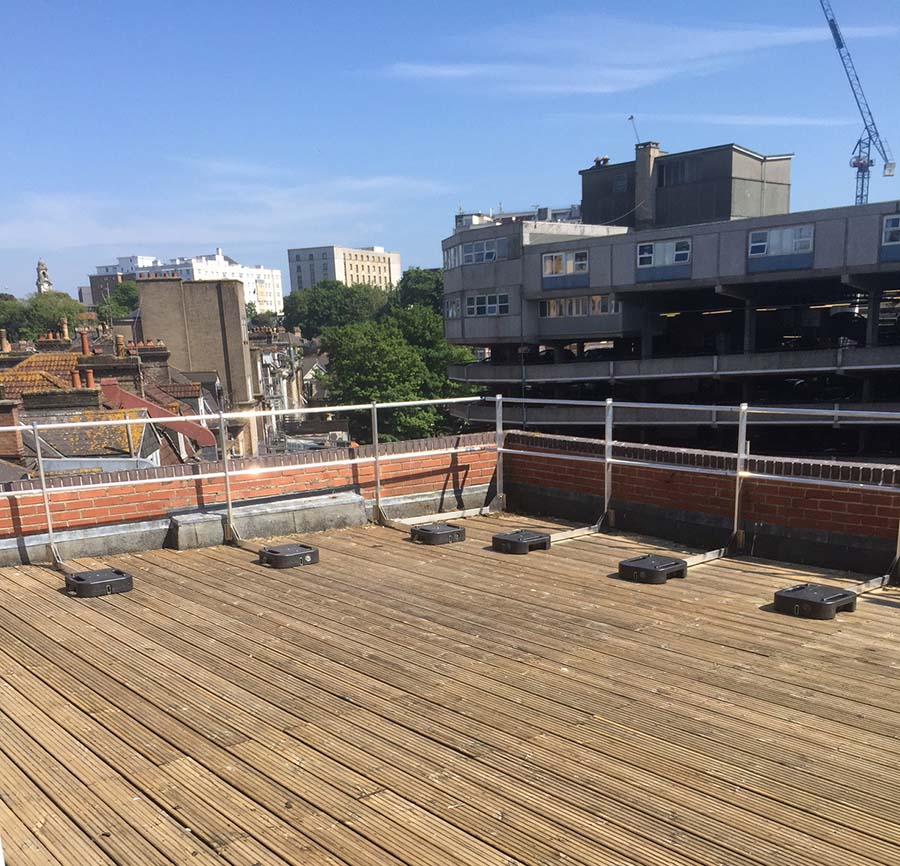
Non-penetrating guardrails (commonly referred to as freestanding guardrails) are roof edge protection solutions that rely on counterweights rather than mechanical fixings. Because they do not penetrate the roof membrane, they’re commonly used on roofs that need to maintain their waterproof integrity.
These systems are often modular in nature and are quick to install. They’re ideal for buildings that require regular roof access without permanent fixings, and are especially popular on flat roofs with delicate membranes or where landlord restrictions apply.
What are fixed guardrails?
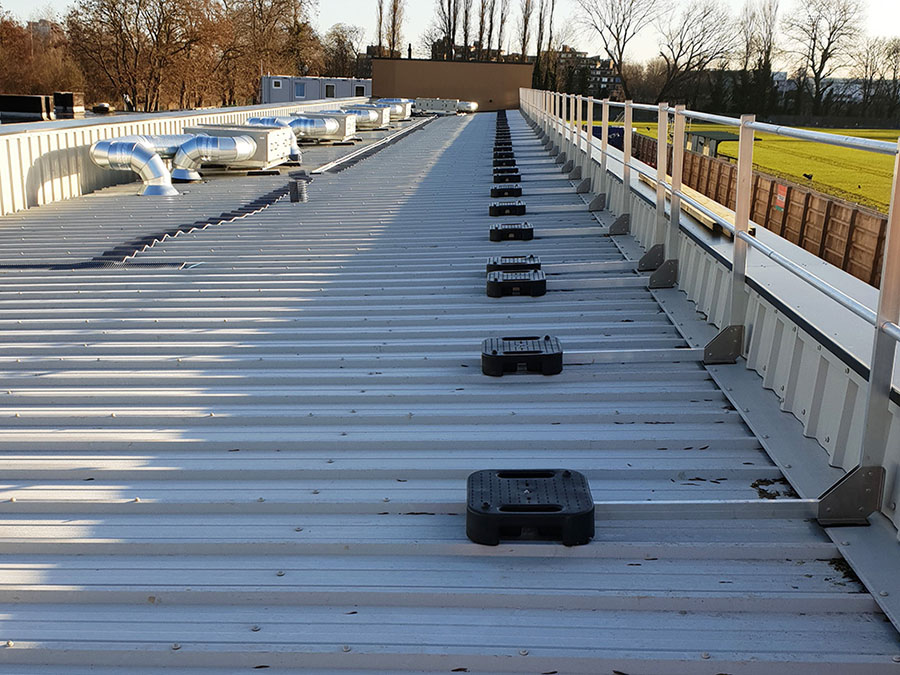
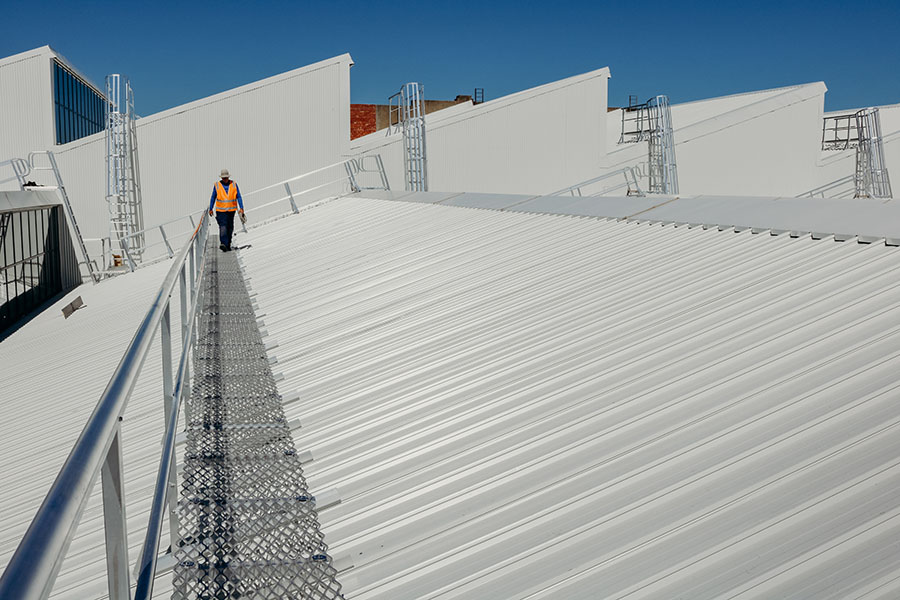
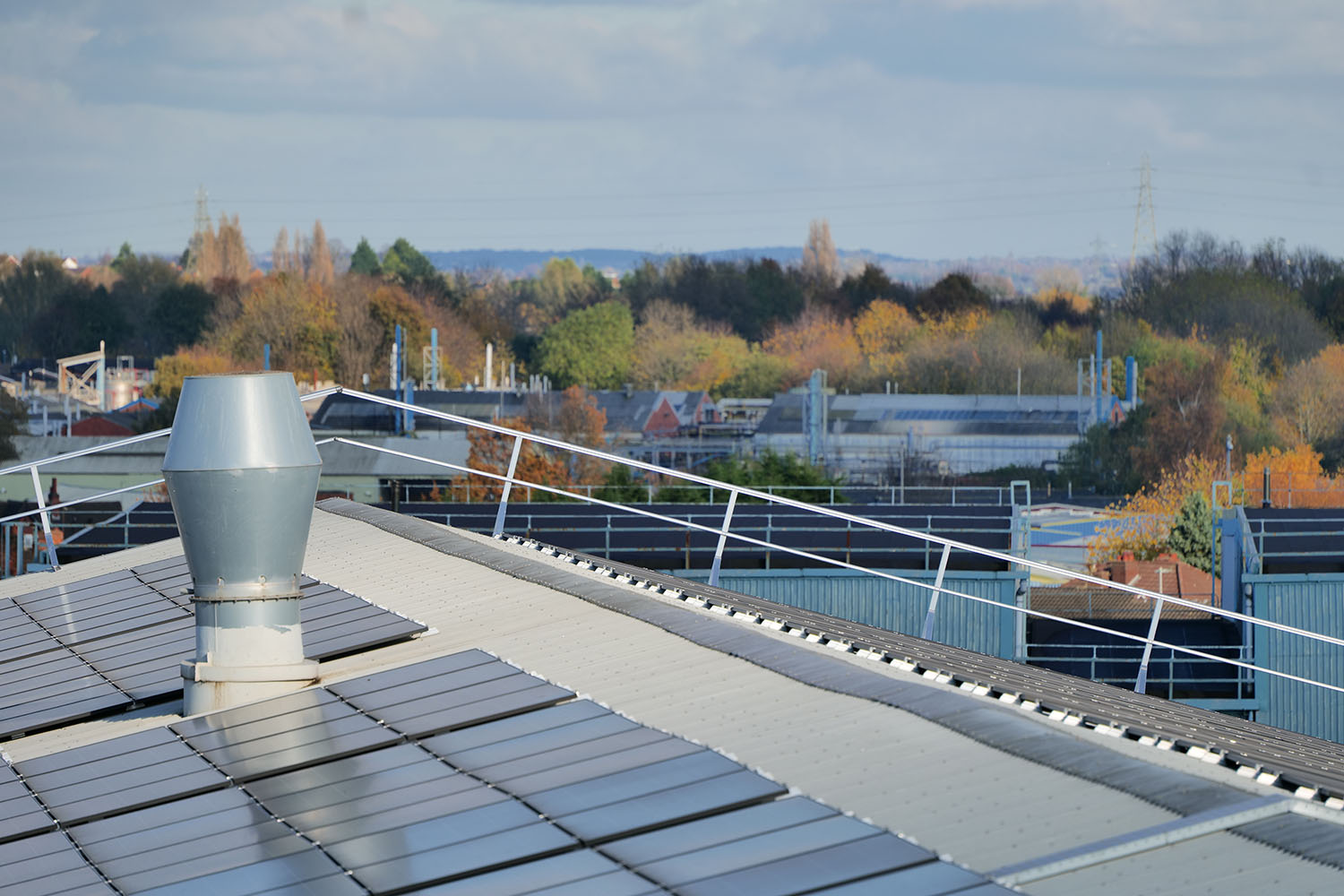
Fixed roof guardrail systems are mechanically anchored into the roof structure or parapet. They become part of the building’s safety infrastructure once installed, offering long-term edge protection for anyone who’s working at height.
At Katt Safety, we supply modular, high strength aluminium roof guardrails in a variety of configurations to provide collective edge protection around the perimeter of a flat roof. They’re designed in line with relevant UK safety standards, including The Work at Height Regulations 2005 and applicable BS/EN guidance, and are able to withstand the demands of frequent foot traffic, harsh weather, and complex roof layouts.
Comparing non-penetrating guardrails vs fixed guardrails
Cost
- Non-penetrating guardrails often appear more affordable upfront. There’s no need for structural fixings or intrusive roof work, which makes them relatively inexpensive to install.
- Fixed guardrails may be more expensive to purchase upfront due to the complexity of the design and installation time required. However, they’re often more cost-effective over the entire lifespan of a building.
Installation time
- Non-penetrating guardrails are typically installed without the need for hot works or drilling, making them much quicker to install and keeping your downtime to a minimum.
- Fixed guardrails take longer to install, as they must be securely anchored into place. But once they’re in place, they don’t require any repeated setup, making them a good option for sites with ongoing maintenance needs.
Wind loading
- Non-penetrating guardrails rely on calculated ballast to resist wind uplift. While they are fully compliant when correctly designed, they might not be the most suitable option for high-rise or exposed buildings.
- Fixed guardrails transfer loads directly into the building structure. This makes them ideal for use in locations with higher wind speeds or complex roof geometries.
Roof compatibility
- Non-penetrating guardrails work best on flat roofs with sufficient load-bearing capacity to accommodate the counterweights. Not all roofs are suitable for these guardrails, so we recommend carrying out structural checks first.
- Fixed guardrails can be designed for a wide range of roof types, including metal deck, concrete, and composite structures. They’re often the preferred choice for irregular roof layouts or roofs where parapets already exist.
Maintenance
Both systems require regular inspection to ensure they remain compliant with The Work at Height Regulations 2005.
- Non-penetrating guardrails should be regularly checked to ensure that the counterweights remain correctly positioned and that the components haven’t shifted over time.
- Fixed guardrails are a permanent solution so require less maintenance. However, you should inspect the fixings and general condition of the guardrails on a regular basis.
Non-penetrating vs fixed guardrails: a quick comparison
| Consideration | Non-penetrating guardrails | Fixed guardrails |
| Fixing method | Freestanding, weighted system with no roof penetrations | Mechanically fixed into the roof structure or parapet |
| Installation time | Quicker to install with minimal disruption to operations | Longer installation time due to structural fixings |
| Upfront cost | Lower initial cost for short-term or limited access | Higher initial cost but more cost-effective for long-term access |
| Wind loading | Relies on calculated ballast, not always suitable for exposed or high-rise roofs | Loads are transferred directly into the building structure, offers higher wind resistance |
| Roof compatibility | Best suited to flat roofs with sufficient load-bearing capacity | Suitable for a wide range of roof types and complex layouts |
| Maintenance | Requires regular checks to ensure the counterweights remain correctly positioned | Straightforward inspections focused on fixings and overall condition |
| Best for | Providing occasional maintenance access to rooftops that need to avoid roof penetrations | Providing frequent access to rooftops that require permanent edge protection |
Choosing the right system for your roof
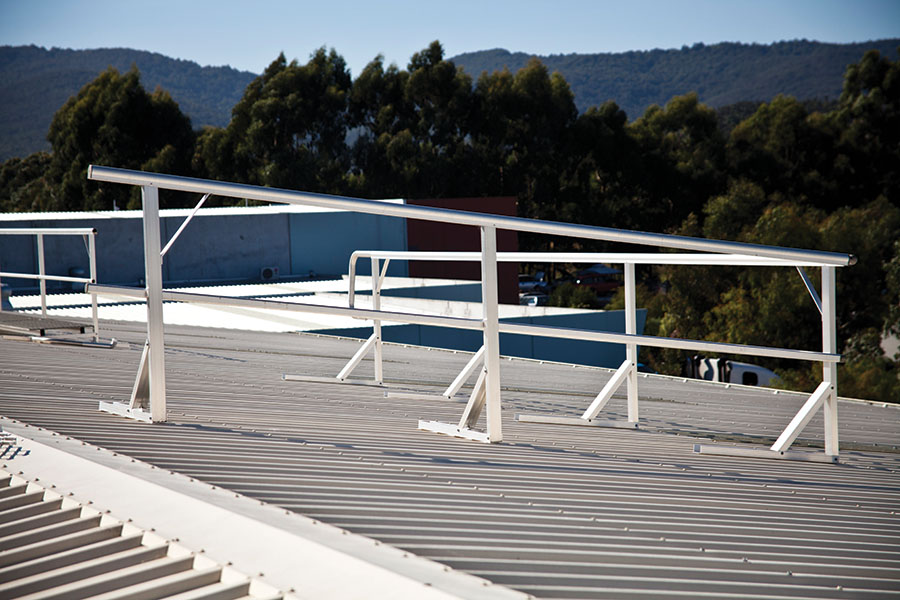
When choosing between non-penetrating guardrails and fixed guardrails, it’s important to remember that neither system is ‘better’ than the other. It’s all about which solution is more suitable for your rooftop.
If you’re looking for a flat roof guardrail system that doesn’t require drilling into the rooftop, our sister company Ezi Klamp specialises in non-penetrating roof guardrails that are made up of pre-assembled posts for quick installation.
But if your roof layout is more complex and you require a permanent solution for regular access, our fixed guardrail systems could be the perfect option for you.
Get in touch with our expert team today and we’ll help you choose the right system for your rooftop.
FAQs
Do fixed guardrails damage the roof membrane?
When fixed guardrails are correctly specified and installed, fixed guardrails prevent long-term damage to the roof membrane and maintain its waterproof integrity.
Which guardrail system is better for frequent roof access?
Fixed guardrails are generally better suited to roofs that see regular foot traffic due to their permanence and durability.
Can non-penetrating guardrails be used on all flat roofs?
No, non-penetrating guardrails aren’t suitable for use on all flat roofs. It’s important to assess the roof’s size, structural capacity, and wind exposure before specifying a freestanding system.
How do I decide which roof edge protection is right for my building?
A site-specific assessment is key to deciding which roof edge protection is right for your building. Factors such as access frequency, roof structure, and environmental exposure should guide your decision.