Key takeaways:
In 2026, every design decision you make in the fixed ladder planning process should be fully compliant with BS EN ISO 14122-4:2016. Having a clear and consistent specification will minimise the risk of delays and support safer project delivery. By mapping out access routes early and capturing the essentials in a detailed ladder spec sheet, you’ll ensure that everyone involved remains completely aligned throughout the entirety of the build.
Are you planning a new building project in 2026 and want reassurance that you’re specifying the right ladder system? Fixed access ladders are a fundamental part of early-stage construction planning, helping to keep your team safe during the build, and prevent installation delays and costly redesigns later on.
This guide walks you through the essential steps of fixed ladder system planning and highlights how Katt Safety’s fixed access ladders give you a compliant, durable, and future-ready solution you can rely on throughout your building project.
Your step-by-step guide to fixed ladder system planning
1) It all starts with compliance
BS EN ISO 14122-4:2016 defines the key requirements for fixed ladders on industrial and commercial buildings. Here are the core factors you’ll need to consider when specifying your ladder system:
- How high your ladder will be and whether the standards require a rest platform for your ladder height
- What type of fall protection will provide the right level of safety for ladder users
- How your operatives will safely step through or step off at the roof or platform level
- What clearances you’ll need around services, cladding, and structural elements
- How your personnel will approach the ladder and move around the surrounding work area safely
By considering the standard from the very beginning of your project, you’ll avoid unnecessary redesigns later down the line and keep your project running on schedule.
2) Define the purpose of the ladder
The intended use of the ladder will determine the specification. Whether it’s required for infrequent maintenance access or routine operational use will influence the ladder height, fall protection, and platform requirements. Start by asking yourself:
- Will the ladder be used regularly or occasionally?
- Will the users of the ladder be trained in working at height?
- Do you need multiple ladders across different elevations or plant zones?
- Will your operatives be carrying tools or equipment when climbing the ladder?
Understanding these details early on will ensure that your ladder system is the perfect fit for your and your maintenance team’s needs.
3) Capture the key details in a fixed ladder spec sheet

A well-structured fixed ladder spec sheet will ensure that everyone involved, from architects and specifiers to contractors and installers, remains fully aligned throughout the project. Your spec sheet should include the following:
Structural requirements
- Ladder material
- Load ratings and fixing details
- Wall-mounted or roof-mounted configurations
Ladder configuration
- Ladder height and any rest platforms required
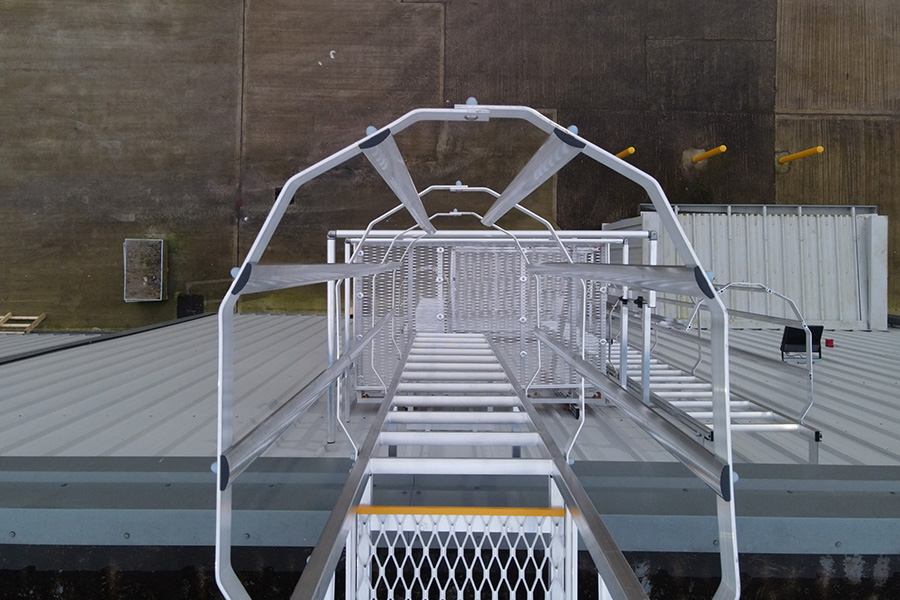
- Step-through design and top access arrangement
- Guardrail and handrail requirements
- Rung spacing and ladder width
- Compliance with BS EN ISO 14122-4:2016
Safety features
- Fall arrest system type (rail-based, cable-based, or cage)
- Lockable access gates for controlled entry
- Anti-climb measures (if required)
- Integration with roof edge protection
4) Map safe access routes across your facility
A fixed ladder is just one part of a much wider safe access strategy. You need to ensure that your operatives are protected not only during ascent and descent, but also once they reach the roof or elevated area. You’ll need to consider:
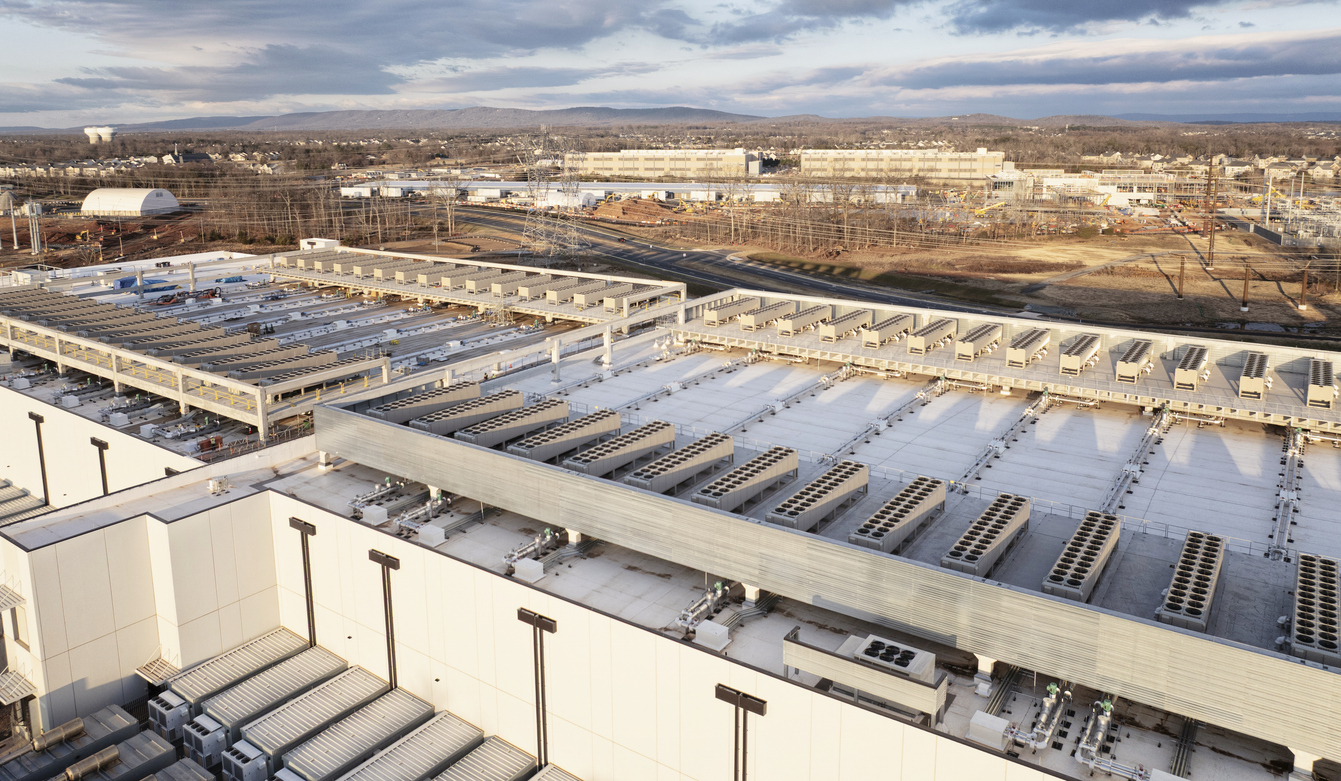
- Whether a walkway is required to direct your personnel safely across the roof
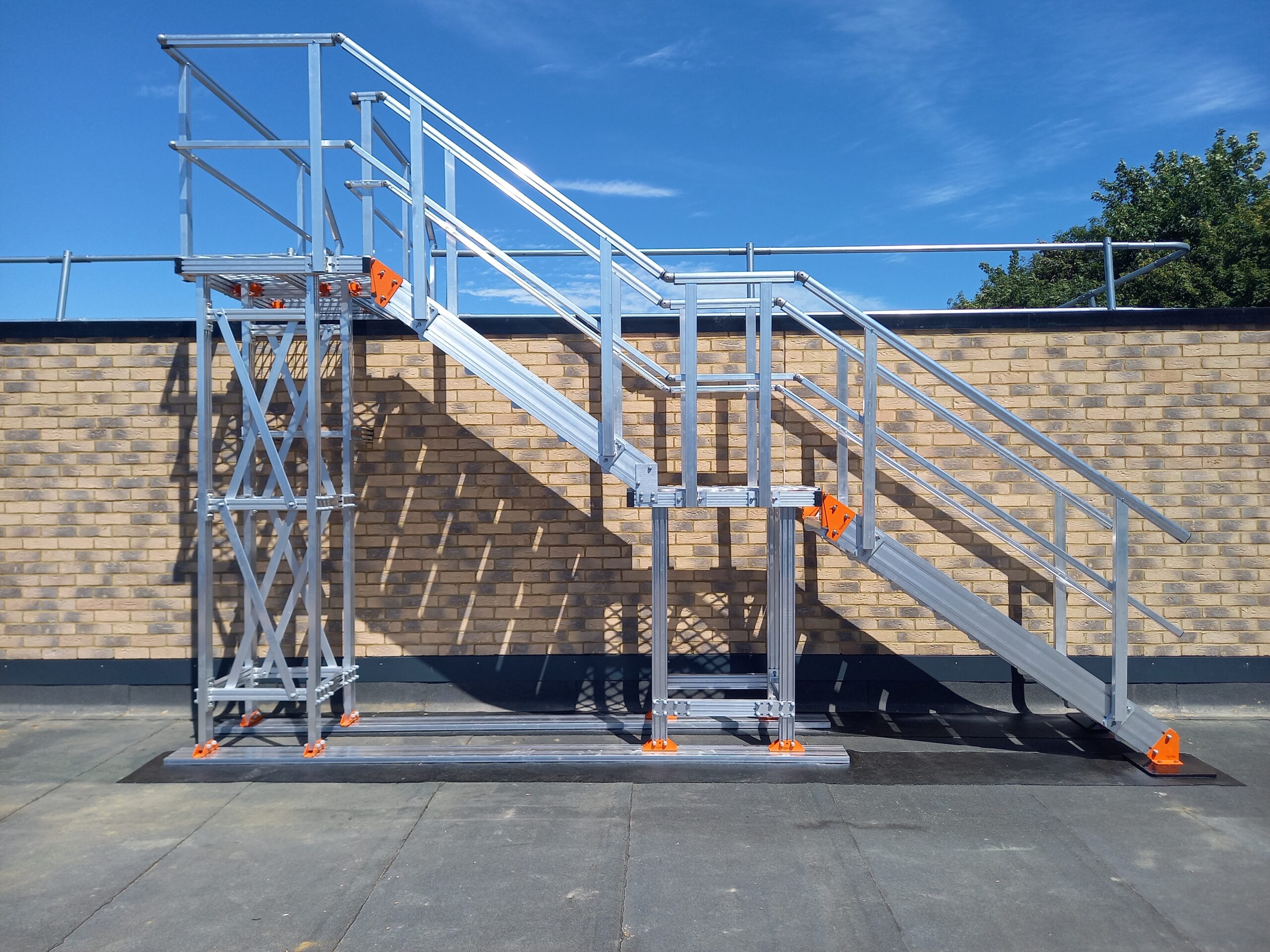
- If multiple roof levels need modular stair units or access platforms
- Whether the roof contains fragile zones that might need additional measures (like skylight covers)
- How the ladder will integrate with existing guardrails or plant maintenance areas
5) Plan for installation and long-term maintenance
Proactive planning will ensure that the installation goes smoothly and that your ladder continues to perform throughout the building’s operational life. Here’s an easy ladder installation and maintenance checklist for you to follow:
- Confirm the substrate type and suitable fixing methods
- Ensure that all structural load assessments have been completed
- Maintain clear, accessible zones around installation areas
- Pre-agree the ladder lengths, platform dimensions, and fall protection requirements
- Provide access for future inspections and maintenance tasks
6) Future-proof your ladder system
As regulations get stricter and safety expectations become much tighter, it’s vital to ensure that your building can adapt to any changes. Consider:
- Choosing modular ladders that can be easily extended or reconfigured
- Using corrosion-resistant materials that are suitable for extreme conditions
- Allowing for additional plant access needs in the future
- Ensuring that your fall protection can be upgraded as standards evolve
Keep your building project safe and compliant with Katt Safety’s fixed access ladders
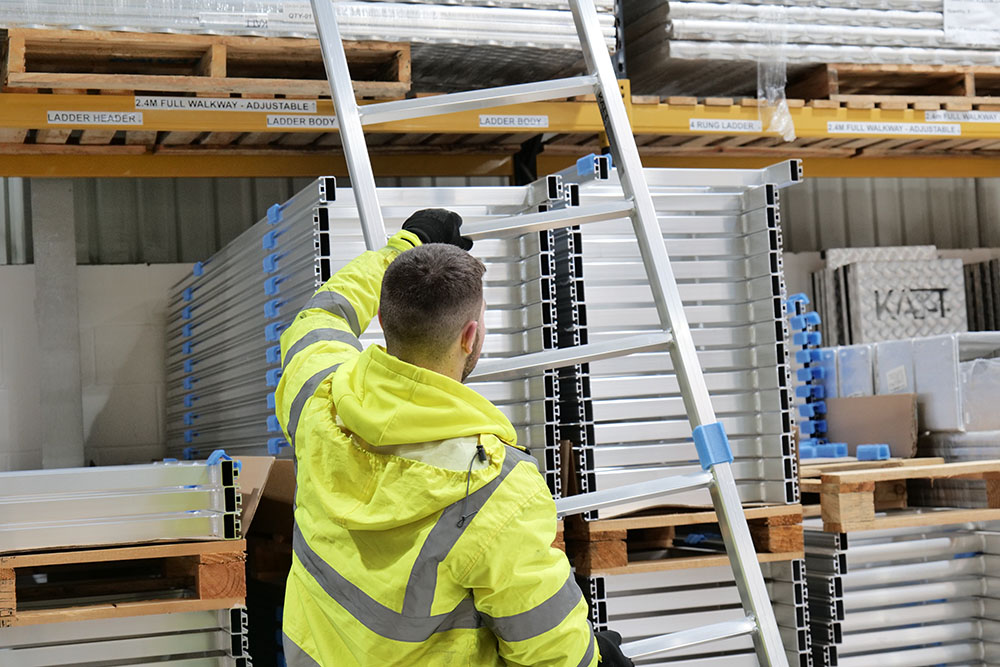
Katt Safety is proud to supply an extensive range of fixed access ladders that are tailored to suit your exact requirements. Our ladders are manufactured from strong yet lightweight aluminium, making them exceptionally easy to install with minimal maintenance required. Every ladder in our range is fully compliant with BS 4211:2005 and BS EN ISO 14122-4:2016, as well as being modular in nature – meaning it can easily adapt to your layout as your building project evolves.
Fill out our ladder configurator form to receive your free quote today.
FAQs
What are the minimum requirements for a compliant fixed ladder system in the UK?
A fixed ladder system must meet the requirements set out in BS EN ISO 14122-4:2016, which covers rung spacing, ladder width, clearances, platforms, and fall protection. These standards ensure that maintenance staff can access the ladder safely, reducing the risk of accidents on site.
Do all fixed ladders require a safety cage?
No, not all fixed ladders require safety cages. Safety cages are no longer recommended as the primary method of fall protection, and vertical fall-arrest systems such as rail or cable-based solutions are now preferred as they provide a more reliable and controlled means of fall protection.
When is a rest platform required on a fixed ladder?
A rest platform is required on a fixed ladder if it exceeds the maximum uninterrupted climb height specified in BS EN ISO 14122-4:2016. These platforms allow operatives to pause safely before continuing their ascent or descent, helping to reduce fatigue and minimise the likelihood of falls.