
In short:
The fixed access ladder regulations in the UK are intended to reduce the risk of falls from height, ensuring your ladders are safe and suitable for the task at hand. You’ll need to comply with recognised industrial ladder standards such as BS 4211:2005+A1:2008 and BS EN ISO 14122-4:2016, and make informed decisions about ladder cages, vertical lifeline systems, safe landings, and inspection regimes.
Whether you’re specifying a new rooftop access ladder or reviewing an existing installation, it’s vital that you comply with the fixed access ladder regulations in the UK. This will ensure that your maintenance crew can access elevated areas safely and consistently, without putting themselves at risk.
We’ve put together this comprehensive guide to fixed access ladder regulations, so you have a complete understanding of ladder safety on site. We also cover key design and maintenance considerations such as cages vs vertical lifeline systems, landings, and inspections to help keep your ladder safe and compliant.
What are the fixed access ladder regulations in the UK?
In the UK, fixed access ladders fall under the wider framework of work at height and work equipment legislation. However, there are two industrial ladder standards that are commonly referenced when specifying or assessing a fixed ladder. These are:
BS 4211:2005+A1:2008
BS 4211:2005+A1:2008 has long been used in the UK as a benchmark for the design and assessment of permanently fixed ladders on buildings and structures.
The standard provides guidance on key design elements such as:
- Ladder width and pitch
- Rung spacing and diameter
- Maximum climb heights
- The use and positioning of safety hoops
- The provision of intermediate landings
BS 4211:2015+A1:2008 is commonly referenced when reviewing older installations and is a useful baseline for understanding whether your existing ladder is fit for purpose.
BS EN ISO 14122-4:2016
BS EN ISO 14122 is a European standard that covers permanent means of access to machinery and industrial areas. Part 4 specifically focuses on fixed ladders, and is widely used for rooftop and plant access across industrial and commercial buildings.
The EN 14122 ladder requirements focus on:
- Reducing fall risk for workers during climbing
- Ensuring safe access and egress at the top and bottom of the ladder
- Encouraging safer alternatives to ladders where possible
BS EN ISO 14122-4:2016 is often used on modern sites as the preferred reference for rooftop access ladder design.
Key ladder design considerations
Ladder cages vs vertical lifeline systems
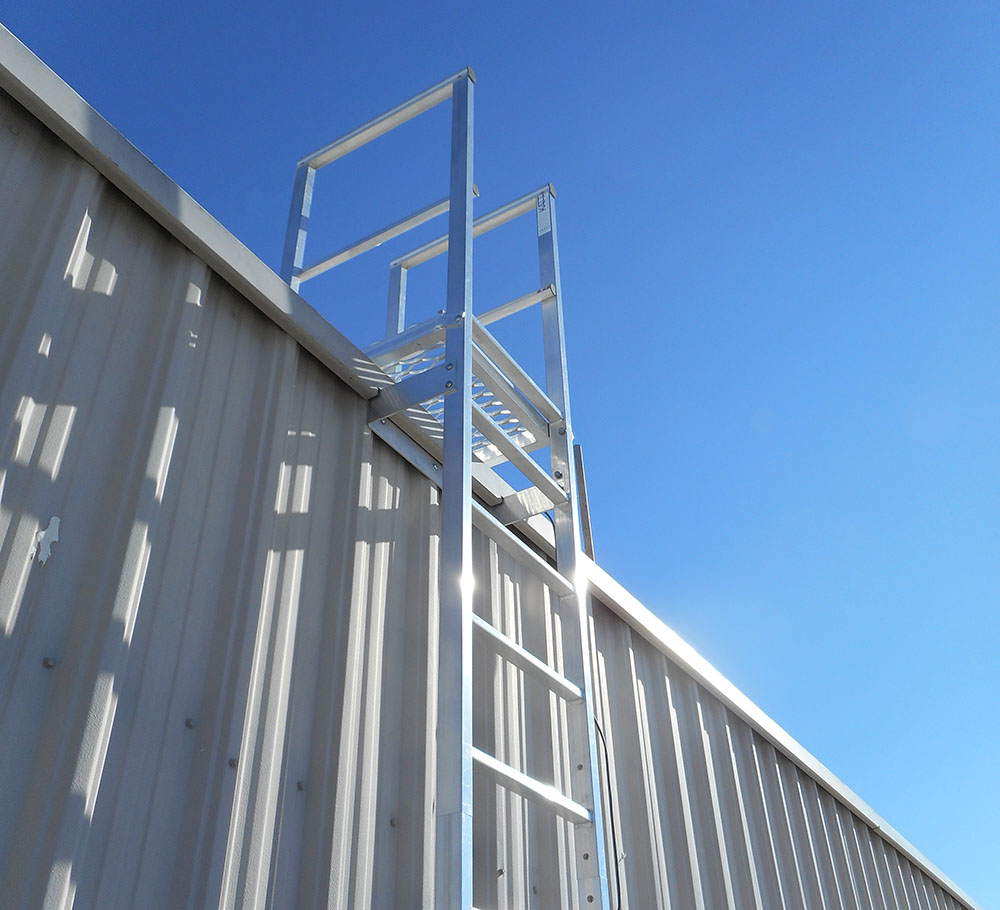
One of the questions that people often ask us is whether ladder cages are required to comply with the fixed access ladder regulations. Cages can help prevent users from falling sideways or backwards when using a ladder, but they can’t be relied on 100% to arrest a fall.
Vertical lifeline systems, however, can provide a complete fall protection solution when correctly specified, installed, and used as part of a managed system. Here’s how they compare:
| Cage vs vertical lifeline system | |||
| Protection type | Benefits | Limitations | Best suited for |
| Ladder cage | Familiar design, some lateral protection | Doesn’t stop a fall, limited rescue capability | Low-risk, infrequent access where risk assessment supports use |
| Vertical lifeline | Provides continuous fall protection during ascent and descent | Requires correct specification, training, and inspection | Higher-risk climbs, frequent access, or modern ladder safety upgrades |
Landings and rest platforms
Many falls occur when stepping on or off a ladder. Good ladder design looks beyond the climb and considers the entire access journey. This means you’ll need to address the key risk areas around the ladder, including:
- Safe ladder exits and entries which allow users to maintain three points of contact
- Parapet platforms that remove the need to climb over handrails or upstand details
- Self-closing safety gates that reduce the risk of accidental falls
Rest platforms also play a vital role in reducing fatigue on taller ladders, particularly when users are carrying tools or equipment. Level landing areas should be placed at both the top and bottom of the ladder and finished with non-slip surfaces to reduce the risks of slips in wet conditions.
What is the correct way to maintain a fixed access ladder?
As fixed access ladders are classed as work equipment, they must be regularly maintained and kept in a safe condition throughout their working life – not just at the point of installation.
You’ll need to:
- Carry out visual checks before each use to identify any obvious issues that could increase slip risk
- Hire a competent person to carry out regular planned inspections
- Conduct post-event inspections following severe weather, alterations to the building, or reports of damage
If you identify any defects, you must rectify them promptly. Ladders should be taken out of use if there is an obvious safety risk. Ensure that you keep clear inspection and maintenance records to prove compliance and ensure that issues are fixed before it’s too late.
Improve your ladder safety and compliance with Katt Safety
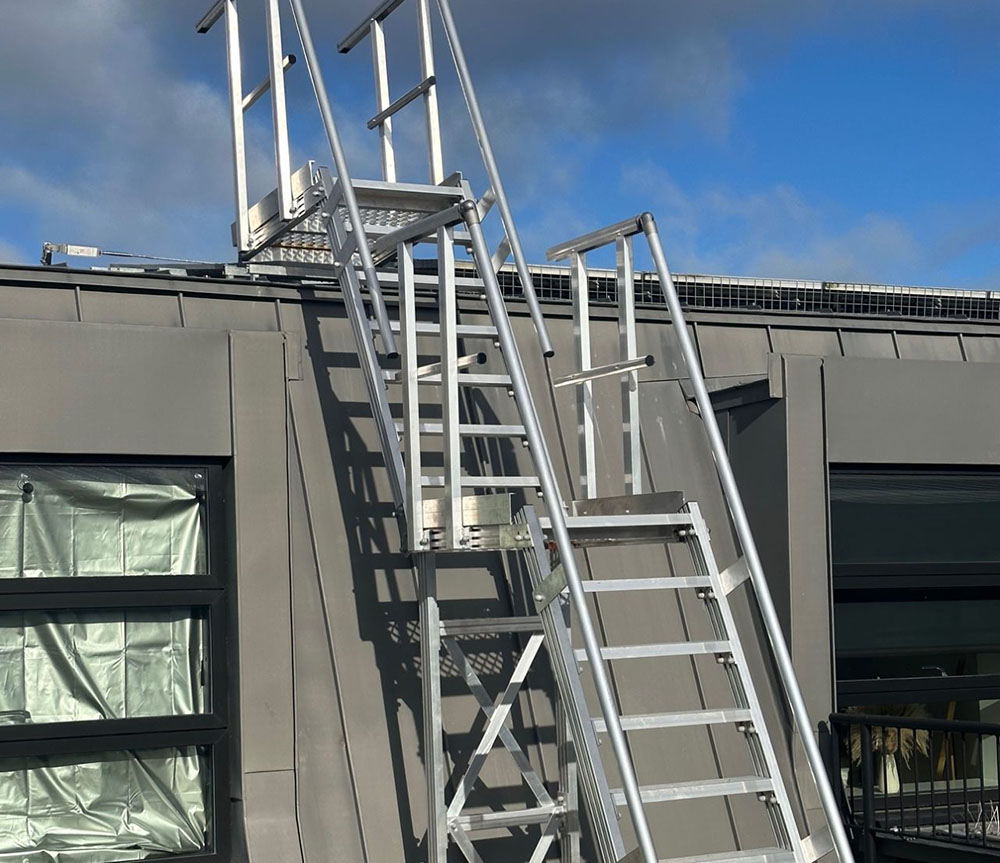
Are you currently upgrading an existing ladder or planning a new rooftop access solution? We supply a wide range of fixed access ladders that meet all the relevant regulations and create safer access routes for those working at height. We also provide a Vertical Lifeline Kit (compatible with our RL53 Vertical Line Ladder) to enable safe movement and arrest in case of a fall.
If you’re not sure which fixed access ladder to choose, get in touch with our expert team for further advice. We’ll review your access risks and help you find the right solution for your site.
FAQs
Are fixed ladder cages mandatory in the UK?
No, fixed ladder cages are not mandatory in the UK. The suitability of fixed ladder cages all depends on risk assessment, ladder height, frequency of use, and rescue considerations.
Can a vertical lifeline be added to an existing ladder?
Yes, vertical lifeline systems can be retrofitted to existing ladders in many cases, provided the ladder and structure are suitable.
How often should fixed access ladders be inspected?
You should visually check ladders before each use, and you should also have a competent person carry out regular planned inspections.
What is the biggest safety risk with rooftop access ladders?
Unsafe transitions at the top of a ladder are a major safety risk. Installing guarded exits, platforms, and gates are all critical to reducing falls.