The short answer:
Aluminium and GRP (glass reinforced plastic) walkways both provide safe and compliant access across roofs and plant areas. However, they suit very different environments. Aluminium is the stronger all-rounder for most rooftop and industrial sites, offering higher load capacity and lower upfront costs than GRP. GRP is more suitable for demanding environments that are exposed to extreme temperatures and corrosion, such as cold stores and chemical plants. You’ll need to take your site’s chemical exposure, temperature range, and load requirements into account when choosing between aluminium vs GRP walkways.
Not sure whether to choose an aluminium walkway or GRP walkway for your site? Both materials tick the boxes for strength, durability, and corrosion resistance – but they behave very differently when used on site. The right material plays a key part in keeping your workforce safe, your operations running smoothly, and your budget on track.
In this walkway material comparison guide, we explore how aluminium vs GRP walkways compare on corrosion resistance, cold store performance, load capacity, and cost, so you can specify the right material for your site the first time around.
What is an aluminium walkway?
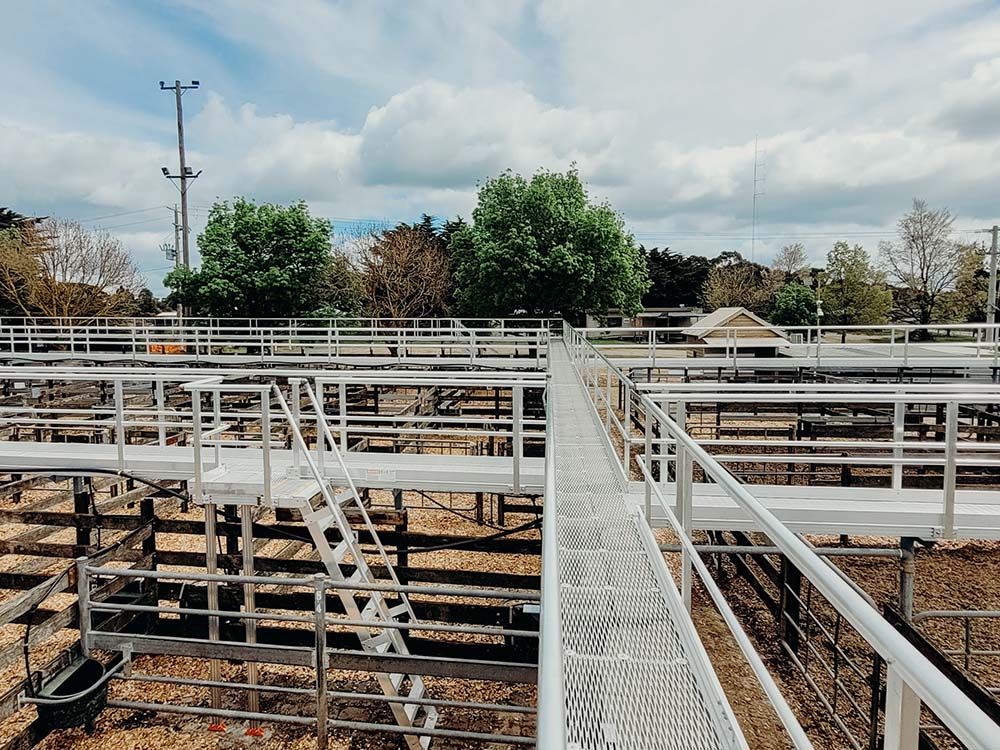
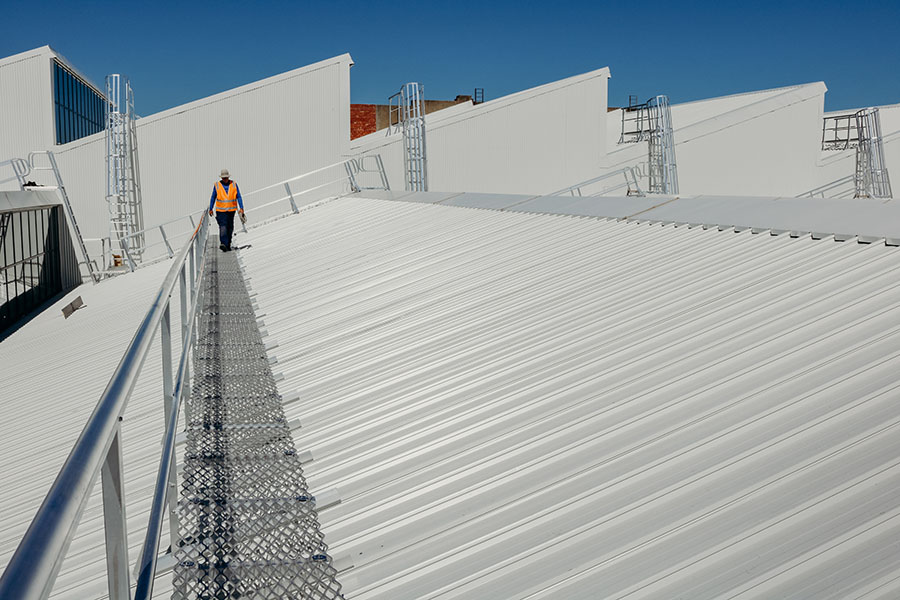
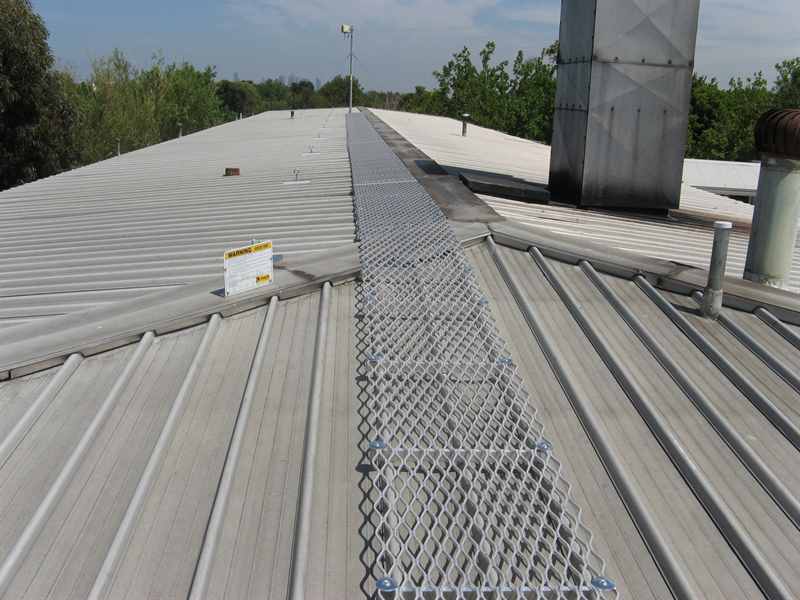
Our aluminium walkways are built from modular aluminium components that create a strong, lightweight, and durable access route. Aluminium naturally resists corrosion and offers a high strength-to-weight ratio. This makes it well suited to rooftop areas and plant areas where you need a stable, non-slip surface, without adding significant load to the structure below.
What is a GRP walkway?
GRP walkways are built from glass reinforced plastic. This composite material is made of fine glass fibres that are woven together and set in a resin binder. It’s naturally resistant to corrosion and will not rust or degrade when exposed to chemicals, moisture, or salt. Our sister company, Ezi Klamp, supplies GRP walkways that are ideal for demanding environments.
Aluminium vs GRP walkways: a quick comparison
| Factor | Aluminium walkway | GRP walkway |
| Corrosion resistance | Naturally resistant to corrosion, suitable in most weather conditions | Naturally resistant to chemicals, saltwater, and harsh weather exposure |
| Cold store performance | Conducts cold, can feel colder underfoot in refrigerated areas | Low thermal conductivity, doesn’t turn brittle or feel cold underfoot |
| Load capacity | Higher capacities available, dependent on batten spacing | Suitable for light-to-moderate foot traffic |
| Cost | Lower cost per metre for standard applications | Higher material cost for specialist grades |
| Best for | Standard rooftops, plant, and intralogistics access sites | Cold stores, chemical plants, and other corrosive environments |
Corrosion resistance: which holds up in harsh environments?
Aluminium resists rust in most outdoor and industrial settings. When exposed to air, it forms a thin oxide layer on its surface, which protects the metal underneath from further oxidation. This level of protection is more than enough for the vast majority of sites.
GRP takes this one step further. Its corrosion resistance is built into the material itself rather than applied as a coating, meaning it doesn’t suffer the electrochemical corrosion that eventually affects metals. If you’re working around coastal sites, wastewater plants, or chemically-intensive environments, a GRP walkway is the more suitable option.
Best fit for corrosive environments: GRP walkways – they’re best suited to sites where chemical exposure is frequent or severe.
Cold stores: which material performs better?
Aluminium remains structurally sound in cold conditions. However, it does conduct temperature more readily, which can make it feel colder underfoot and encourage moisture to form in humid, refrigerated air.
On the other hand, GRP has much lower thermal conductivity. This means it won’t turn cold to the touch or become brittle when exposed to low temperatures. It also won’t contribute to condensation in the same way that metal surfaces can.
Best fit for cold stores: GRP walkways – thanks to their insulating properties and resistance to moisture and mould.
Cost and load: which offers better value?
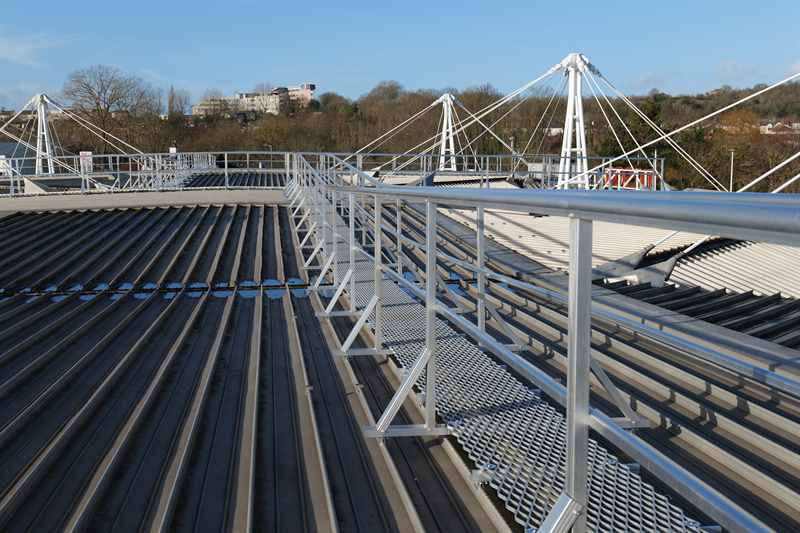
Aluminium wins on value for most standard rooftop and plant access routes. It typically costs less per metre to purchase and can support higher loads for its weight. This makes it a practical option for the majority of commercial and industrial projects.
GRP can be more expensive to purchase upfront for specialist grades. However, it does offer a long lifespan and is exceptionally easy to maintain, making it more cost-effective over time than steel alternatives.
Best fit for value: Aluminium walkways – they’re cheaper to purchase than GRP and offer exceptional load bearing properties.
Helping you choose the right walkway specification for your site
At Katt Safety, we understand the challenges that rooftop and industrial sites face when it comes to safety and compliance. Our expert team is here every step of the way to guide you through the process and help you choose the right walkway specification for your site.
Our KATT Walk fixed and loose-lay walkway systems are built from high-quality aluminium and come with a 10-year warranty as standard. They offer the most cost-effective and durable solution for the majority of rooftop, plant, and intralogistics environments.
If you’re working on a site that deals with cold storage or heavy chemical exposure, though, then GRP might be the more suitable option. Our sister company, Ezi Klamp, supplies GRP walkways in a range of modular configurations that can be tailored to your exact requirements, with a long lifespan of 25+ years guaranteed.
Ready to get started? Contact us to discuss your requirements.
FAQs
Are aluminium walkways corrosion resistant?
Yes, aluminium walkways are corrosion resistant. The material naturally resists rust and performs reliably in most UK weather conditions. However, it’s less resistant to sustain chemical exposure than GRP.
Is GRP better than aluminium for walkways?
Neither GRP or aluminium is universally better for walkways. The right option all depends on your environment. Aluminium offers better value and load capacity for standard rooftop and industrial sites. On the other hand, GRP suits corrosive, chemical-heavy, or cold store settings.
Why is GRP walkway grating recommended for cold stores?
GRP has low thermal conductivity, which means it won’t freeze or turn brittle in low temperatures. It also resists moisture better than metal surfaces, which can become cold and slippery underfoot.
Does Katt Safety supply GRP walkways?
Katt Safety specialises in aluminium walkway systems through our KATT Walk range. For GRP, we work alongside our sister company, Ezi Klamp, who supply GRP grating, handrails, walkways, fencing, and access solutions for harsh environments.