The short answer:
Roof walkway systems provide designated access routes across rooftops, helping to reduce slips, trips, and falls while also protecting fragile roof surfaces from damage. To choose the right solution for your rooftop, you’ll need to understand the differences between materials such as GRP and aluminium, as well as assessing the fixing methods, slip resistance, and load capacity of each type. You’ll also need to ensure the system is compliant with all relevant UK safety legislation.
According to the HSE, the construction industry accounted for the greatest number of workplace deaths in 2024/25, with the majority caused by falls from height. Whether your personnel are carrying out routine plant maintenance or major repair work, it’s vital that they can access rooftops safely.
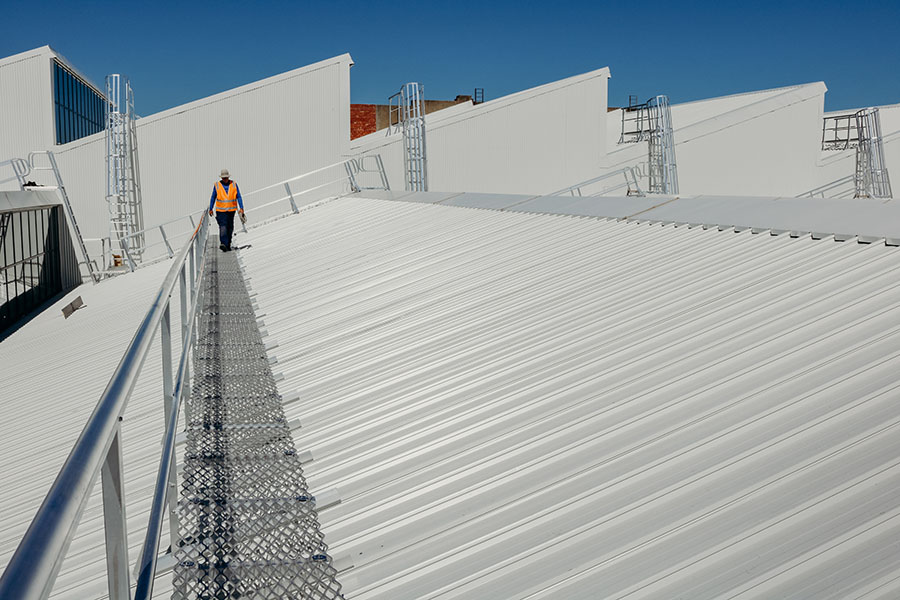
Roof walkway systems provide a clearly defined, slip-resistant route for your maintenance staff, helping to reduce the risk of accidents while also preventing unnecessary wear to the rooftop. Here are the factors you need to consider when choosing a roof walkway system for your building.
Factors to consider when choosing a roof walkway system
Material: GRP vs aluminium walkway systems
The most common materials for roof walkway systems are Glass Reinforced Plastic (GRP) and aluminium, with each offering different advantages depending on the application.
GRP walkway systems are celebrated for their corrosion resistance and non-conductive properties, and are often used in industrial environments where chemical exposure or electrical conductivity is a concern. However, GRP systems may not always offer the same load-bearing performance or durability as aluminium solutions.
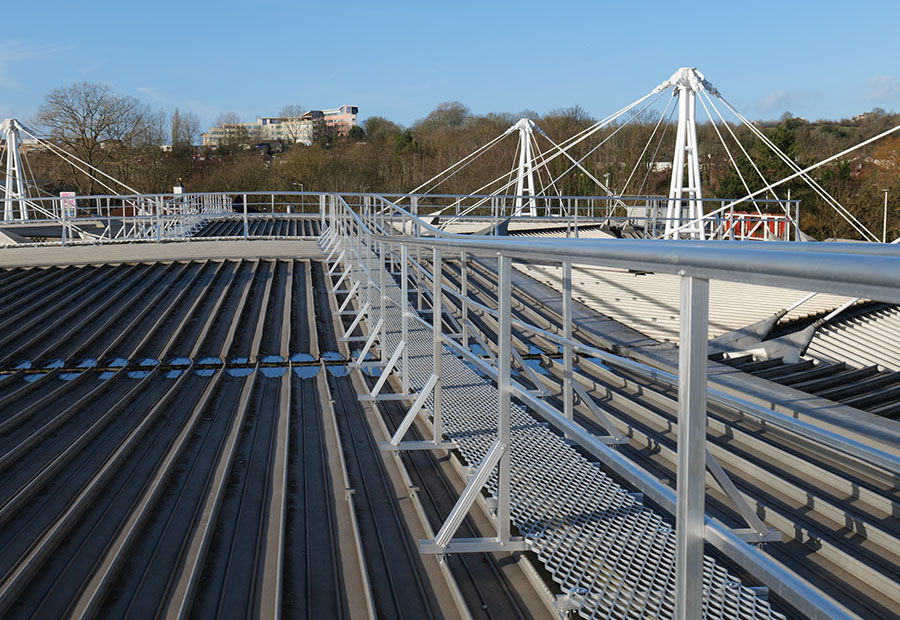
Aluminium walkway systems are lightweight, strong, and highly durable, making them ideal for rooftops that see regular use. Katt Safety’s aluminium walkway systems are engineered for long-term use and can be configured into modular layouts to suit your exact roof design, making them a popular choice for commercial and industrial buildings.
Fixing methods: fixed vs loose-lay
Fixings play a major role in how your rooftop access walkway will perform, and how long it’s likely to last.
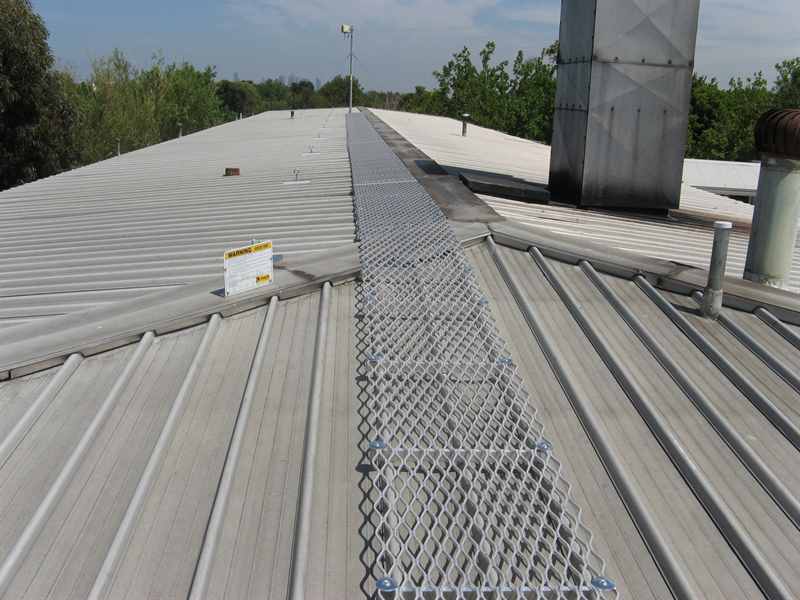
Our fixed walkway systems are mechanically secured to the roof structure using fixings appropriate to the substrate. They can be fixed to standing seam roofs with clamps and to metal profile roof systems with rivets. Fixed walkways provide excellent stability and wind uplift resistance for permanent access routes.
If drilling is not permitted on your rooftop, our loose-lay walkway systems might be a better option for flat roofs. They can be easily installed using cable ties, with no need to penetrate the rooftop. They can withstand strong winds of up to 60mph, making them a flexible yet durable walkway solution.
Slip resistance
A non-slip roof walkway is essential for maintaining safe access in harsh weather conditions, including rain and ice. The slip resistance of a walkway is typically measured using testing methods such as pendulum testing or R-value ratings.
Our fixed roof walkway grating is designed with a multi-directional, non-slip surface to provide consistent grip underfoot. This helps to reduce the risk of slips in challenging rooftop environments, including exposed roofs where rain, frost, and algae can quickly build up and make surfaces hazardous.
Or if you’re looking for a more flexible option, our loose-lay walkway systems include slip-resistant PVC matting, delivering reliable anti‑slip performance while protecting sensitive membranes.
Load capacities
Each roof walkway system has a different load capacity. It’s vital that you choose the right walkway load capacity to safely support your personnel, tools, and maintenance equipment, without placing excessive loads on the roof structure.
Our fixed aluminium walkway systems are designed to distribute loads evenly across the rooftop, helping to reduce stress on roof decks and membranes. Our systems are tested to BS EN ISO 14122-3:2016 and BS EN 516:2006 to ensure their suitability for regular access and maintenance activities.
On the other hand, our loose-lay walkway systems offer lower load capacities and are best suited to light-duty access routes or temporary applications, rather than areas that experience frequent or heavy foot traffic.
Integration with other protection measures
If you want to protect your workforce and keep your site compliant, you shouldn’t consider a roof walkway in isolation.
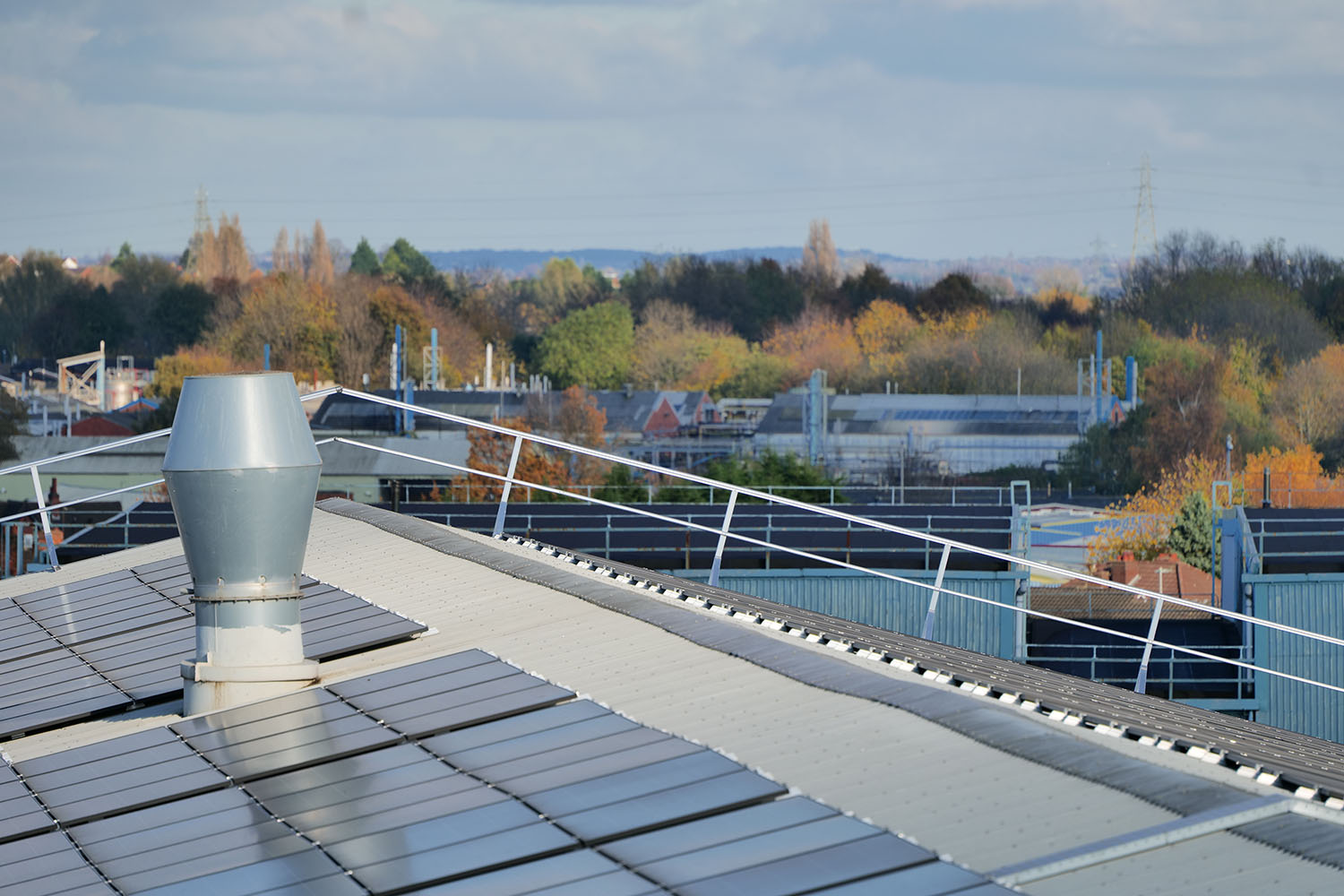
Our roof walkways can be easily integrated with other collective protection measures such as guardrails and edge protection systems to create a safe and compliant environment that supports all maintenance activities, while reducing reliance on PPE and personal fall protection.
Protect your people and your roof with our walkway systems
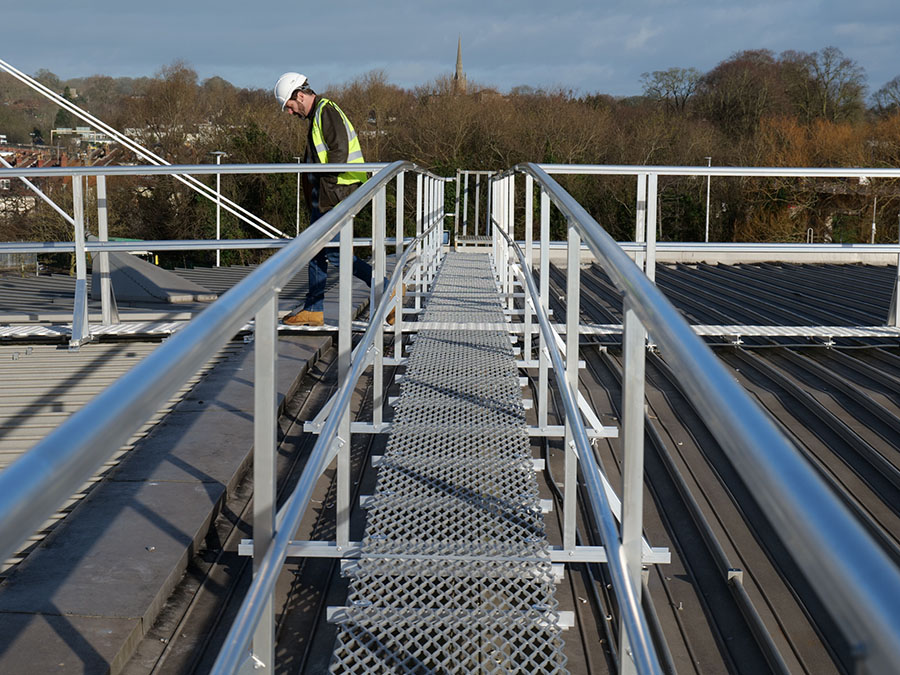
Need to create a safer, more efficient access route across your rooftop that will withstand daily use and harsh weather conditions?
We supply fixed and loose-lay walkway systems that are designed to suit a wide range of roof types and applications, from lightweight maintenance access to permanent, high-traffic routes. Whether you’re planning a new installation or upgrading an existing rooftop access walkway, our experienced team will help you assess your building and usage requirements, before selecting the right walkway system for your site.
Get in touch to take the first step toward a safer, more compliant rooftop today.
FAQs
What is the purpose of a roof walkway system?
A roof walkway system provides a safe, designated access route across a rooftop, helping to reduce the risk of slips and protect roof surfaces from damage.
What is the difference between fixed and loose-lay walkways?
Fixed roof walkways are permanently secured for regular use, whereas loose-lay walkways are non-penetrative solutions that are suited to lighter or temporary access.
Which is better: GRP or aluminium walkways?
Aluminium is generally preferred for regular rooftop access due to its strength, durability, and low maintenance requirements, while GRP is suited to corrosive or electrically sensitive environments.
Can roof walkways be installed on existing roofs?
Yes, Katt Safety’s roof walkway systems can be retrofitted to most roof types with minimal disruption to your operations.